

How Many Servers Does A Data Center Have?
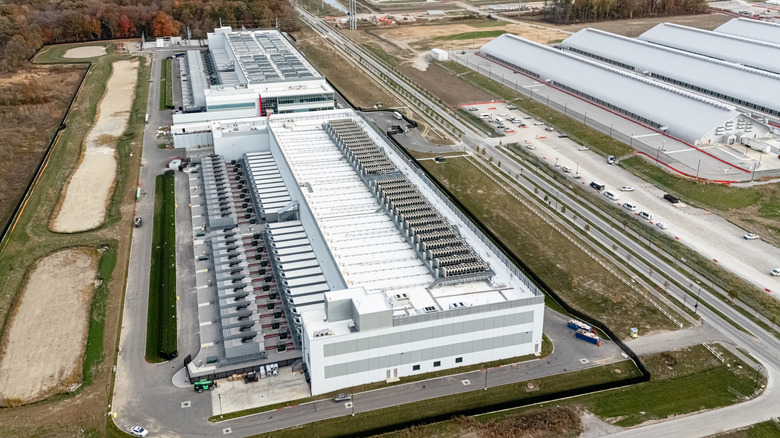
Although it may seem like they're a new phenomenon because of heavy recent media coverage, data centers have been around since the 1940s. The purpose of a data center is serving as a building for operating IT hardware. Granted, modern data centers look almost nothing like their older counterparts, thanks to smaller, more powerful computers connected to the internet and the use of cloud storage. Google built a hyperscale data center in 2006 in Oregon, a facility that may have created the modern standard. Estimates from the time say it consisted of three buildings covering more than 200,000 square feet.
What's the average size of a data center being built today in terms of servers housed? It varies quite a bit, depending on the project. Some micro data centers may only have around 140 servers. However, large hyperscale data centers could have 1 million or more servers. Some of the largest facilities could potentially house more than 6 million servers.
Companies rarely disclose the number of servers included in their data centers or the size of the server rooms. They may treat this information as proprietary. Industry professionals who try to estimate the number of servers might use the interior square footage of the building, which is public record when the company seeks building permits for the project from local governmental offices. Others may use the energy capacity of the building site, working backward to determine how many servers that amount of energy could support.
Real-world examples of the number of servers in data centers
DataCentre Magazine estimated the number of servers in some of the world's biggest data centers in late 2024. The magazine lists the China Mobile data center as one of the biggest, as it encompasses 10.7 million square feet in the Inner Mongolia Information Park.
At the time it was built in 2012, China Mobile said the enclosed space was large enough to manage 9,000 racks and 100,000 servers. However, the facility underwent a recent expansion to add more units. Of course, this server count information is two years old. A huge number of data centers are scheduled to be built in the U.S. in the near future or have recently opened. Many of these facilities will probably hold even more servers.
C&C WaveTech put together an estimate of the number of servers based on the type of data center. A data center a company builds to support its own needs (called enterprise) typically contains between 500 and 5,000 servers, but some companies may need a number outside this range. A data center that's built as a business (called colocation), meaning the owner rents storage space to other companies and hosts the servers, typically would have between 1,000 and 100,000 servers. A cloud data center, which provides storage and computing resources to clients, may have tens of thousands of servers. A hyperscale data center can have 1 million or more servers.
Why estimating server capacity based on square feet is tough

The costs to build a data center are quickly increasing. Project Sail in Georgia is expected to cost $17 billion, for example. The campus will cover 4.34 million square feet, making it one of the largest in the U.S. Making a rough estimate of the number of servers on the campus based on the square footage is possible, but has challenges. Some industry professionals estimate that about 65% of the space is actually used for server rooms. These facilities need space for human workers, HVAC systems, hardware to manage power demands, and cabling.
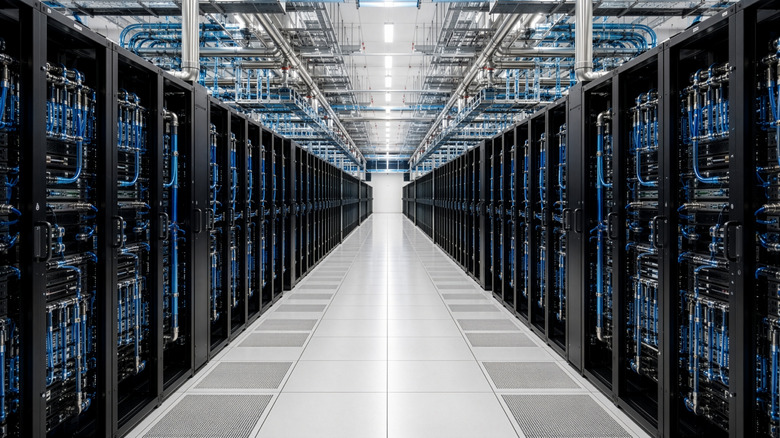
If you know how many racks a data center contains, you can make an estimate about the number of servers the building has. However, even this information can generate wildly different numbers. Each rack will usually have 42 to 52 units of space (shortened to U). Individual servers will usually occupy between 1U and 6U, depending on the type.
The 1U servers are significantly thinner than the 6U models. The thinner 1U servers are better in locations where you have limited space available in the data center, and you want to maximize the number of servers. Wider models are better when you need them to perform difficult processing work, as it's easier to cool them. In a 42U rack, you could fit seven 6U servers or 42 1U servers, which is a wide range that complicates estimates.