

Here's What A Data Center Actually Does (Besides Use Electricity And Water)
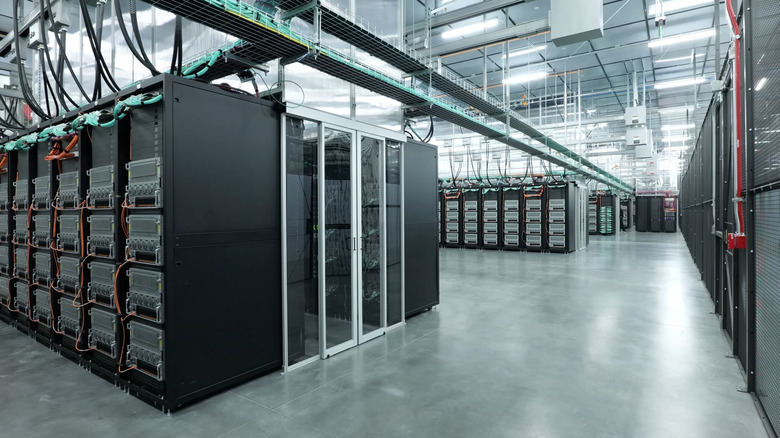
As AI and its relevant tech companies become more ubiquitous in the United States and beyond, data centers have started cropping up all over the place, sometimes against the wishes of local businesses and residents. It's specifically data centers in service of AI tech that have drawn ire and controversy, but data centers have been in operation since well before the generative AI boom. It's through data centers that many of the baseline functions of the wireless ecosystem run, from sharing files to communicating on various apps.
There are data centers all over the world, with some of the largest providing wireless network connection exchange and cloud data storage services. These centers operate using a combination of physical data storage servers and cloud storage access to circulate data around their respective countries and communities. Data centers are not inherently problematic, especially the ones that are powered entirely through renewable means, but new data centers specifically meant to service the AI industry, driving up utility costs and bothering local residents, are what's drawing the majority of ire.
A data center stores and circulates data physically and virtually
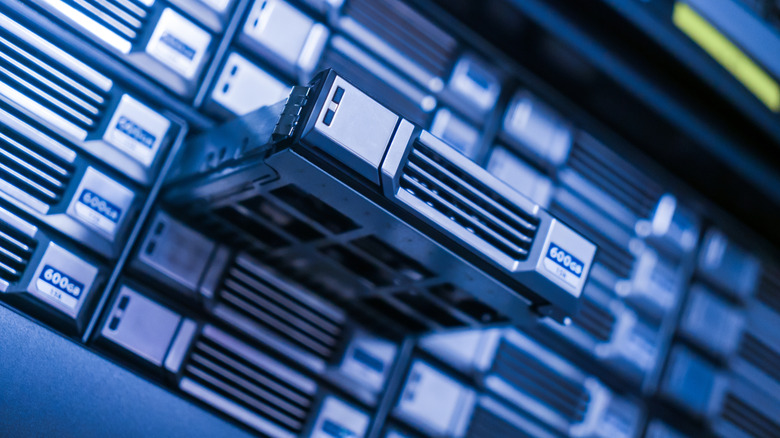
A data center is, as its name implies, a center for data. In other words, it's a central hub through which large quantities of data can be stored and circulated. Much in the same way that your personal PC needs internal storage and memory to store and run programs, so too do data centers use similar types of components. The difference is that these facilities are handling data flows from entire counties, regions, states, or larger, so they need a positively massive quantity of physical servers, storage drives, and network infrastructure.
Modern data centers use a combination of physical and virtual storage and computation methods, both to save space and better connect with other data centers. A single service's combined data needs can be networked through multiple different data centers via cloud computing, which also helps to protect that service's functions in the event a data center is damaged or compromised. In addition to the computational components, data centers are usually also equipped with various pieces of support hardware, including power subsystems, backup generators, and ventilation and cooling equipment. That many servers running at full capacity get very hot, though many data centers offset the cost of cooling and power by building in cooler locales like deserts or high-elevation areas. China has even gone as far as to build a data center entirely underwater.
Data centers can serve practical purposes (though don't always)
By current standards, data centers are broken up into two broad categories: traditional data centers and AI data centers. It's largely through traditional data centers that the seemingly seamless internet experience you have today is facilitated; they manage web hosting services that keep websites running, store data for cloud services, run virtual apps that external users can access without local installation, and manage important communication services like email and digital calling.
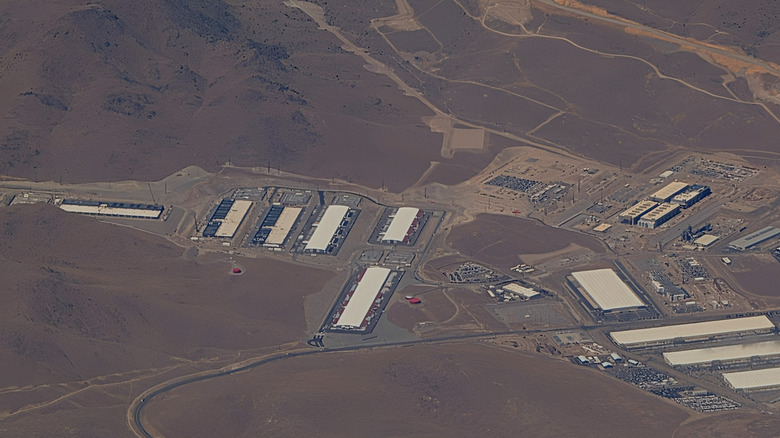
One of the largest data centers in the world, the China Telecom Information Park located in Hohhot, Inner Mongolia, is responsible for all of those service types, plus government systems and business enterprise services. There is a similarly large data center located in Tahoe Reno, Nevada, in the U.S., owned by Switch that provides a myriad of telecom services to the government, businesses, and individual tech clients. Where traditional data centers serve these many practical purposes, it's the AI data centers specifically that have been publicly scrutinized.
Just like traditional centers, AI data centers contain large quantities of physical servers, though they're also loaded with GPUs, TPUs, NVME storage drives, and other high-end components, all with the exclusive purpose of running and training AI models, as well as running adjacent jobs like data analytics and managing chatbots. Because these particular centers are loaded with so much fancy hardware, they have higher power and cooling needs, which is why they've been controversial for monopolizing local resources. Amazon's AI data centers alone used over 2.6 billion gallons of water for cooling in a single year.