

SpaceX Might Build More AI Compute In 18 Months Than Google Has In Its Existence

SpaceX may be best known for its advances in space exploration, but the company is also aiming to become one of the biggest players in the artificial intelligence industry. In fact, SpaceX CEO Elon Musk believes the company could bring an additional 10 gigawatts (GW) of AI computing capacity online throughout 2027. That would bring its total capacity to around 13 GW by year-end, according to the company's third-quarter earnings call.
To put into perspective how massive that undertaking is, analysts estimate that SpaceX could build as much data center capacity in just 18 months as Google built between 1999 and 2026. And while Musk has certainly made ambitious claims about his companies in the past, analysts believe SpaceX might actually be capable of pulling this off. They've already identified more than 9 GW of potential capacity across the company's various development sites.
SpaceX's plans to expand its AI computing capabilities aren't necessarily new. The company added xAI to its umbrella in February 2026, bringing two of Musk's companies together and expanding its focus beyond. However, some of SpaceX's biggest advantages over other companies building AI infrastructure may stem from its experience manufacturing rockets.
Why analysts think SpaceX can actually pull it off
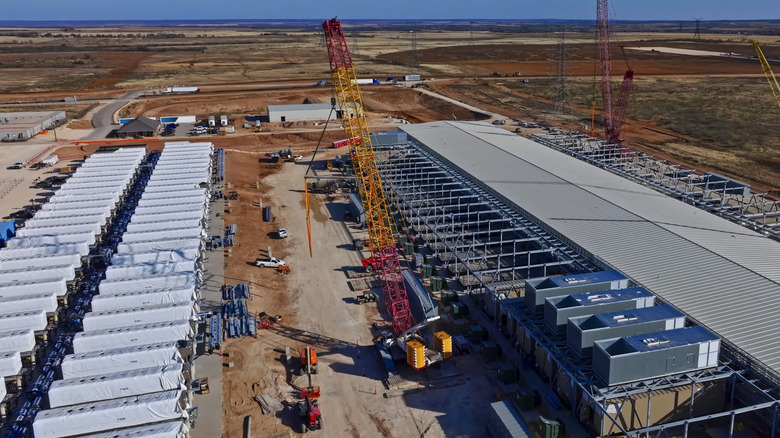
One of the biggest hurdles that companies looking to expand their AI computing capacity face is securing enough electricity to power their data centers. In fact, Musk noted during SpaceX's October earnings call that power generation, cooling, and related infrastructure have become bigger constraints on the company's AI expansion than the availability of the chips themselves. To help alleviate some of those issues, SpaceX is leaning into its existing manufacturing capabilities, including producing gas turbine components using expertise it developed while manufacturing rocket engines.
SpaceX has also expanded its existing facilities at an unprecedented pace. The power generation capacity at the company's Colossus 2 facility, for instance, is projected to grow from just 0.4 GW in January 2026 to 2.4 GW by the end of the year. Analysts have also identified similarly rapid construction at two data centers located at Starbase, the dedicated rocket manufacturing and launch facility SpaceX established in Texas.
SpaceX may also be benefiting from Tesla's manufacturing capabilities. Analysts believe Tesla could be helping manufacture prefabricated electrical and mechanical infrastructure for the company's data centers. This would reduce the amount of on-site work. SpaceX has also secured $40 billion in financing to help fund its acquisition of the GPUs needed to actually put all that infrastructure to use.
SpaceX still has some major hurdles to overcome
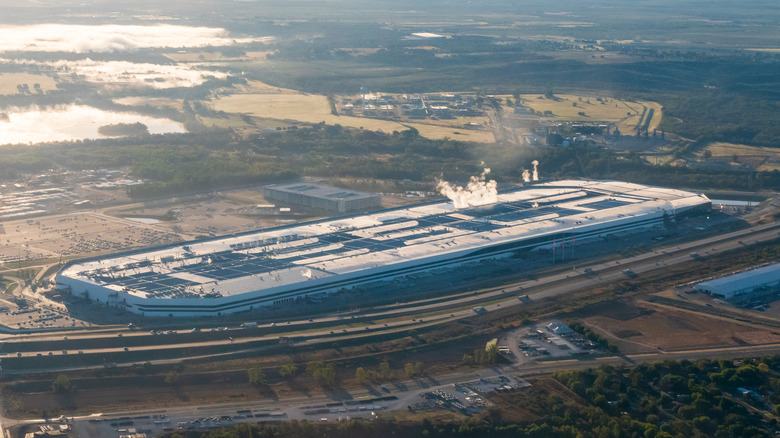
While SpaceX has expanded its existing data centers at an impressive rate, there's no guarantee it can replicate that success across all its planned facilities. For starters, the gas turbines that have helped the company circumvent some limitations of existing power grids have already caused quite a stir among residents near its data centers. SpaceX has also been told to take its last temporary gas turbines in Southaven, Mississippi, out of operation by July 2027.
It's also worth noting that just because SpaceX builds out 13 GW of data center capacity doesn't necessarily mean it will have more actual computing power than Google. Gigawatts are ultimately a measurement of power, not computational performance. The hardware installed in those data centers, and how efficiently it can run various AI workloads, will also play a role in how the two companies stack up against each other.
Beyond its plans to expand its data center operations on Earth, SpaceX also plans to build AI data centers in orbit. Those plans are separate from the company's terrestrial expansion targets, though. For now, the more immediate test of SpaceX's ability to compete with the biggest names in the AI industry will be whether it can maintain the pace at which it has been building and powering its data centers throughout 2027.