

SpaceX Just Revealed That Orbital Data Centers Will Be Here Sooner Than You Think
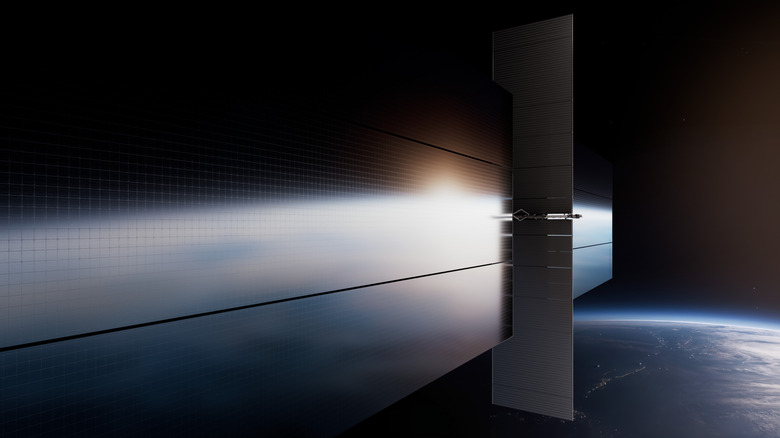
SpaceX has revealed details about when it plans to create an orbital data center called Starmind. The company aims to launch its first satellites in 2027, sooner than many would have thought. While speaking at a Goldman Sachs conference on Sept.10, SpaceX Chief Financial Officer Bret Johnsen offered the latest insights into SpaceX's plans. The company bought xAI in February 2026, and while xAI relies on terrestrial data centers just like any other current compute provider, SpaceX intends to scale its AI workload capacity into space. It aims to create 5–10 gigawatts of terrestrial data center capacity by 2027 and intends to scale further in 2028 as its orbital data center plans unfold.
In June 2026, SpaceX revealed technical details about its first-ever orbital data center during a SpaceX update. The presentation, which featured SpaceX CEO Elon Musk, showed plans for a satellite called AI1, which has a computing platform flanked by two large solar arrays and radiators, and would be capable of initially averaging about 120 kilowatts of power for computing. SpaceX intends to build these satellites at a new Gigasat factory in Bastrop, Texas. SpaceX filed an application with the Federal Communications Commission in January that detailed plans for an orbital data center constellation consisting of up to 1 million satellites.
Can SpaceX overcome the heating challenges associated with AI computing?
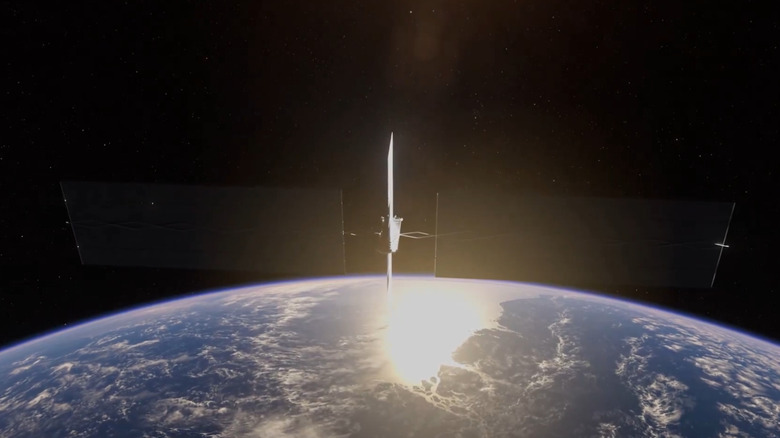
Getting rid of heat generated by AI processors in space is one of the biggest physics challenges holding back orbital data centers. During a Terafab event in March, Musk downplayed this issue as not being a significant concern to SpaceX. "For some reason there's been a bizarre debate about radiators in space," Musk said. "It's safe to say SpaceX knows how to do heat rejection in space with 10,000 satellites in orbit." SpaceX launched its 10,000th Starlink satellite into orbit in March 2026. It remains to be seen if it will be able to overcome these challenges despite Musk's claims.
Musk claims that orbital data centers are not only possible but could be a lot more cost-effective than terrestrial data centers, due to the abundance of solar power in space. Musk made reference to the total cost to get payloads to orbit on SpaceX's Starship vehicle, which SpaceX hopes will offer more economic means of getting payloads to space. "As soon as the cost to orbit drops to a low number, it immediately makes extremely compelling sense to put AI in space," he said.
OpenAI CEO, Sam Altman, has criticized the Starmind concept, challenging the idea that it could provide meaningful AI workload capacity at a realistic cost. Altman cited launch costs and on-orbit hardware maintenance as some of the key challenges with the concept.
SpaceX has already secured multibillion-dollar contracts with Anthropic, Google, and an unnamed customer for AI computing power. The company appears to be sourcing solid investment for its data center expansion plans, but only time will tell if orbital data centers can become a reality.