

SpaceX's First-Ever Orbital Data Center Is Coming With A Powerful Payload
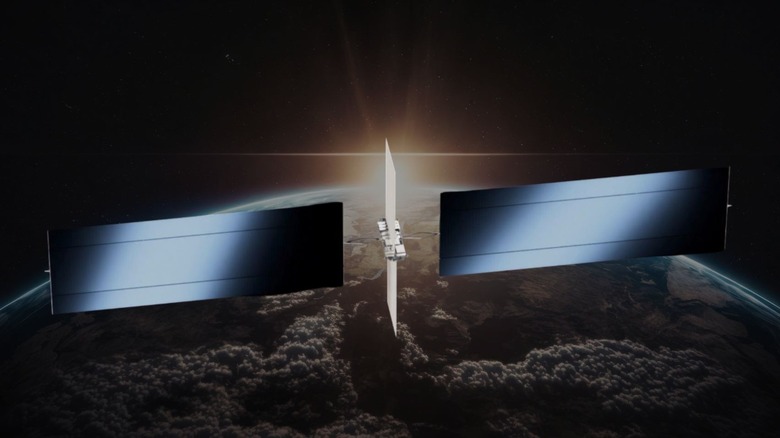
SpaceX has devised a way to outfit its AI1 satellite with an interchangeable compute payload that allows the installation of hardware from any capable chipmaker. Unveiled in a video posted on X, AI1 is the first-ever orbital data center and satellite, designed to run compute operations from space. It's purported to have a 150 kilowatt peak output, producing 120 kilowatts on average, with an efficiency of 70 kilowatts per ton. The power will be delivered through a 150-kilowatt solar array built into the craft, which should provide 250 watts per square meter of power — all of it using SpaceX-manufactured technology, minus the powerful payload.
The interchangeable chipset is a big deal here because it's how the company aims to address market challenges that could effectively hold back the project. SpaceX previously reported, as shared by Tom's Hardware, that it couldn't supply enough chips for this very same orbital project, which is part of a joint venture with Tesla and its TeraFab solution. Allowing the platform to remain open to all capable vendors means SpaceX can install whatever is most competitive at any given moment, whether it is readily available, cheaper, or more powerful.
In the video, Musk estimates that the compute payload of AI1 is the equivalent of a single Nvidia GB300 rack, which requires about 140 kilowatts of power back on Earth. For cooling (which is more challenging in the vacuum of space, since traditional methods aren't viable, as waste heat has no materials to dissipate into), AI1 will also be equipped with 110 square meters of deployable liquid radiators. Additionally, pumping loops are installed for redundancy, alongside micrometeroid shielding, which should help fend off debris.
What's so powerful about the payload?
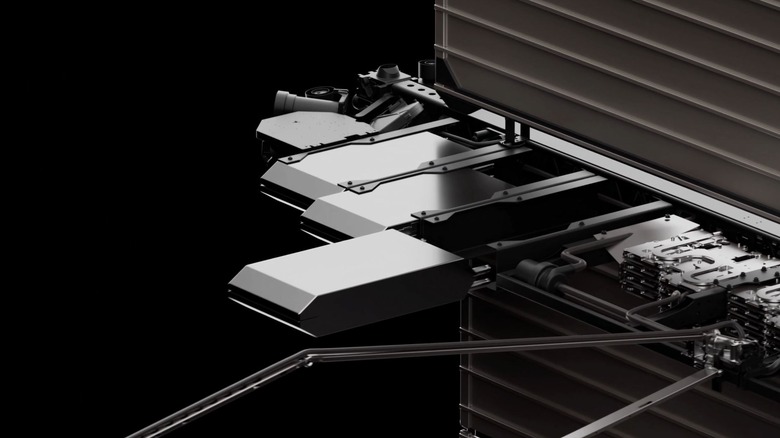
The modularity or open design for AI computing chips is what makes the AI1 so powerful from the get-go. Simply put, an AI data center is the facility or location that houses the IT infrastructure for the "compute" operations. Those operations are training, deploying, and delivering AI applications and services. AI workloads have incredibly high demands for data storage (hard drives), high-speed memory (RAM), and processing (data center GPUs and CPUs). When you look at what makes Nvidia's AI accelerators different from regular GPUs, like the H100, it's all about computing tasks, processing, and math handling, versus visual or hardware logic for graphics. In layman's terms, they need lots of power. Lots of compute power, to be exact. Being able to swap out for what's available, what's most powerful, or what's most efficient will absolutely make the AI1 satellites both extremely useful and future-proof.
For now, constraints are driven by hardware shortages and market complications, but eventually it may become more about which hardware is most powerful to include in the satellites to maximize compute power. As Musk says, "Seems like a reasonable place to start is 150 kilowatt peak, 120 kilowatt sustained." The initial models will be a "draft version of Version One of the SpaceX AI satellite." It's not a leap to imagine future versions or generations of the AI1, with more powerful hardware, thanks to its open design.
Why is AI1 such a big deal in the first place?
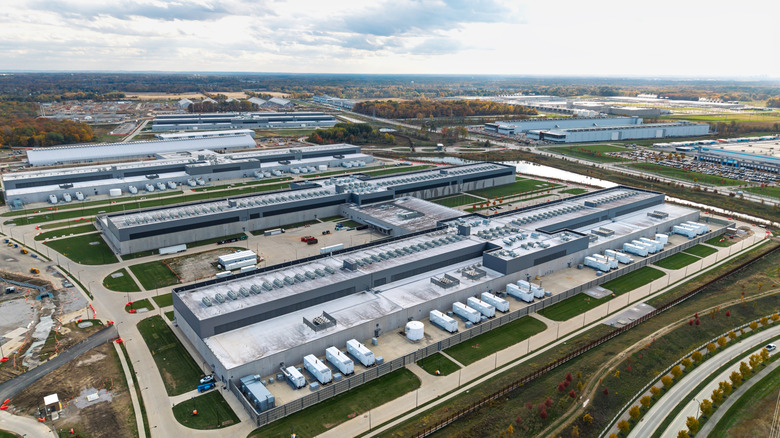
AI1 will be SpaceX's first-generation data center operating in low Earth orbit. With data centers consuming monumental resources back on Earth — one tech company even wants to put mini data centers in your home — space-based data centers have been proposed as a viable alternative. But the idea has its detractors. Nvidia's CEO, Jensen Huang, discussed several reasons we don't put AI data centers in space, namely the cooling challenges and the inordinate costs of launching hardware into orbit. Some critics, like the CEO of Amazon Web Services, believe the technology required to make it happen is "just not economical."
AI1 is SpaceX's answer to the challenge and will be expressly running AI compute workloads from orbit, fully powered by solar power. If it works out, more of that compute power could be offset to orbital hardware rather than taking up valuable resources back here on Earth, land and water most of all. Companies are becoming more creative about where data centers are located, such as China's new underwater and wind-powered data center. However, we still have Earth-based operations in progress, such as Kevin O'Leary's rural Utah center.