

Your Apple TV Is Probably Plugged Into The Wrong HDMI Port - Here's Why
We may receive a commission on purchases made from links.
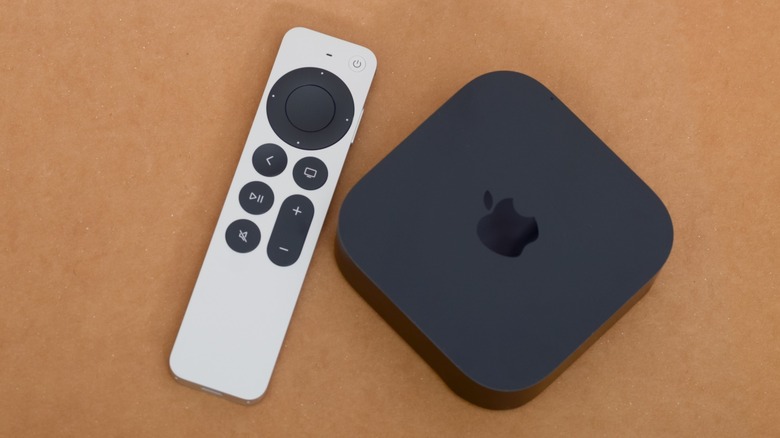
The Apple TV 4K is a highly-rated streaming device that gives you access to popular apps such as Netflix, Hulu, and HBO Max, on top of Apple ecosystem features that synergize with iPhones, MacBooks, and Apple HomeKit devices. That said, if you're looking to get the best picture and sound quality when streaming with your Apple TV, you will want to make sure the device is connected to your TV's HDMI Audio Return Channel (ARC) or Enhanced Audio Return Channel (eARC) port. You'll also want to use an Ultra High Speed HDMI cable that's rated for up to 48Gbps transfer speeds.
As the name implies, eARC is an "enhanced" version of ARC, but what exactly does that entail? As with most forms of data, the difference is the result of bandwidth and speed. An eARC port accepts much higher bandwidths, which means more data for less compressed audio. While you can hook up your Apple TV to any of your TV's HDMI ports, connecting to HDMI ARC/eARC on your TV ensures your Apple tech can process lossless audio streams up to 48kHz.
Do keep in mind that none of the older, non-4K Apple TVs support the HDMI ARC or eARC feature, and neither does the first-gen version of the Apple TV 4K that released in 2017.
ARC/eARC: The magic lane for your streaming device
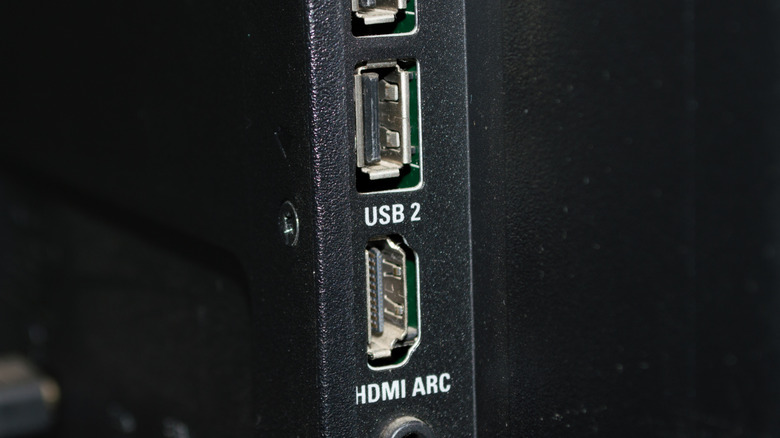
Your TV's HDMI ARC/eARC port uses HDMI technology to transmit visual and audio data simultaneously between a source device (like the Apple TV) and host hardware, be it a TV or projector. If you've ever wondered if it matters which HDMI port you use on your TV, know that sometimes the Apple TV 4K gets finicky when it's not connected to an HDMI ARC or eARC port. The primary issue you'll run into when not using the ARC/eARC port is diminished audio quality. You'll still hear audio, but it won't be taking advantage of the ports' larger bandwidth, and it might sound a little muffled compared to the clarity that eARC provides. Additionally, though it may have more to do with the type of HDMI cable you use, some users report not being able to use HDR. If you're seeing problems with your HDR, and you're not plugged into the ARC/eARC port, consider making that simple swap.
Connecting your Apple TV 4K to your TV's HDMI ARC or eARC port helps cut down on any annoying connectivity glitches you may encounter. When plugged into HDMI ARC/eARC, your TV treats the Apple TV 4K as a top-priority device, which often results in improved signal paths and fewer errors altogether.
One wrong port can ruin the party
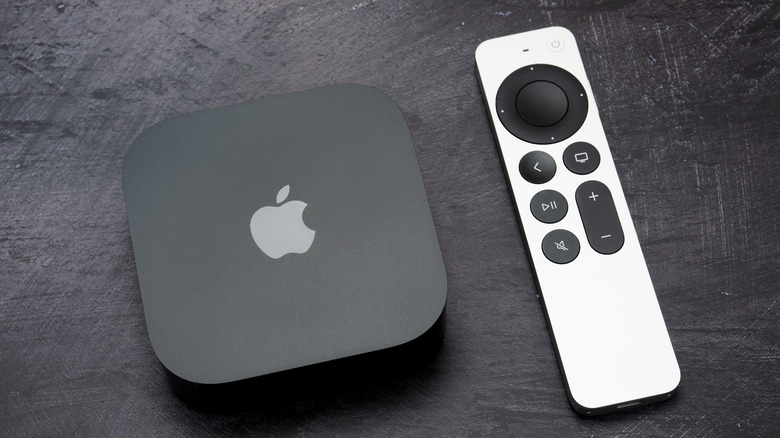
Fortunately, bypassing the ARC/eARC port isn't a dealbreaker, but it can limit your Apple TV 4K's capabilities. When you're routing everything through a receiver or soundbar with HDMI switching, remember that not all HDMI inputs are created equal, even on high-end hardware. Many receivers reserve 4K/60Hz or 4K/120Hz support to just one or two ports, which means connecting the Apple TV to the wrong jack can bottleneck your video or block advanced audio formats entirely. This is why it's worth taking an extra minute to map out your connections.
When plugging everything in, make sure the Apple TV is feeding into a true 4K HDR-ready input on your receiver or soundbar, and that the receiver's HDMI ARC/eARC output is using a proper 48Gbps Ultra High Speed Cable. This chain of compatibility helps ensure crisp HDR highlights, buttery framerates, and zero audio dropouts — exactly what you want when you're invested in one of the streaming box's best shows of the year.