

Hyundai's EV Software Might Be Locking Owners Out Of Repairs
It's important to have the option to repair products you buy yourself and own. Dubbed "Right to Repair," this concept aims at fairer consumer or end-user practices both legally and socially. It also advocates for making repairs and parts both affordable and accessible to all, seeking to prevent interested parties from forms of price gouging.
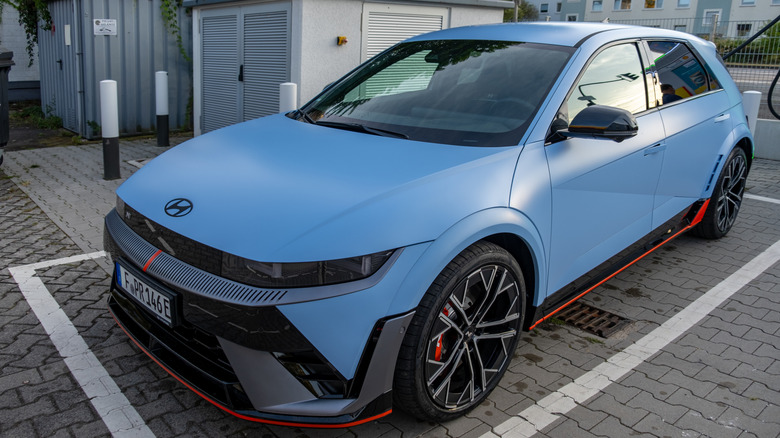
Now, one Hyundai Ioniq 5 N owner (going by SoultronicPear on Reddit) has claimed that the manufacturer has blocked drivers from conducting routine brake work on their own. Through locked software, and the required use of proprietary and paid tools, the brake replacement process is stymied for would-be DIYers.
The problem cited by said owner is Hyundai's unique "J2534 Diagnostic Tool" software, which is Windows-based and requires a paid license to use, in addition to requiring a specialized adapter. In order to change out brake pads, the Ioniq's electronic parking brake must be disengaged and reset digitally using the software. Moreover, the J2534 adapter needed to reset the brake allegedly costs about $2,000 at the low end because it must be an officially approved model, limiting availability. When you do a quick search for these types of tools on Amazon, there are many that are cheaper. It's unclear if they'd work, but $200 to $250 is still a lot to pay to find out.
Of course, the icing on the cake is that Hyundai's licensed dealers may not even use the same software or technology to repair and diagnose vehicles — reports suggest they use an Android tablet-run package. The jury is out as to whether electric cars might be cheaper to repair in the long run, but does that even matter if manufacturers are locking down access?
More DIY speed bumps than necessary

User SoultronicPear also outlined more hurdles to overcome for Ioniq 5 N owners looking to simply replace their brakes. The Windows diagnostic software package has not been updated to work with current generation models. That functionality appears to be dealer-specific, which means even if you invested the money in the software, you may still have trouble getting it to work correctly. Attempting to update also requires a National Automotive Service Task Force (NASTF) login, a credential required to allow technicians, mechanics, and locksmiths access to security-related systems. In short, there's almost no reason for your average vehicle owner to sign up and use the platform — at least previously.
Also potentially problematic is the invasive data collection necessary to use the software. SoultronicPear explained that while using the diagnostic tools, the developers collected information from his PC and vehicle, giving him little say in the matter. Ultimately, SoultronicPear outlined many unnecessary barriers presented to bar him from engaging in a largely mechanical process, one that should only involve securing the vehicle, removing the wheels and components, then servicing the brakes.
This report begs the question: Is this what the future of modern vehicle ownership looks like? Independent mechanics are also worried about this problem, too. Furthermore, most EVs are somewhat unreliable when compared to gas-only variants, at least as companies work out the growing pains. Being able to DIY repairs and maintenance is important to keep costs down for many vehicle owners. With federal EV tax credits having expired, reliability a concern, and potential blocks on DIY repairs, it's no wonder EV adoption hasslowed.