

The Music Trend That's Replacing Spotify And Apple Music For Some
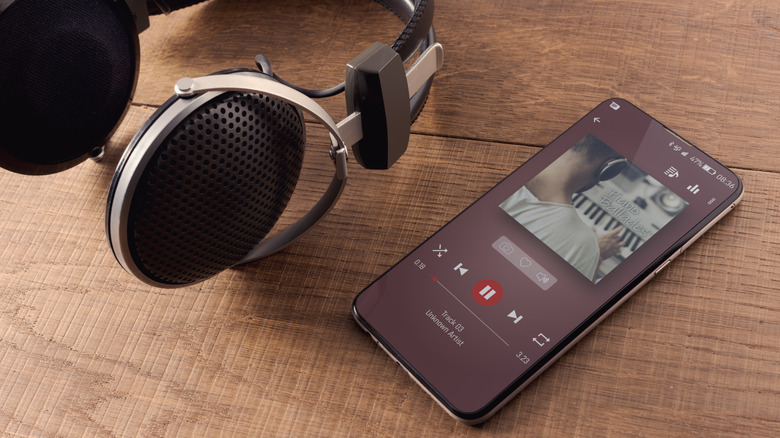
In 2025, streaming services — commonly Spotify and the many competing music streaming services — are the most common way people listen to music. In fact, according to a Forbes report last year, nearly 85% of the music industry's revenue comes from streaming services. It's not surprising, as a subscription to one of these services essentially grants you access to almost any song you could ever want to hear at a moment's notice. But the problem, for some users, lies inherently in the concept of streaming — namely that you don't actually own the music you're listening to. This lack of tactile experience, or a sense of permanence, is driving some listeners back to a more technologically primitive form of media: the vinyl record. Vinyl fans point to differences in the sound tied to the format itself as an attraction to the medium, as well.
There's an emphasis on the phrase "some listeners" here, because while vinyl listenership has certainly grown in the past decade or so, it's not dominating the space compared to streaming. Take this in-depth look from Statista. It noted that though vinyl "accounted for 8% of U.S. music revenue," it's nowhere near the massive peak it saw in the late '70s. The fact remains, however, that the practice of listening to vinyl is seeing growth — and that 8% revenue figure is nothing to sneeze at. So why are people turning back to those large, grooved discs?
How vinyl is different than other forms of recorded music
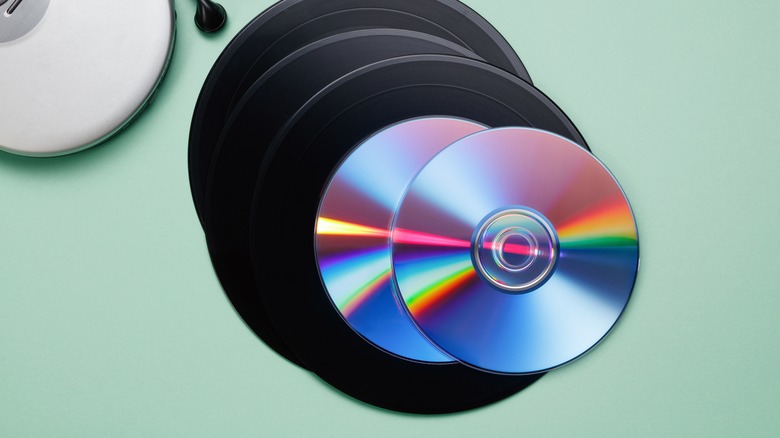
In discussing the cause of vinyl's resurgence, one might examine elements which make vinyl unique — particularly in comparison to more modern music formats. In simple terms, vinyl is an "analog" form of music recording, meaning it takes the sound waves produced in the real world and transfers those continuous vibrations right onto another form (in this case, actually pressing grooves into a vinyl record). This means that, theoretically, vinyl records present a more accurate reproduction of an original recording than digital equivalents. In practice, wear-and-tear on the grooves and other physical impediments may present less-than-lossless experiences — the crackle, pop, and hiss most associate with listening to vinyl records being one example.
Looking at more modern digital formats tells a different story. Let's take CDs as an example. Because they're a digital format, they require an analog signal to be converted into a digital file. That means it won't be a direct analog feed of the music, but rather a digital approximation with a certain resolution. CDs typically use 44.1 kilohertz, 16 bits of resolution, which many listeners might find adequate, but which does not match the fidelity of lossless audiophile formats such as FLAC. Streaming services, on the other hand, sometimes offer lower-resolution or compressed sources — although higher-quality streaming formats do exist, and Spotify recently announced lossless streaming for those who subscribe to its premium tier.
The nostalgia and merch factor
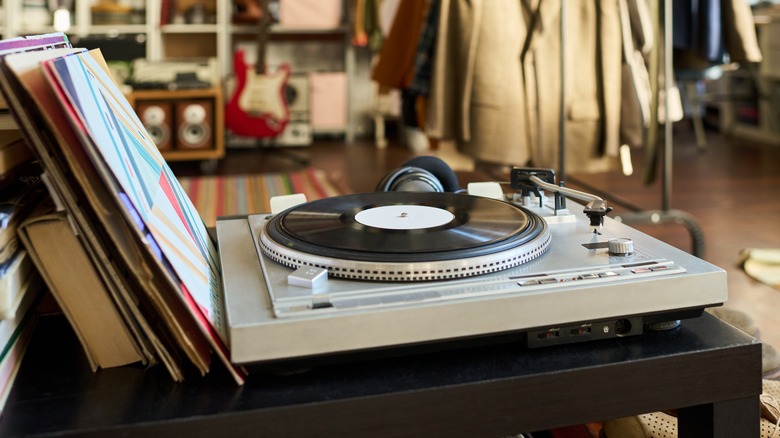
Those pops and artifacts commonly encountered while listening to a vinyl record? That's actually the whole point for some listeners. Proponents argue that analog sound in a vinyl format comes with organic warmth that embraces imperfection, offering the experience of hearing an album or live performance as close as possible to how it was recorded. This experience, for some, presents a welcome alternative versus a more sterile or mechanical sound put forth by digital formats.
Then there's the physical, tangible thing you get to hold in your hand. Streaming services just can't compete with full-bleed, double-panel album art featuring lyrics artfully presented within the liner notes. These keepsakes have become popular ways for modern artists to tap into a new merchandise market. Fans go to live concerts and want to physically take home their favorite album as a souvenir, and vinyls are an appealing way to do just that.
So while there's much ado about streaming services paying a fraction of the royalties they once did, vinyl can be a way for artists to feel a real return on their investment for recording a well-written, well-crafted album. At the end of the day, vinyl is unlikely to replace streaming for most listeners; the convenience factor presents a significant barrier in this regard. But, many streaming listeners are turning to the medium for a renewed relationship with the music, and the artists, that they love.