

The Google Pixel 10 Is Great, But The Smart Money Buys A Cheaper Phone

The good, better, best strategy is used by a variety of phone makers, usually with a "pro" model followed by a similar, larger one with a moniker like "Plus" or "XL" to describe the massive screen. Then, there's a base model, the bare bones option for those who want to save a bit of dough and don't need all the bells and whistles of the premium devices. But lately, brands like Google have been developing affordable budget options. With Google, these fall under its "a" series.
It makes you wonder, then, what's the real difference between a base model phone and an "a" series one? Indeed, there are usually small differences in feature set, durability, materials, cameras, or battery life. But while the Google Pixel 10 is a fabulous phone, the smart buy is to actually go with something else, notably the previous-generation Google Pixel 9a. It's still a current phone, has the same main rear and ultra-wide cameras, and affords access to AI features. Sure, it's a step down in other ways, including materials, processing, RAM, and charging speeds. But for average users, it's likely more than enough.
The Pixel 9a is a powerful phone
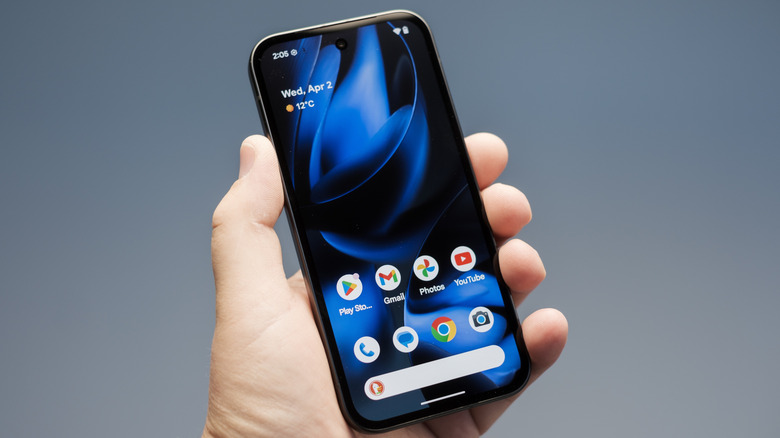
The Google Pixel 9a might be a generation older, but it's much cheaper, still gets six years of software and security updates, and isn't a massive step down. It has a less powerful processor and less RAM than flagship Pixels, but it's still a powerful phone. The glass back has also been replaced by plastic, but you'll likely (and should) have a protective case on either device anyway.
Its screen is slightly less bright, but more than enough for the brightest conditions, and it only has a dual rear camera system versus the Pixel 10's triple rear camera system. But the main and ultra-wide cameras have the same resolution at 48MP and 13MP, respectively. All it's missing is the 10.8MP telephoto lens from its more expensive sibling.
Finally, it also has many of the same AI features, though the Tensor G5 chip in the Pixel 10 can handle more powerful AI processing than the Tensor G4 chip in the Pixel 9a. If you're only using the AI features sparingly, however, this might not matter to you. Charging speed is also slower. The Pixel 9a supports 23-watt wired charging and only 7.5-watt wireless charging. The Pixel 10 supports 30 watts wired and 15 watts wireless via Qi2. You will get all-day battery with either phone.
Flagship Pixel series vs. a series
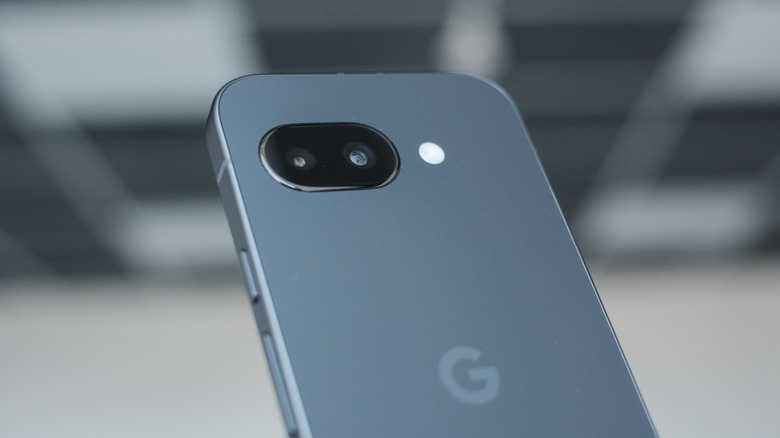
No matter which generation Pixel phone you choose, you'll find value in getting the "a" series variant over the flagship one, or even other cheap Android phones. It costs much less with only minor step-downs in features, processing power, cameras, and design. Most people who value these upgrades would likely fork over the extra money for the Pro-level phone versus bumping to the mainline one, since those provide more significant upgrades.
It's suspected that Google will release a Pixel 10a variant sometime around March 2026 if the company sticks with its usual schedule. Some expectations for it include a boosted version of the Tensor G4 chip, faster charging, and potentially different screen sizes. Comparing it to the Pixel 10's feature set, you might find it's the better deal if you're willing to wait.
But even the Pixel 9a, which launched in April 2025 and remains one of Google's most overlooked Android phones, still offers great value and will be more than enough phone for most. So, skip over the mainline Pixel phones and jump right to the "a" series to get a similar phone while saving some money.