

8 Smart Home Upgrades That Can Actually Save You Money
We may receive a commission on purchases made from links.
"Smart home" is a term that's thrown around pretty loosely in 2025, and it carries a different meaning for everyone. To some, a smart home is just a normal house with a fancy security system. To others, it's about buying every internet-connected device for the most convenience. Whichever camp you're in, it's no secret that the market is filled with all sorts of tech that promises to make your life easier and save on monthly running costs.
Of course, there are lots of choices. Couple that with the fact that some smart home companies have been caught spying on users through cameras (specifically the Amazon brand Ring) rather than cutting costs, and picking the right gear becomes ever so difficult. This is exactly why we scoured the internet to find the eight best smart home upgrades that will save you money without jeopardizing home security.
Smart bulbs
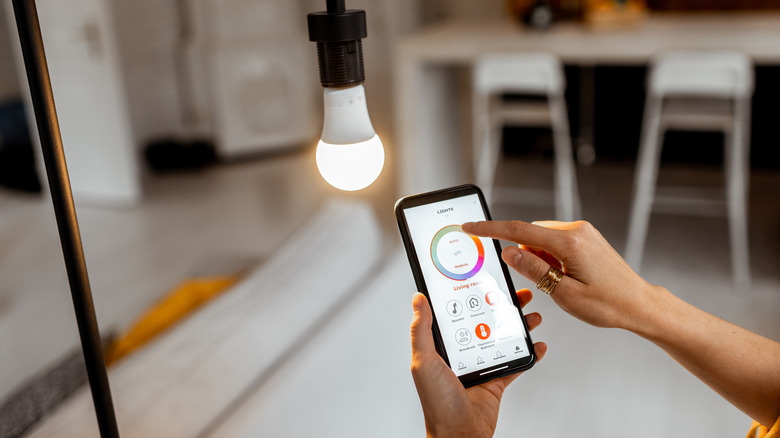
When smart bulbs first came around in 2012, they were expensive, often costing at least $200 for a small kit. Thankfully, with advancements in tech (and more competition), smart bulbs today are arguably the best home upgrade that saves cash. These devices replace regular incandescent models and can change the whole vibe of a room from a sterile hospital look to something straight out of a '90s disco. Your imagination is truly the limit since most of these bulbs can display over 1 million colors.
It's not just about aesthetics, though, because such bulbs have Wi-Fi connectivity and integrate directly with a smart home system, letting you control them from anywhere in the world. You can create a routine that dictates when the lights should be turned on, or you can even configure them to work in tandem with a motion sensor, lighting up only when someone is passing down the hall. All these features translate to approximately 75% lower energy consumption.
While the type of bulb you need will vary depending on your home, one great option is the Wiz 60W A19 Color Smart LED Bulb. It's rated 4.3 stars and costs just $11 on Amazon. Users who spent their hard-earned money highlighted the bulb's easy setup process and its even light distribution throughout the room. The model comes with a range of customization options, including a circadian-rhythm mode that adjusts the white balance based on the time of day. For people looking to cover a larger area, the Wyze Smart Bulb, which costs $23.99 for a two-pack on Amazon, is a decent option, as it reaches up to 1,100 lumens and supports both Amazon Alexa and Google Assistant.
Smart plugs
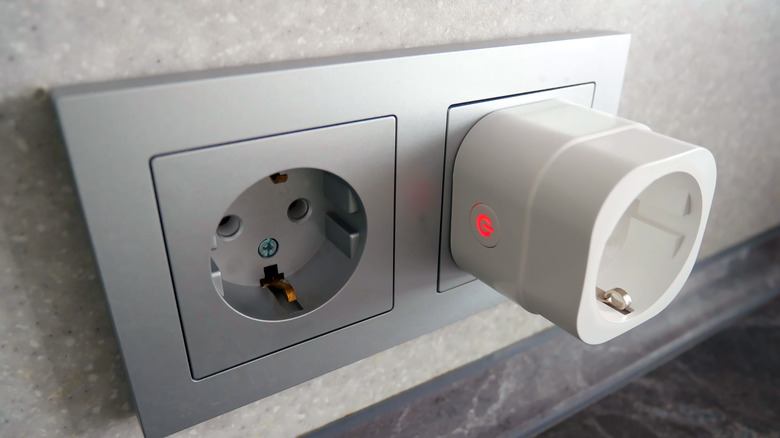
Since changing all the appliances at home to smarter alternatives is an expensive endeavor, smart plugs are the way to go. They're cheap, hook right into the existing socket, and transform your "dumb" devices into smart ones by connecting to the internet and letting you remotely control power from anywhere in the world. So now, if you forget to turn off the lamp before leaving home in the morning, you can turn it off so it won't keep drawing power. Certain plugs even connect with digital assistants and examine how much energy an appliance is drawing. This can be especially useful for identifying devices that consume vampire power. For the uninitiated, the term "vampire power" refers to the extra energy some older appliances continue to draw even when not in use.
Choosing which plug to buy, though, is not that simple. The market is filled with all sorts of smart plugs that cater to different needs. One great option is the Kasa Ultra Mini, which costs $9.99 on Amazon. It was our top pick on the best smart plugs list because its app is simple to use and offers different modes for scheduling power and configuring automations. If buying smart plugs doesn't match your aesthetics, smart home outlets are also an option. For context, devices like the Eve Energy outlet replace your existing outlet, let you control any connected device, know how much power each device is consuming, and schedule power. Although the outlet is pricey at $54.95 on Amazon, it connects with all smart home ecosystems thanks to Matter and Thread support.
Smart thermostats
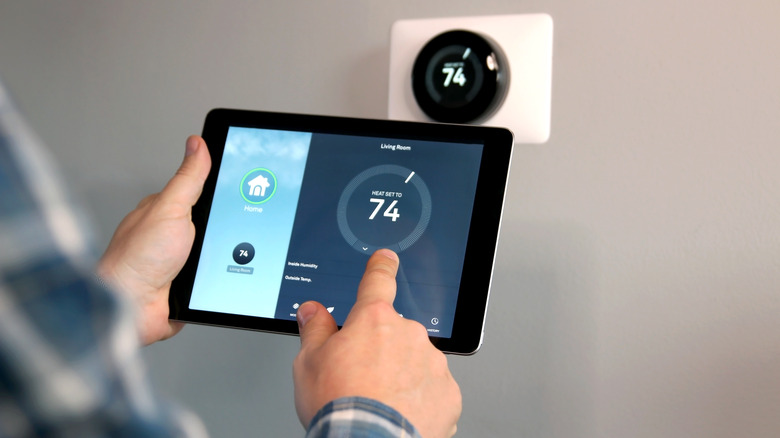
Normal thermostats work strictly on user settings, either heating or cooling the room without question. While this technique is effective, it's not entirely energy-efficient. According to a report from the U.S. Energy Information Administration, over half of U.S. households' energy consumption goes into managing temperatures. Sure, this data will vary by location, but given the recent threat of AI increasing your power bill, investing in a smart thermostat can help you save money.
The Ecobee Smart Thermostat Premium is a great option that lets you control the house's temperature from anywhere in the world, so the heater you forgot to turn off won't keep wasting energy for no one. Beyond that, the thermostat monitors air quality and automatically pauses heating or cooling if any door is left open for more than five minutes. The device is compatible with almost all smart home ecosystems, including Amazon Alexa, Apple HomeKit, Google Assistant, IFTTT, and Samsung SmartThings. Plus, it also doubles as a smart speaker. Unfortunately, the Ecobee Smart Thermostat Premium does cost a pretty penny, and that number is $243.99 on Amazon. If you're on a budget, Ecobee's Essential Thermostat is a great alternative that costs just $139.99 on Amazon. It keeps the necessary features like the ability to control home temperatures, the touchscreen, and support for digital assistants, but omits the air quality monitoring system and speaker capabilities.
Smart leak sensors
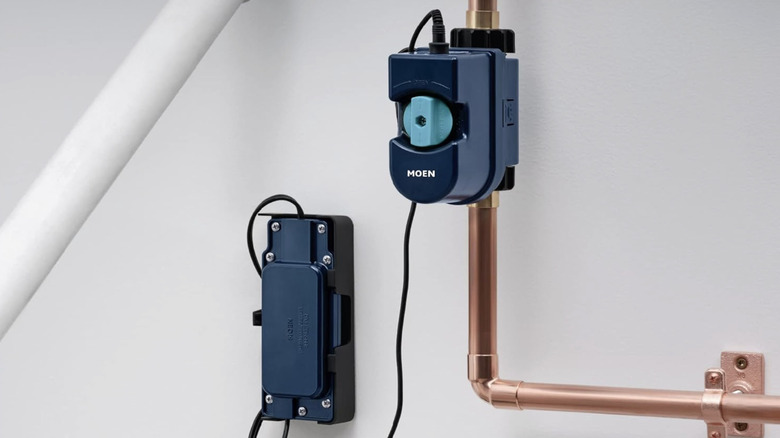
Tap water, at least in the U.S., costs money, and the price varies by the city you live in. Keeping this in mind, preventing leaks could be a great way to save cash. Unfortunately, while big leaks are generally noticeable, it's the smaller ones that do the most damage and are the hardest to find. As a result, U.S. households waste nearly 1 trillion gallons of water every year, according to the Environmental Protection Agency. Smart leak sensors, some of the most overlooked smart home accessories, solve this exact problem. These devices are installed in water-consuming appliances (such as dishwashers, toilets, and heaters) to monitor water usage and detect leaks. They can even send alerts to your phone, allowing for quick fixes.
On the market today, there are plenty of leak sensors that do the job. One such option is the First Alert L1 Wi-Fi Water Leak Sensor, which costs $72.69 on Home Depot. Real users and experts have highlighted the sensor's ability to detect the smallest of leaks quickly. It can cover up to 500 feet using the extension cables (sold separately) and monitors when the water in your pipes is about to freeze. While the sensor does not work with any smart home platforms, users say its app is pretty simple to use. For people looking to monitor their home's total water usage, the Flo by Moen system is the next best bet. The device generates reports on consumption for each device and alerts you to potential leaks by continuously tracking pipe pressure. Just note that the system requires professional installation and is a bit pricey, costing $581.99 on Amazon.
Smart sprinkler system
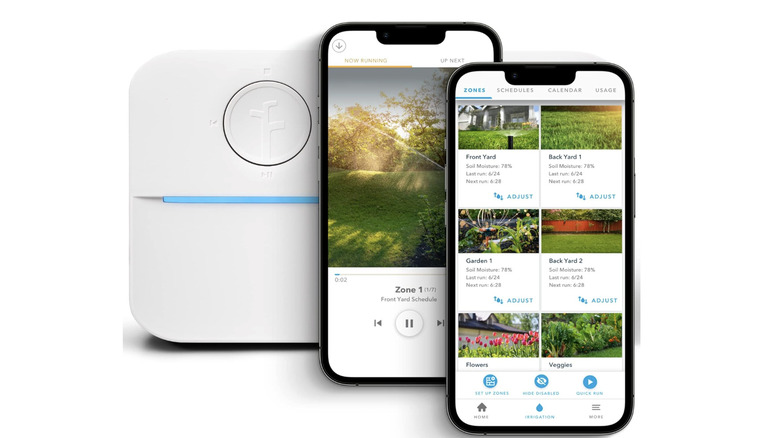
Having a lawn outside your house is great — it gives you an open space to sit back in the sunshine or let the kids play. Of course, part of owning a lawn is also doing maintenance. You need to constantly water the grass to keep it fresh, and for most people, the easiest way to do so is with a sprinkler system. While these networks water the lawn at specific time intervals, they offer little flexibility in response to weather changes. After all, nobody wants their sprinklers working just after a full day of rain. That's where a smart sprinkler system comes in. It can monitor weather data and use in-ground moisture sensors to determine when to spray water and how much. Most also sync with a mobile device, allowing you to keep an eye on weather reports and schedule the sprinkler to run — even at off-peak electricity hours — to save cash.
Regarding specific recommendations, experts in the field have been pleased with the Rachio 3 Smart Sprinkler Controller, which costs $199 on Amazon and comes with a slew of features, including the ability to schedule the sprinkler for specific times of day, in accordance with different seasons and weather conditions. The setup process, according to real users, is pretty easy. The app can configure multiple zones, and the system works with voice assistants like Siri, Amazon Alexa, and Google Assistant. If you're on a tight budget, then the Orbit Smart Indoor Sprinkler Controller, which costs $111.79 on Amazon, is really good too. It can also water your lawn automatically by keeping an eye on the weather reports and integrates with Amazon Alexa and Google Home.
Smart home security systems
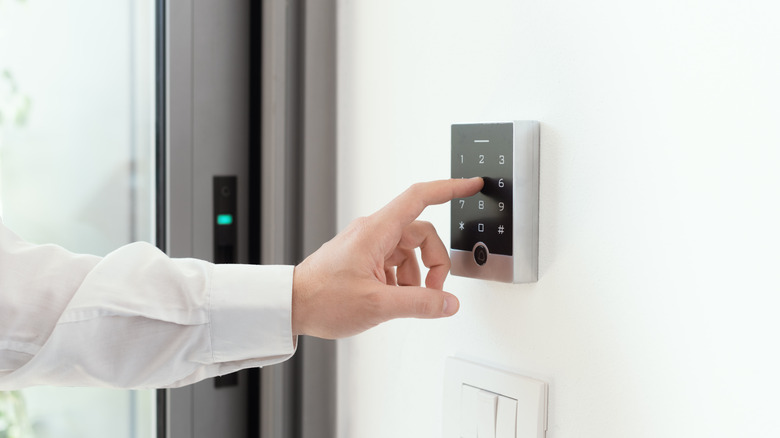
On paper, smart home security systems protect your home from theft and vandalism by continuously monitoring the surroundings for any unwanted things or people. While saving your belongings is a great way to save money, there is another way in which these systems can reduce your bills, and that's through insurance. Because security systems decrease the risk of robbery, insurance providers often offer discounts to encourage people to install them. Some have even been offered reduced premiums, often in the range of 2% to 9%. It's important to note that to qualify for these rebates, different insurance providers typically recommend different systems and require professional installation.
Keeping that in mind, the SimpliSafe Smart Security System, which also topped our list of the best home security systems, is a really good choice thanks to its easy setup (no professional help required) and optional monitoring plan. The starter package costs $239.99 on Amazon and comes with a base station, one outdoor security camera, a keypad, three entry sensors, and another motion sensor. There's cellular and Wi-Fi connectivity as well. Unfortunately, the SimpliSafe system has limited integration with other smart home platforms (only Amazon Alexa and Google Assistant). If that's a priority for you, the Abode Iota All-In-One Security Kit is the next best bet. It's priced at $249 on Amazon and comes with a security hub that houses a 1080p camera, along with one key fob and a door/window sensor. Most importantly, it's compatible with up to 160 other smart devices and supports Amazon Alexa, Google Assistant, Apple HomeKit, and IFTTT.
Smart smoke detectors
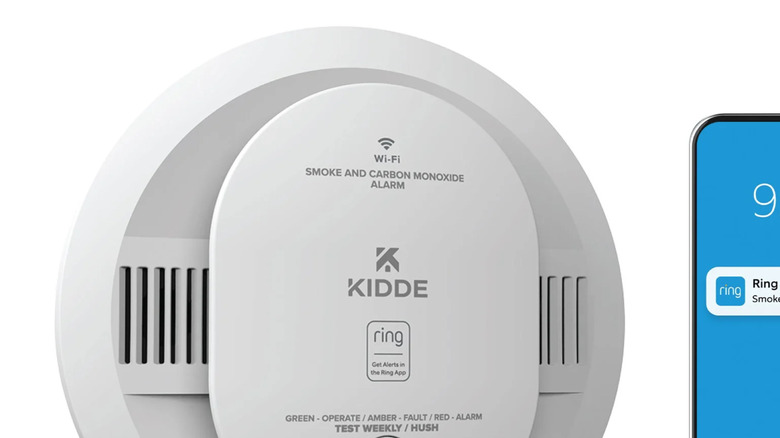
It's no secret that smoke detectors are essential for alerting people about potential fires and saving lives. And according to many experts, if there is one thing you should invest in to make your home smart, it's a smart smoke detector. These devices work essentially the same way but add the convenience of alerting your phone in case of an emergency, which is really important when you're not home. Some detectors can even work in tandem with other smart devices to call for faster rescue services and adjust the ventilation system.
Fortunately, smart smoke detectors aren't very expensive, and the best one, according to experts, is the Kidde Smart Smoke detector, which costs $74.97 on Amazon. It's capable of detecting both slow- and fast-burning fires and also monitors carbon monoxide levels. Reviews say the alarm does a decent job of differentiating between cooking smoke and the real deal. If you have a Ring smart home system, Kidde also offers a $74 Ring-compatible version that, when activated, automatically connects to professional monitors who can notify your local fire department in case of a fire. For all the Nest Protect users, there's the First Alert SC5 Smoke Detector system, which costs $129.99 on Amazon. It tracks both smoke and carbon monoxide and has a reliable alerting system, according to the reviews.
Smart appliances
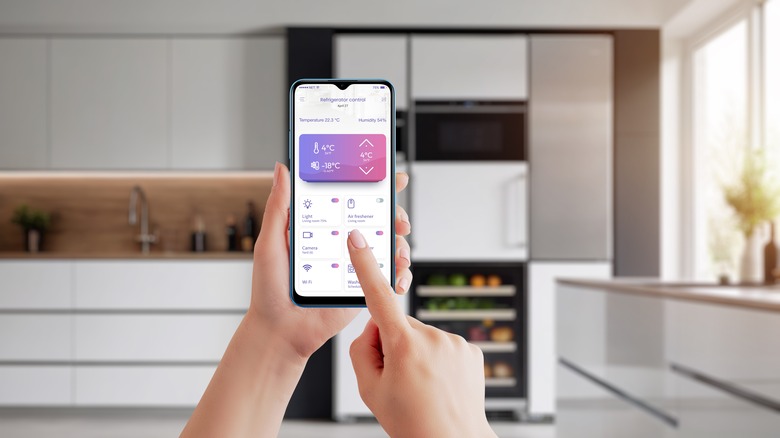
Smart appliances like a fridge or washing machine seem like a really costly upgrade on paper. After all, your old models might work just fine for years to come. However, investing in newer appliances can also save you money down the road, for a few key reasons. First, newer models have better energy ratings (represented by stars) and can save on electricity costs every month. Beyond that, appliances like smart fridges keep track of inventory, notify you when supplies are running low, and some even alert you when produce is about to expire. With these perks, you can prevent food spoilage and reduce waste, which is always a plus for your wallet.
Similarly, smart washing machines track energy and water usage, generate regular reports, and can even configure themselves to run during off-peak electricity hours. There are many washing machine brands in the market today, but the best ones are Samsung and LG. Their washing machines consistently rank at the top for reliability, cleaning experience, and integration with smart home ecosystems.