

Intruders Can Use Wi-Fi Jammers To Evade Your Home Security - Here's How
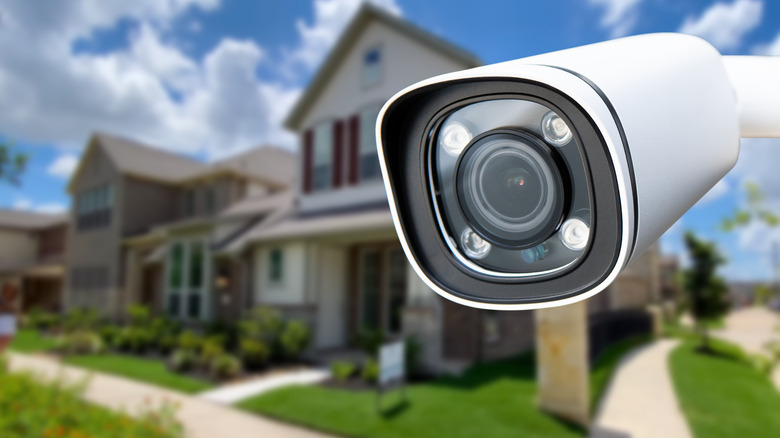
Technology has found its way into just about every facet of our lives, with one of the most prominent recent examples being smart home upgrades and security. Unfortunately, with better consumer technology comes newer and more devious means of subverting it, utilized by bad actors and dangerous individuals. In the specific case of smart home security, burglars and thieves may try to use Wi-Fi jammers to hinder your signal and disable its connected devices.
A common thread between most forms of smart home security is that the system is interlinked via your home Wi-Fi signal. Should that signal be disabled or compromised via Wi-Fi jamming, your home security could go with it, and a burglar could waltz right in. The good news is that the technology behind Wi-Fi jamming is, itself, full of holes, so as long as you understand how it works, you can take countermeasures to ensure bad actors can't break into your system or home.
Wi-Fi jammers can compromise wireless security

As the name implies, a Wi-Fi jammer is a compact device designed specifically to hinder, scramble, or otherwise interfere with your Wi-Fi signal. These jammers can take on a few different forms, from handheld, battery-powered devices to bigger modules meant to sit on a desk. In a nutshell, Wi-Fi jammers produce a field of influence within which Wi-Fi simply doesn't work.
This can be accomplished in several different ways depending on the format of the jammer; for example, it could flood a network with constant signals to prevent other devices from connecting, or it could produce fake signals to confuse the network and trick its connected devices. Wi-Fi jammers are only supposed to be used by police or military personnel for safety and security purposes. In fact, the public sale of Wi-Fi jammers is banned in the United States by the FCC.
Even so, criminals have ways of obtaining banned items, such as black market purchases. With a Wi-Fi jammer in hand, a burglar could, in theory, use it outside of your home to attack your personal Wi-Fi network and disable its devices like cameras, motion trackers, and alarms. Even if they couldn't be disabled completely, the signals would be severely impacted, which could cause them to miss alerts or slow the rate of reporting.
Better smart home tech can combat jamming

While Wi-Fi jammers sound intimidating, the good news is that it is exceptionally difficult for criminals to obtain these devices, let alone use them. The odds of a common criminal actually obtaining a functional Wi-Fi jammer are low at best due to the stringent laws around their sale and use. Even if they did get one, using a Wi-Fi jammer is not as simple as walking up to your front door and flipping a switch. Jammers only work if you know a network's frequency and the devices connected to it.
To obtain this information, a burglar would have to case your home and spy on your Wi-Fi network, which could leave them open to being caught on security cameras or you could catch them connecting to your signal. It's for these reasons that actual reports of successful Wi-Fi jammer use by burglars are few and far between. There have been some incidents with presumed usage of Wi-Fi jammers due to alarms not triggering, but this is merely speculation on the part of authorities. Even so, if you're concerned about a burglar attacking your network in this manner, there are a couple of measures you can take.
Like using a smart security system that's shored up against jamming attacks. Certain brands like SimpliSafe have failsafes that automatically send reports if a jamming attack is suspected. You might also opt for smart security cameras that are connected directly to your home network via an ethernet cable instead of Wi-Fi, which makes them impervious to jamming.