

The ROG Xbox Ally Is Great, But The Smart Money Buys A Cheaper Device
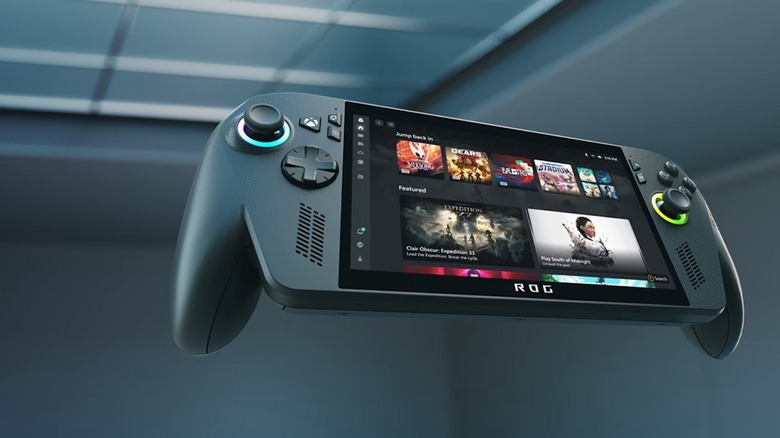
The spectrum of handheld gaming consoles has expanded significantly over the past few years. Since the Nintendo Switch was released to high praise (including in our own Nintendo Switch review), we've seen entries from PlayStation, Lenovo, Asus, MSI, and even Valve, the parent company of Steam. A sort of arms race seems to have started between many of those companies in an attempt to deliver devices that are the best on the market.
The Asus ROG Xbox Ally is Microsoft's attempt to enter the competition. The device is built on an interesting collaboration between the PC manufacturer Republic of Gamers and Microsoft's Xbox division, which shared its experience creating the Xbox to make the new handheld feel and play more like a console.ROG has also loaded its top Xbox Ally X model with an impressively powerful AMD Ryzen Z2 Extreme, giving it a lot of power to run demanding games. But that power comes with the substantial price point of $999.99, which begs the question: Is the ROG Xbox Ally X enough of a step up from other competitors to warrant this price? Even though we praised the handheld's performance in our review of the Xbox Ally X, a lot more value can be had from other portable devices from Valve and Nintendo. If you compare them to the lower-spec $599 ROG Xbox Ally, the answer is even clearer.
Switch it up with Nintendo
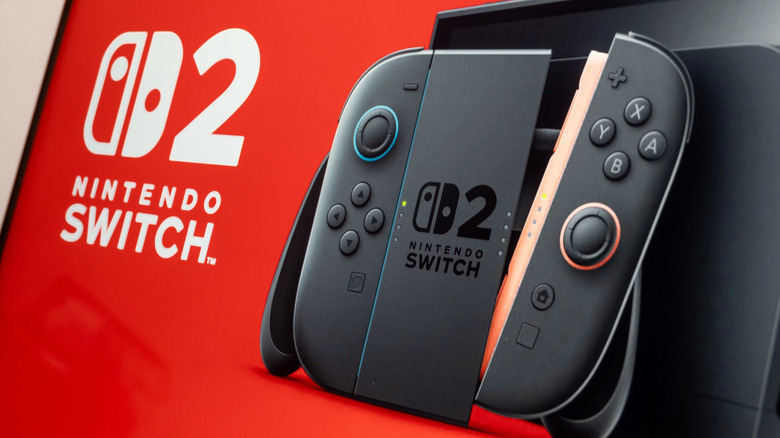
If you're in the market for a handheld, it's important to consider what you'd like your device to do. Most PC handhelds with high-end components inherently occupy the same space as traditional PC gaming, an area where handhelds require heavy price points and bloated specs to compete in. If you're just hoping to play some games with excellent performance in a travel-friendly form factor, consider the Nintendo Switch 2 instead of the Xbox Ally X.
The latest offering from Nintendo builds on the original Switch in solid ways, especially considering it's now easier to get your hands on a Switch 2 after initial shortages. First, you get the impossibly sleek form factor, including detachable controllers and multiple play modes, such as a tabletop screen or a TV console for multiplayer couch co-op. These things can be done with a PC handheld like the ROG, but they require extra accessories and controllers.
The Nintendo Switch 2 processor is a lower-powered NVIDIA processor, but Nintendo's approach to beautifully measured first-party titles and their handling of ports from top AAA game studios means that the performance will feel modern and sleek. It generally has lower resolution and frame rate than the ROG Xbox Ally X, but if you like first-party Nintendo titles and don't need the top specifications, the Switch 2 is a great way to save some money ($550, to be exact).
Get more bang for your buck with other PC handhelds
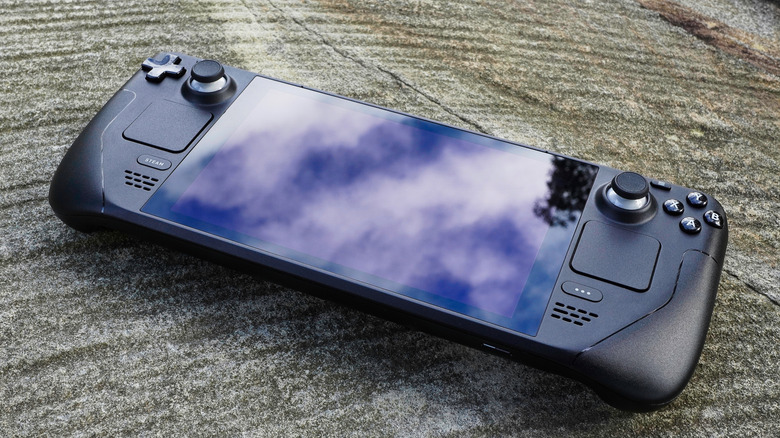
One of the reasons that PC handhelds are so singular is that they often feature full-on operating systems. The ones made by PC manufacturers typically come loaded with Windows. This can be a mixed bag, because while it gives users the flexibility to let their handheld double as a computer, Windows is just not designed for being navigated with a controller, let alone in handheld mode.
That's why one of the best ways to save money and get a streamlined experience is with a Steam Deck. Developed by Valve and featuring a custom Steam operating system based on Linux, these devices are made to support a vast array of games from the Steam store. The best part is that the Steam Deck OLED starts at just $549, features a gorgeous 7.4-inch OLED display, and offers performance that's perfectly reasonable for Steam-optimized games. All of that for around half the price of a top-spec ROG Xbox Ally? That's a win in our book.