

This Is The Biggest Nuclear Power Plant In The US
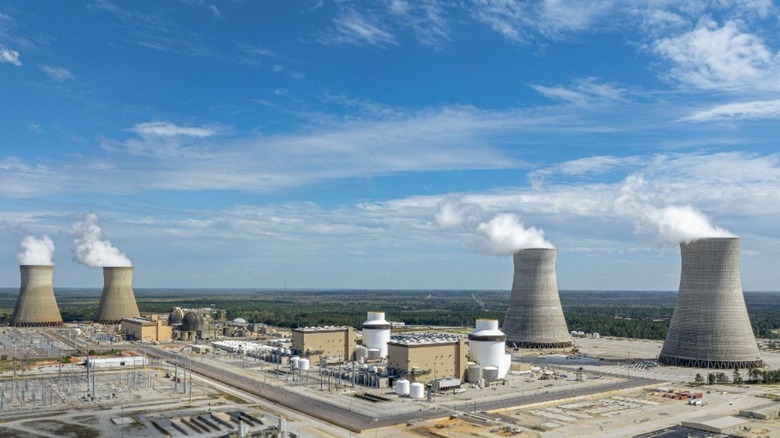
The United States operates the most robust fleet of nuclear reactors in the world. With 94 reactors across 54 power plants, the U.S. generates roughly 97 gigawatts (GW) of nuclear power, significantly outpacing France, China, and Russia, despite adding only three reactors since 1996. The largest of these sites is the Plant Vogtle in Waynesboro, Georgia, which generates roughly 4.8 GW of electricity. In May 2025, the Trump administration announced new initiatives to usher in a "nuclear renaissance," aiming to boost total capacity to 300 GW by 2050.
The plan looks to expand America's next-gen nuclear reactor technology by building ten AP1000 reactors over the next five years, largely through an $80 billion partnership with Canadian nuclear firm Westinghouse Electric. Vogtle added two Westinghouse AP1000s in 2023 and 2024, respectively. Despite making the Waynesboro plant the nation's largest, the expansion project ran seven years and $21 billion past initial projections. To spur development, the Trump administration instructed the Nuclear Regulatory Commission to cut oversight, reduce staff, and fast-track permits.
Aimed at slashing red tape, the move has some experts raising safety and regulatory independence concerns. Despite these challenges, U.S. officials believe that developing nuclear energy infrastructure is essential to meet its booming energy demands, which hit record highs in 2024 . Moving forward, nuclear energy could help fill the void between American consumption and capacity as these demands continue to rise.
Building the Vogtle nuclear power plant
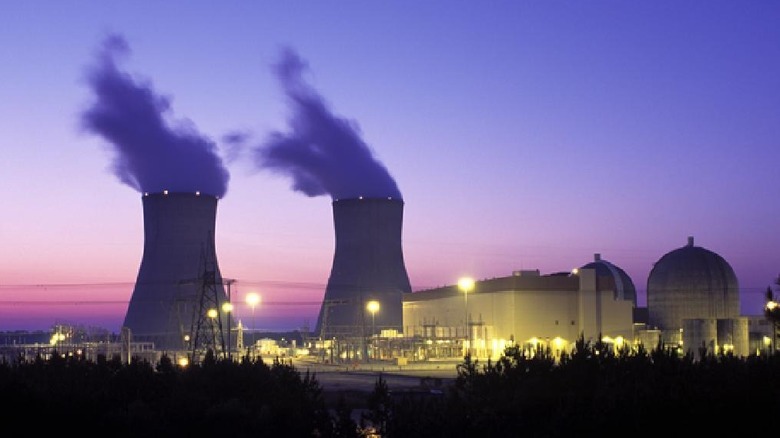
When the expansion of the Vogtle nuclear power plant received approval in 2009, it was the first project of its kind in roughly 30 years. Prior to this, a lack of political will, caused primarily by high-profile disasters like Three Mile Island and runaway construction costs, stranded U.S. nuclear capacity in no man's land. At the time, the addition to the Alvin W. Vogtle Electric Generating Plant was seen as potentially reversing the trend. In adding 2.5 GW of capacity, enough to push nuclear to 19% of the total generation grid, the two new reactors would propel the facility past Arizona's Palo Verde plant as the nation's largest.
Unfortunately, the project would serve more as a cautionary tale than a resounding endorsement. Cost concerns have plagued the powerplant since it broke ground in 1970. Taking nearly 20 years for the plant's first two reactors to come online, construction costs rose from a projected $660 million to a whopping $8.9 billion by the time Vogtle's second reactor entered service in 1989. Seventeen years later, Southern Co., the parent company of Vogtle owner Georgia Power, announced plans to add two Westinghouse AP1000 reactors to the facility.
But by the time the first of these reactors entered service in 2023, a series of delays, prompted by technical issues, financing concerns, and lawsuits, more than doubled the project's cost estimates to $30 billion. A concurrent project, at the V.C. Summer plant in South Carolina, was abandoned prior to completion, reinforcing concerns facing U.S. nuclear expansion. That said, the Vogtle plant's generating capacity underscores the vast potential of the American nuclear sector should it overcome such cost barriers.
Looking forward to nuclear power in the U.S.
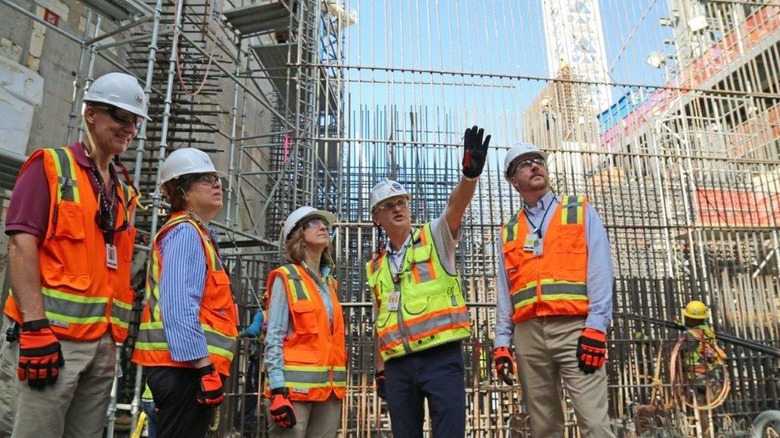
Despite difficulties plaguing construction, investment in Westinghouse Electric proves that regulators believe the Vogtle nuclear facility could serve as a blueprint for nuclear expansion in the U.S. And while nuclear energy is not 100% clean, the plant is credited with avoiding 10 million metric tons of carbon dioxide emissions per year. As it stands, the 94 nuclear reactors in the U.S. account for over half of the country's carbon-free electricity production and roughly 18% of its total electricity.
This output comes despite the closure of 12 reactors since 2013, as increased efficiency elevated nuclear capacity rates to a record 94% in 2019. For reference, the average capacity for U.S. reactors in 1991 was only 70%. Building more efficient, high-powered nuclear reactors may be the key to an energy sector looking to service increasingly demanding electricity needs. In particular, the explosion of the AI industry, and its subsequent need for data centers, has caused big-tech to go all in on nuclear technology, with Google, Microsoft, and other tech giants striking deals to revive old nuclear plants.
Both the Biden and Trump administrations have supported this move toward nuclear power, culminating in the aforementioned $80 billion investment plan. America's nuclear revolution is expected to take some time, however, with experts predicting capacity will rise just 27% by 2060. And while many believe smaller, more easily installed nuclear reactors will prove a cost-effective solution to the issues experienced at the Vogtle plant, the U.S. government plans to add 10 more AP1000 reactors to the American power grid by 2030.