

5 Uncomfortable Truths About Using Spotify

Spotify is one of the best music streaming apps on the market, with hundreds of millions of users. As the most popular music streaming service, people love it because, among other things, it has a free plan, an easy-to-use interface, and boasts a wide catalog of music. It also has diverse content, with audiobooks and podcasts that make it more than just a music streaming service.
Even better, Spotify is available on a ton of platforms, from your TV to smart speakers, cars, and smartwatches. Spotify has also risen to become one of the go-to streaming services for audiophiles by launching lossless quality, allowing its users to listen to music at up to 24-bit / 44.1 kHz quality at no extra cost after years of delay following the initial announcement in 2021.
However, besides its great features, Spotify isn't perfect. It has its downsides that every single user of the music streaming service needs to know about. Some of these uncomfortable truths might change how you view the service, and maybe even embrace one of Spotify's alternatives.
AI slop is filling the service
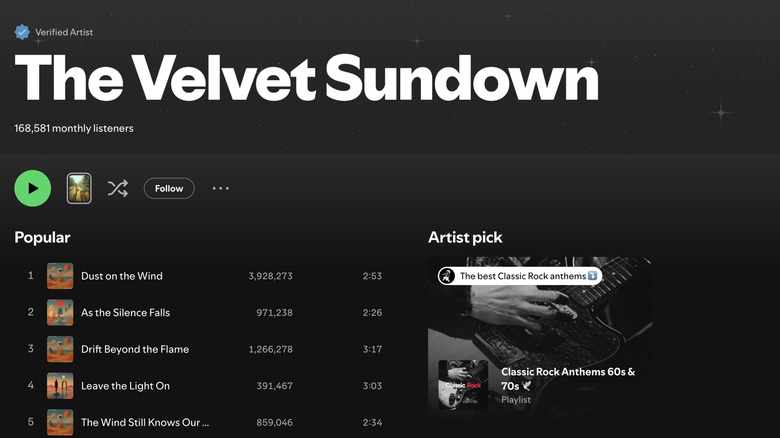
When you're streaming music on Spotify, you probably assume that there's a human artist behind the songs. But the truth is, now more than ever, that isn't always the case. Despite having a wide catalog of music with over 100 million tracks, not everything available on Spotify is created by an artist. Some songs on the service are generated by artificial intelligence (AI). In July 2025, for example, an investigation by The Guardian uncovered a band on Spotify going by the name Velvet Sundown that used AI to create music. The band has released two albums in June 2025 and amassed millions of streams.
Spotify pledged to strengthen AI protections on the platform in September 2025 through stronger impersonation rules, a music spam filter, and AI disclosures. Despite that, you can still listen to the band's music on the platform — and there's no label indicating that the songs are AI-generated as of this writing. There's also another artist page by the name JD Steel, which doesn't have a description on Spotify, yet uses AI-generated images, and produces songs using AI as per their YouTube channel.
The rise in AI-generated tracks on Spotify, among other issues, has also been at the forefront of artist boycotts on the platform that saw several artists pull their music from the service. While Spotify says it has removed over 75 million spam tracks from its service, it's clear that there's still a lot to do to protect its users from AI-generated slop if pages like JD Steel and The Velvet Band are still up.
It pays artists poorly
Like other music streaming services, Spotify compensates the people behind the music when their songs are streamed by its users. According to the service, anyone who holds rights to a song receives compensation for it regardless of whether it's played by a Premium customer or someone who uses the free ad-supported plan. Payments are typically done once a month, and Spotify distributes the net revenue to artists based on the stream share (the percentage of streams a given artist got for the month versus the total across the platform).
Because of how it calculates the payout, the company doesn't pay a fixed amount of cash per stream. But it's not just Spotify; royalties from music streaming services are paid based on the stream share. However, from these numbers, it's possible to estimate the average payout per stream. And on average, Spotify has been found to be one of the lowest-paying services per stream compared to its peers. Multiple estimates place Spotify's average payout per stream between $0.003 and $0.005.
For instance, a report by Duetti found that Spotify paid $3 per 1,000 streams in 2024, which averages to about $0.003 per stream. That payout ranked the service fourth on the report behind Amazon Music, Apple Music, and YouTube Music, which paid $8.8, $6.2, and $4.8 per 1,000 streams, respectively. In other words, Apple Music is paying artists twice as much as Spotify, which is mind-boggling.
UPDATE | Following the publication of this article, a Spotify spokesperson reached out to provide the following statement regarding artist pay: "Every other streaming service pays less than Spotify. Spotify paid out $10 billion to the music industry last year – more than any other retailer in history – and has paid out $60 billion all time. Our music subscription competitors haven't reported their subscriber figures or music industry payouts in years, because they do not want to expose that they pay far less. Additionally, the per stream rate is a false narrative – a high per stream rate means that users are listening less."
Its algorithmic recommendations are highly repetitive
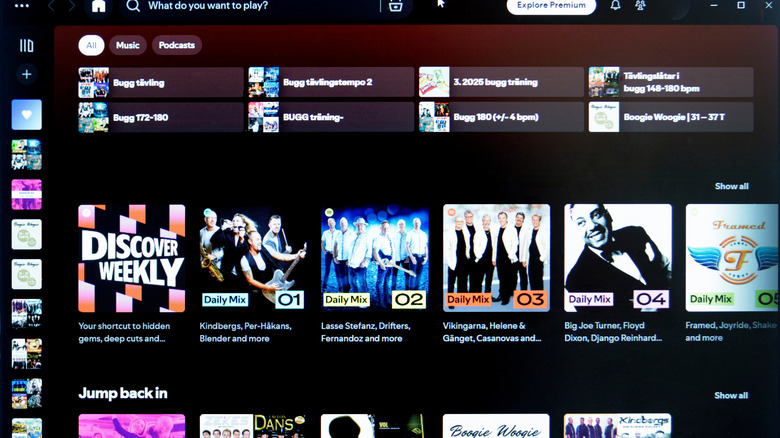
One of the things that Spotify and other music services have in common is AI-powered recommendation algorithms that are used to personalize music and spearhead discovery. On Spotify specifically, its editorial playlists are slowly fading in the background as the platform leans more into AI-powered ones. However, algorithms, as it turns out, aren't the best at recommending music. An article by MIT Technology Review states, "Rather than challenging your tastes, algorithms only provide shuffled versions of what you already enjoy."
If you feel Spotify's algorithm has become repetitive, you're certainly not alone – multiple users on the internet have raised concerns about the same, so it's not an isolated case. Aside from the playlist recommendations, its AI DJ feature is equally repetitive, as it mainly just plays the same songs that you already like. You may not hear enough new music while using Spotify's AI DJ feature, which exacerbates the platform's general theme of playing sounds you already like.
While there are many algorithmically driven personalized playlist recommendations on Spotify that are regularly updated, they often resemble each other and contain songs with the same sound, according to MIT Technology Review. The ultimate goal of Spotify's recommendation algorithm isn't discovery, according to The Verge. Its sole purpose is to keep you listening, and it achieves that by feeding you what's familiar.
You don't own music even if you pay for Premium
Spotify provides a convenient way to listen to your favorite artists and tracks. You pay a small monthly fee and, in exchange, you can listen to available songs as long as you have an active subscription. Or, if you're on a free plan, in exchange for listening to ads. But even if you're paying for the Premium Individual subscription, which costs $11.99 per month, you're not actually buying the music. You're only paying for access to the music for a limited amount of time.
In other words, you're renting these songs; you don't own them. Besides, by renting, the owners of the tracks reserve the right to remove the songs at any time and without notice. For instance, you may have played a song last week, and you might not be able to listen to it the following week because it has been restricted due to licensing issues. This is unlike buying music from platforms like iTunes, Bandcamp, or Qobuz.
When you buy music for, say, $10 an album, you get to keep it and listen to it without paying a monthly subscription fee. With Spotify Premium, you don't get such a privilege, so you're forced to continue paying for the service in perpetuity, as long as you'd like to listen to music.
Spotify doesn't have every song
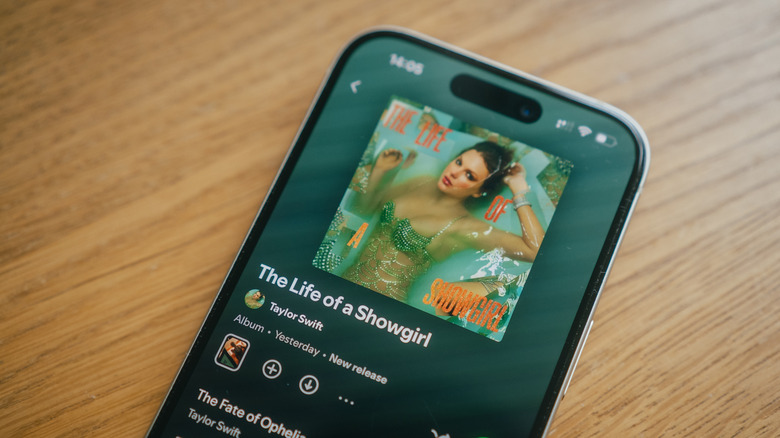
Sure, Spotify has one of the most extensive music catalogs with over 100 million songs and regularly adds new content. But the fact that it contains millions of songs doesn't mean it has every song ever produced. In fact, a Spotify support page clearly states, "We don't have all the world's music and podcasts on Spotify."
So don't be surprised if you run into a case where one of your favorite songs isn't available on the service. That could be because the song was never added, or it could be because it was pulled from the platform by the artist. The latter might seem absurd, but we've seen it play out in the past.
For instance, in 2022, Neil Young and Joni Mitchell temporarily removed their full catalogs from Spotify. Taylor Swift also removed her music from Spotify in 2014 for a short time in protest of low royalties. In September 2025, multiple artists also removed their songs from the service to protest Spotify CEO Daniel Ek's investment in an AI military defense company.