

Can You Really Tell The Difference Between High-End And Cheap Headphones?
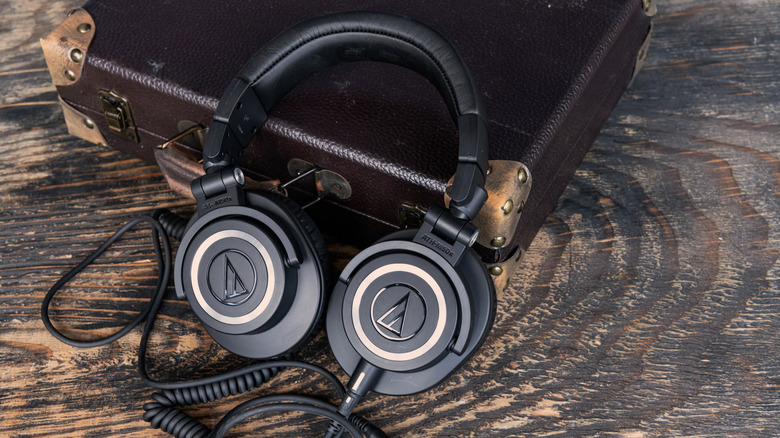
The age-old question of value versus performance is frequently debated in the audiophile community. While many purists may have you believe that only high-end, wired headphones sound good, there could actually be more to the story. To really understand the difference between paying too much money for your headphones and scoring a good deal, it's important to understand how the devices work.
For instance, some headphones rely on high-end components and expertly tuned parts, and because headphones can have sensitive components, that can be labor-intensive. Other headphones that have wireless connectivity or noise cancellation may cost more because there are more processing components inside. Moreover, Consumer Reports reinforced the notion that many high-end headphones are ideal for audiophiles. However, those pricier units could be unnecessary to serve your needs. Perhaps you only listen to headphones while running, or maybe you prefer to listen to spoken word material or podcasts. Finally, you may also only listen to your audio content via Bluetooth, which has its own limitations. All of these scenarios could warrant the selection of a cheaper solution.
What makes headphones expensive or cheap
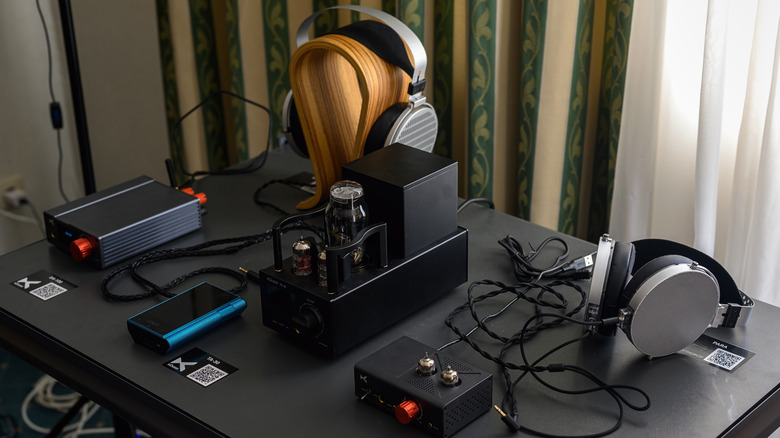
In order to tell the difference between high-end and cheap headphones (and ultimately whether cheap headphones will work for you), it's a good idea to think about what actually goes into an "expensive" pair of headphones. And the best audio doesn't necessarily come from new models exclusively — take these discontinued headphone favorites, for example. Looking at a few more current models of high-end headphones, such as the Sennheiser HD600 series or Beyerdynamic's 900 PROs, it's clear that what's inside the headphones themselves is a crucial part. Why is that? Well in Sennheiser's case, the drivers inside the headphones are tuned to provide a "flat response curve," which means they're great at depicting exactly the audio they're playing. Beyerdynamic headphones take a similar approach, but they also add in popular velour-like earpads that feel luxurious. These material choices are expensive, and so is the engineering effort required to tune headphones so well.
If you're in the market for wireless headphones, you'll also see a huge range of prices. On the lower end, your headphones or earbuds may do away with certain functionality such as noise cancellation, or extra audio features like smartphone apps or equalization control. Therefore, to get these features — those delivering high-quality sound with lots of extra features and options — you may have to spend flagship-brand money. Again, this is at least partially due to the components required to manufacture these headphones reliably.
When a cheap pair of headphones may be suitable

Understanding why headphones are expensive can be the key to unlocking whether that expense is even worth it to you. First, let's consider high-end headphones. These over-ear devices tend to require a wired connection, and because they have a high-impedance rating, they sound best when connected to a headphone amp. As a result, you may only want to consider the audiophile tier of wired headphones if you're listening to high-resolution audio from a wired device, perhaps paired with a high-quality amp.
Another thing to consider is how you're transmitting the music you're listening to. Most listeners opt for Bluetooth earbuds, so the audio is being transferred wirelessly with some compression. When you add the fact that this audio is often being streamed on Spotify (generally, but not always, bearing its own inherent compression), you may wonder how well high-end earbuds will perform. Once all this compression is taken into account, the average listener may not hear the difference between, say, a pair of original AirPods and the latest AirPods Pro 3 (which we reviewed recently and loved).
One final note is to consider when a pair of headphones is too cheap to provide desirable audio output. Once you dip below the $50-75 price range, you will start to lose some of the fidelity of your music. While Apple's EarPods look similar to the original AirPods, their driver components and build are different, as there's no on-board processing or sound shaping on the former solution. Cheap headphones tend to lose bass fidelity and make things muddy, so — while they can be fine for phone calls or podcasts — it's best to keep audio solutions in the $50+ price range at minimum.