

Why Are Android Phones Getting Rid Of SIM Cards?
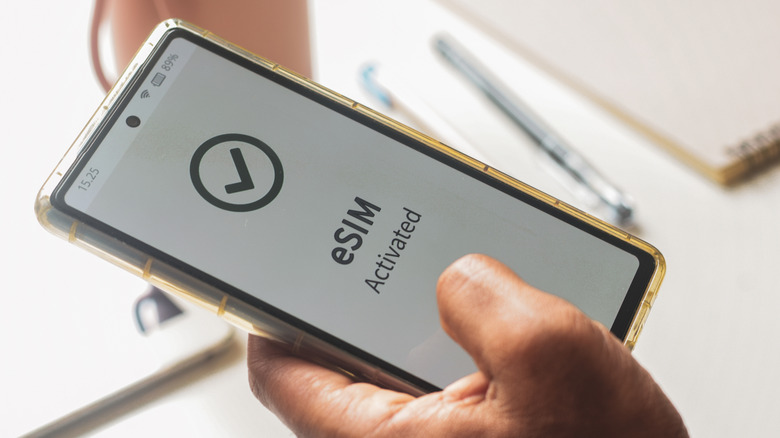
Physical SIM cards have long been synonymous with phone numbers. They've changed greatly from what they once used to be — giant cards you'd have to put in after removing your phone's battery – but still function the same way they always have. While not everyone knows what a SIM card really is, we all rely on them to communicate with the rest of the world, and these pieces of plastic have become inseparable. Things are starting to change, though. Following Apple's current-gen iPhones, Android phones like the Google Pixel are also starting to get rid of SIM cards in the traditional sense, opting for an eSIM-only approach. eSIMs, or embedded SIMs, aren't stand-alone products that can be swapped in and out, but rather microchips embedded into the phone permanently.
This is vastly different than what most people have gotten used to, but there are some very good reasons why manufacturers are moving away from physical SIM cards, and why they may become completely obsolete in the near future. For one, if you want to use multiple numbers, you're bound by how many SIM cards you have access to. Since most phones in the U.S. come with a single physical SIM slot, you'll need multiple phones to manage multiple SIMs. This restriction doesn't apply to eSIMs, as you can download as many eSIMs as you want. This is what lets the latest iPhones support up to eight SIMs, something that would be impossible with physical SIM cards.
Ease of travel and security
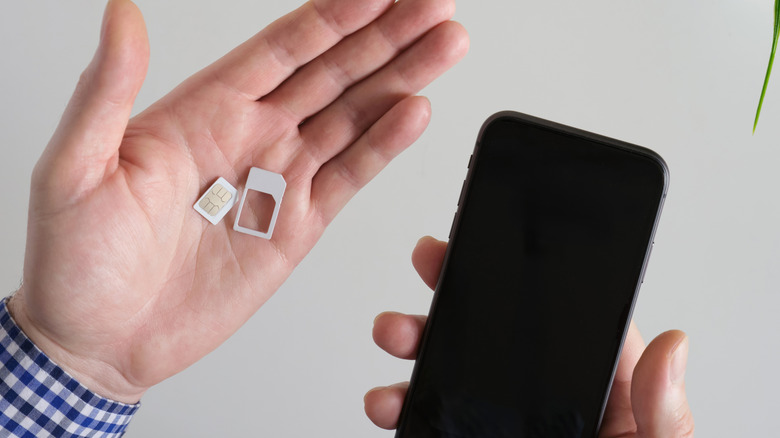
The main area where eSIMs shine for you is if you're someone who travels frequently, as one of the biggest drawbacks of physical SIM cards is getting a new one when you land in another country. This issue is almost completely resolved with eSIMs, as you're in direct contact with international carriers and can download a new SIM without having to physically visit a shop. They're also less prone to hiccups — such as the "Sim Not Provisioned" error message – that can often be caused by physical wear on the SIM card or by not inserting it correctly. Additionally, eSIMs are significantly more secure than traditional ones.
With physical SIMs, anyone with access to your phone can take out the SIM from its slot, put it into their own phone, and then use it. This can have drastic consequences. For people with embedded SIM cards, the only way to use their phone number is by physically using the phone. Even if your phone gets stolen, the thief will not be able to commit any identity fraud using your phone number. Moreover, they can't remove your SIM from the phone either, which means you can track your phone using the IMEI.
eSIMs have their own problems
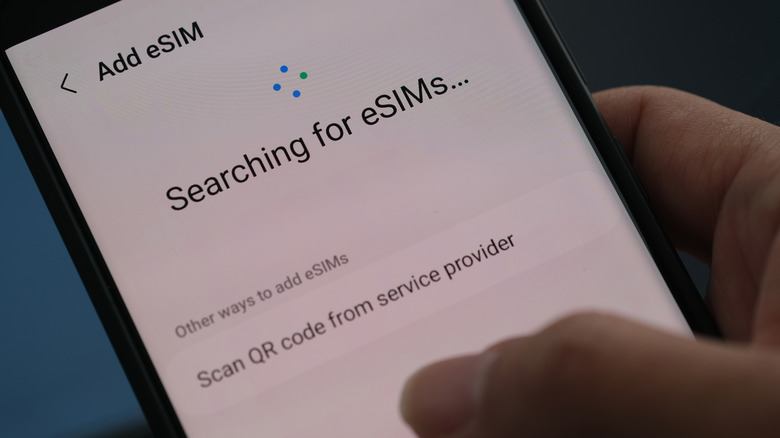
eSIMs certainly bring a lot to the table, but they're not perfect. They're a useful alternative to have alongside physical SIM slots, but Android phones completely getting rid of physical SIM cards can have consequences, at least with how embedded SIMs currently work. Their heightened security can be a double-edged sword, as the SIM is completely bound to your phone. If you break your phone or can't access your number while not logged into the carrier app on another device, you'll have to contact your carrier directly. This can be a huge issue depending on what carrier you're reaching out to, as most of them authenticate your SIM by sending an SMS — something that requires access to your SIM. This can end up taking days or even weeks, and, if all else fails, you'll have to visit the carrier's store physically to resolve the issue.
For traditional SIM users, this is as easy as using a pin to open the SIM slot, removing it, and putting it in another phone. If other Android manufacturers take the eSIM-only route, there should be a simpler way to transfer eSIMs between phones, just the way Apple makes it easy to transfer your eSIM from an older iPhone to a newer one. Notably, eSIM carriers are improving rapidly, and it's only a matter of time before a better way is found that has the best of both worlds. If you're someone who isn't willing to move away from traditional SIMs, both Apple and Google still have international versions of their phones that have SIM slots. After all, several regions outside of the US still rely on physical SIMs.