

How Long Do Car Infotainment Touchscreens Actually Last?
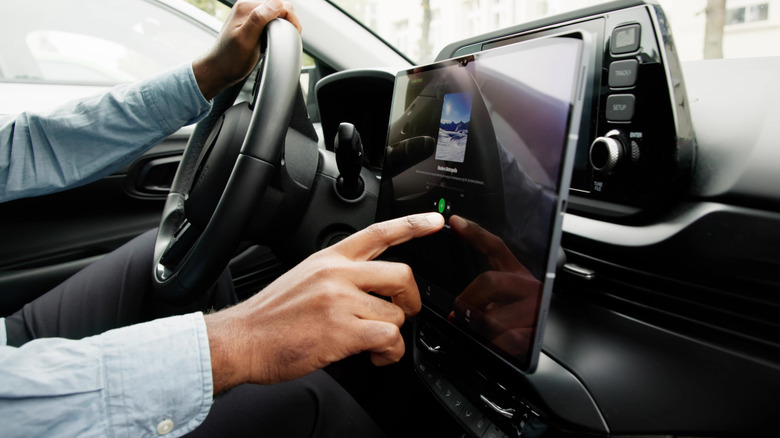
Touchscreens continue to improve the future. However, you may wonder if your car touchscreen, using the same capacitive technology in tablets and phones, is any more durable. If it stops working, the cost of ensuring a car has components fit for automotive use can significantly cut down its longevity. Unlike the electronics you use inside your home, those inside vehicles have to function in extreme weather cycles, be it freezing cold or scorching heat. They're also subjected to constant vibrations, shocks, and direct sunlight. All of these variables make it very difficult to estimate how long a touchscreen is supposed to last.
Tesla, for example, had a scandal in 2021 where a majority of their touchscreens started shutting down in just a few years, something that's a big deal with how expensive Tesla repairs can be. When it happened, we got an official estimate on how long car touchscreens (at least Tesla's) are made to last from then Tesla Vice President of Legal, Al Prescott: a meager five to six years (via TheDrive). This wasn't an issue of the touchscreen itself, though, but rather the underlying memory chip, something that not every car has.
If we're talking purely about the screen itself, especially in non-Tesla vehicles, they can last a lot longer. A capacitive touchscreen is generally expected to last 5-10 years by itself, though this is shortened due to conditions faced by the car. You can still find people with perfectly functioning screens on their 2017 Toyota Prius, and you'll also find those with their 2018 Jeep Compass with the touchscreen completely unusable. On average, your car's infotainment screen should last you several years, with more recent cars that use optical bonding being more reliable than those using other displays.
Issues faced by car touchscreens
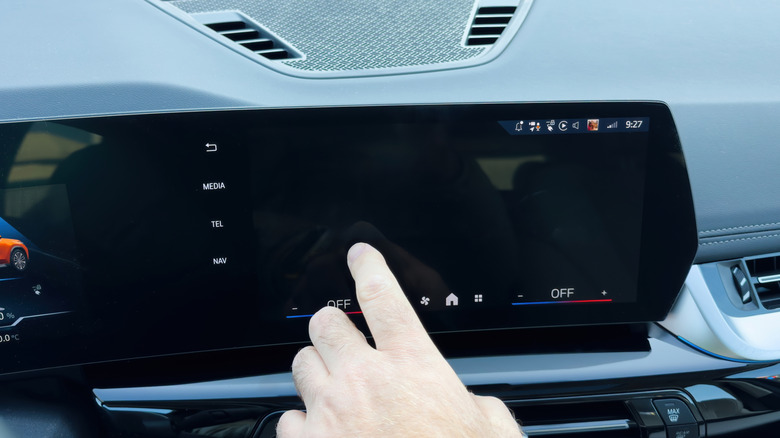
The technology used in car infotainment touchscreens has changed drastically over the years. How long your car's touchscreen lasts differs greatly depending on what era the car is from and what technology it uses. In the first LCDs, there was a gap of air separating the LCD itself from the glass screen that registers your touch. This had a ton of problems, and is what cemented car touchscreens as being largely unreliable. Internal reflections hindered visibility, water got inside the gap from condensation, and the touch worsened with time.
To fix this, car manufacturers found ways to get rid of this gap, either using a gel to connect the two in gel bonding, or using a clear adhesive to bond the LCD and the digitizer in what is called optical bonding. Gel bonding fixed many issues related to visual glare and water seeping in, but it had its own problems. The gel used in these dried out over time, which meant it often resulted in bubbles or a spiderweb-like pattern forming on the screen. Gel bonding was used in most cars released in the 2010s, but optical bonding is becoming more popular due to its higher tolerance to wear.
Nowadays, cars that are more on the luxury side are also offering OLED displays for their touchscreens. These offer significantly better visuals and contrast due to their ability to show true blacks. While the visuals are certainly something to boast about, they can lower the screen's longevity, as OLED screens aren't the most reliable in the long run due to their issues with burn-in.
What is optical bonding?
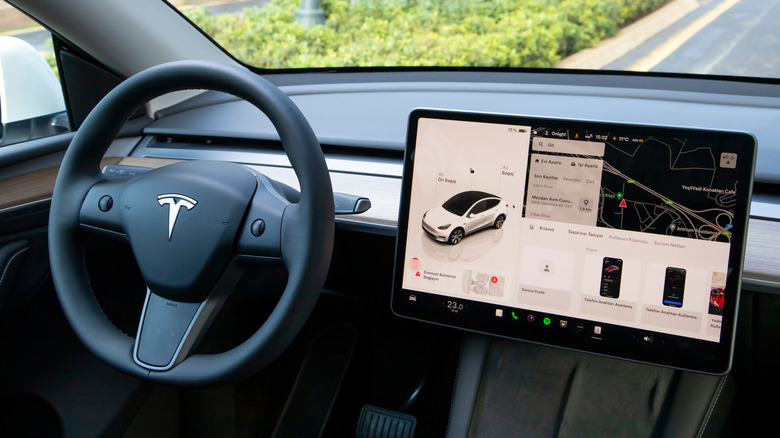
As the digital dashboard starts becoming more integral to modern cars, there is a stronger legal obligation to make them safe and reliable. If you're using a Tesla or a newer GM, you cannot access necessary functions if your screen isn't working properly. This is why most manufacturers are opting for optical bonding, a process that uses a strong transparent adhesive and bonds the LCD with the glass digitizer that registers your touches. This is more durable and provides better visibility. If you have a mid-to-high-end car made after 2021, your infotainment screen will likely last you much longer than touchscreens usually have in the past.
The technology behind optical bonding wasn't created for general-use vehicles, though; Its original purpose was for military use. For military computers that require accurate and quick readings, an issue caused by the light not reflecting properly or due to harsh temperatures messing with the screen's hardware could be deadly. As such, optical bonding was created to withstand shocks and avoid visual artifacts from fogging or sunlight.
With the materials to replicate the technology becoming cheaper and more research being put into it, car brands that wanted bigger and better-performing screens started opting for it. These weren't perfect, as in certain displays — like the ones on the Tesla Model S — the visuals deteriorated with time, creating a yellow border. In the present, most high-end cars released after 2021 come with optical bonding, which is largely devoid of the yellow border issues caused by heat and improper curing. Theoretically, these screens should last you as long as the car does, provided the software updates keep up as well.