

2 Dead Giveaways Your Gas Pump Has A Card Skimmer
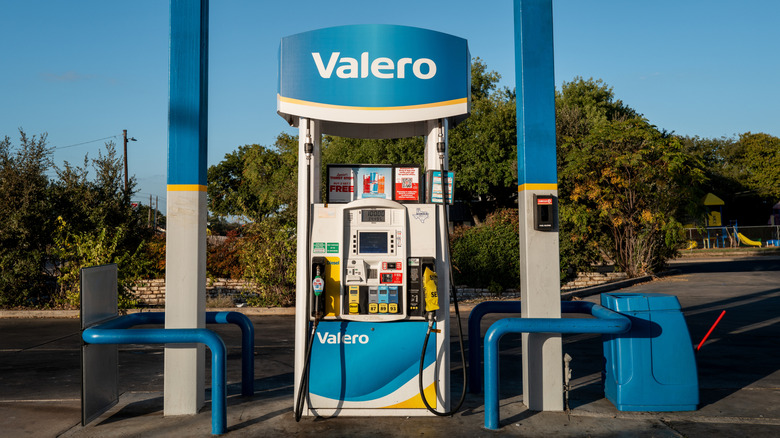
Something that you probably don't think about in your daily life is the unspoken agreement that comes with using a credit card. We all assume that, upon sticking a credit card into something like a gas station pump, the money is only going where it's supposed to. It is within that unspoken agreement that bad actors seek to profit, specifically with gas pump card skimmers. While it may be scary to think about, you can spot the obvious signs of their presence, like damaged or modified panels.
Card skimmers, by design, are meant to take advantage of the practiced, unconscious movements that come with visiting the gas station. You stick your card in the pump, press some buttons, pump your fuel, and leave. It may take a bit of practice, but you can train yourself to identify a gas pump has been tampered with. While you could just use one of the many PayPal alternatives to mitigate danger, watching for signs of skimmers and reporting them to the station benefits the public good, ensuring nobody else falls victim.
Look for a large device mounted to the panel
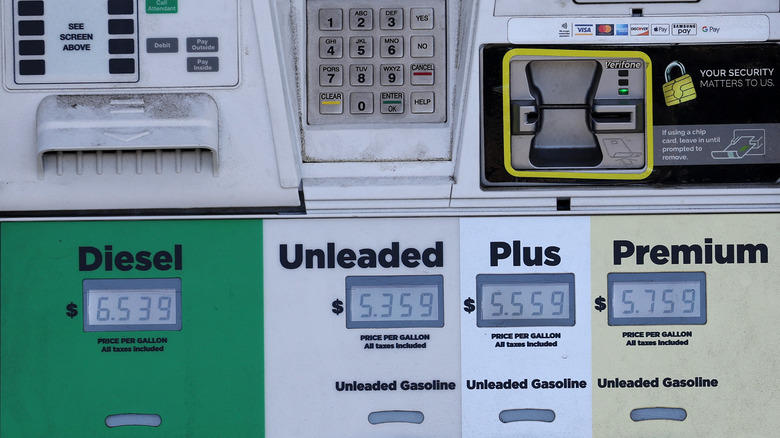
Point-of-service (POS) card skimmers, the kind that are specifically designed to capture information on payment devices and panels, come in two broad forms: External and internal skimmers. External skimmers are essentially just large devices mounted directly to the front of the gas pump panel, over the credit card slot. A bad actor could, in theory, walk right up to a gas pump and attach one of these devices with minimal modification.
As we mentioned, most people don't pay much mind to the appearance of a gas pump panel when using it, and that's where an external skimmer strikes. However, this approach has an obvious weakness: The device is relatively huge, unwieldy, and clearly doesn't belong. Take a close look at the POS panel on the gas pump, specifically at the card slot.
If the slot is jutting out awkwardly, or seems to be a different color or shape from the rest of the panel, there's a distinct chance it's a skimmer. If you're not sure, try jostling it around a bit. Odds are good it will feel loose because it's not actually part of the panel. You can also take a look at panels on the other pumps for comparison. Unless someone was gutsy enough to sabotage every pump at the station, they should look obviously different.
The gas pump panel is visibly damaged
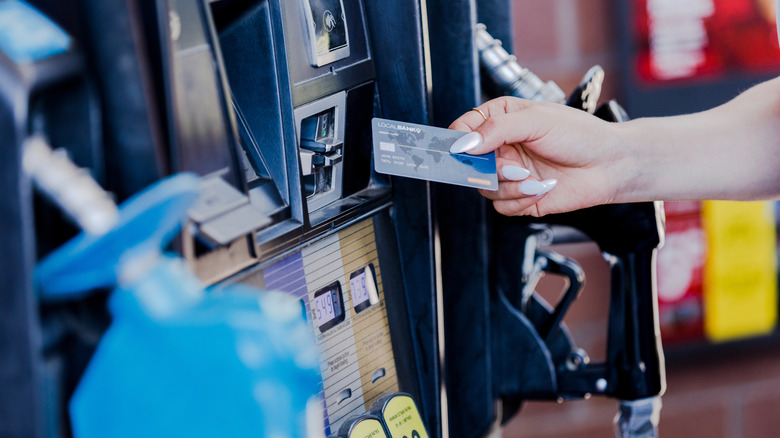
While spotting external card skimmers is relatively easy, internal skimmers are a bit more subtle and insidious. These are either placed inside a panel, right over the reader slot, or are used to replace entire segments of the panel like the keypad. Internal card skimmers aren't quite as easy to spot as the external version, but there are still some signs you can watch for.
Take a close look at the panel and its surrounding construction. Does it look as though it has been damaged or yanked out of alignment with the rest of the pump? The primary weakness of an internal skimmer is that it requires fairly extensive modification to install. There's a strong chance the bad actor had to force the panel open to place the skimmer, which can result in parts that don't line up with one another or large, obvious scratches and dents on the surface of the pump. In the same vein as an external card skimmer, a quick tug of the panel or card reader may reveal something is amiss.
Gas stations do their best to create simple warning systems for when their pumps have been tampered with, chief among them being security stickers. These stickers are usually placed by safety inspectors over the gaps of the pump's access panel. This is on purpose; if the sticker has been torn or peeled off, it's a sign that someone was trying to access the pump's internals without a key. You can also avoid gas pump card skimmers altogether with your iPhone.