

28 Days Later's Multiple Alternate Endings Explained
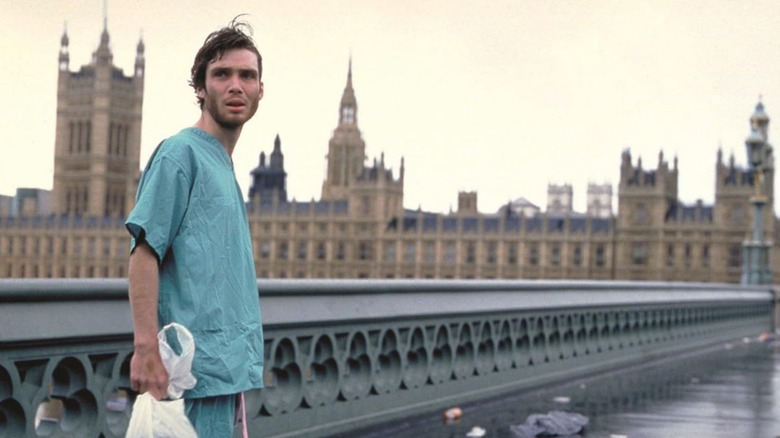
"28 Days Later" reinvented the genre by stripping it down to its rawest fears. At first glance, it's like Zack Snyder's "Dawn of the Dead", with hostile hordes and societal collapse. Yet its monsters are not the traditional undead. Danny Boyle and Alex Garland, the film's creators, envisioned a grittier and eerily plausible viral pandemic that turns living people into uncontrollable creatures rather than reanimated corpses. But even though the infected are what drive the story, at its core are the survivors. We get to see their fears, struggles, and raw emotions. But how does the story end? Why are there multiple endings? Behind the scenes, Boyle and Garland experimented with radically different conclusions.
Some endings are bleak, some hopeful, and one is so extreme it never made it past the storyboard stage. They weren't just minor tweaks. They are fundamentally different statements about survival, sacrifice, and whether there's a place for hope in a world like this. The film's alternate endings are a quiet war between artistic intent and emotional payoff. After all, it was the test audience that chose the canonical ending.
Now, as the franchise is moving forward with the sequels and Jim is confirmed to return, the abandoned endings carry new weight. They're no longer curiosities one can find in the DVD extras. They help explain how "28 Days Later" balances brutality with hope, and why the ending we ultimately got to see defines the future of the franchise.
The theatrical ending
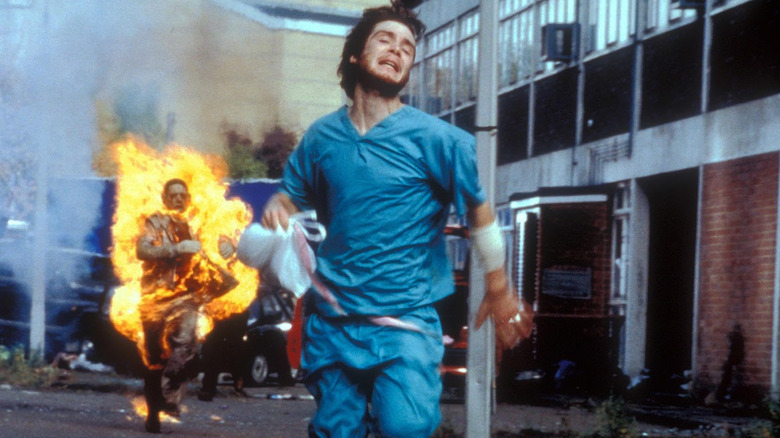
The theatrical ending of "28 Days Later" gives the audience a rare and hard-won glimmer of hope. After all, the movie is filled with relentless dread, and the audience deserves some light in all that darkness. After surviving hoardes of rage-infected zombies and a brutal showdown with renegade soldiers, Jim is shot in the stomach by Major West. And this moment comes just when he is leading his companions, Selena and Hannah, to safety. For a split second, the audience is made to think the movie will end in despair. The scene even cuts to black. However, the title card then appears, and we get to see the aftermath.
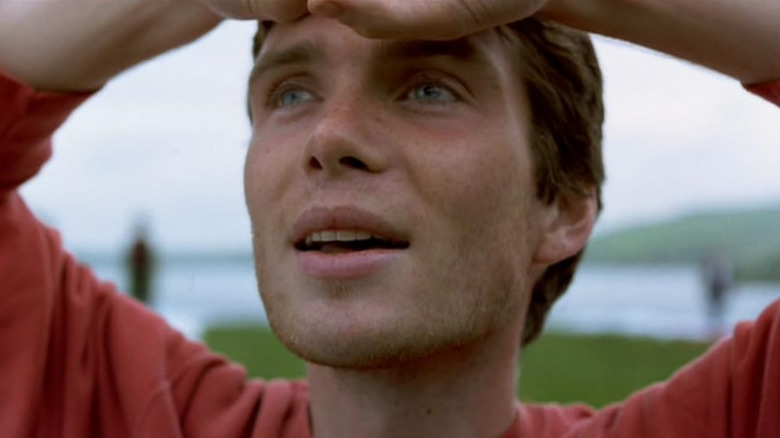
Selena desperately works to keep Jim alive. She is applying all her medical knowledge to fix his wound. In the final scene, we learn Jim pulls through. He awakens in a bed, just as he did at the start of the movie. He runs out of the rural cottage to help Selena and Hannah write HELLO using large fabrics, in hopes of catching the attention of a passing military plane. The movie ends with the plane flying over while the trio waves frantically. We never get to see them actually being evacuated, and we don't really find out what their ultimate fate is.
This ending gives "28 Days Later" a bittersweet closure. Although survival isn't certain, it remains possible. And that's all the audience needed to see. However, this was not the original ending that the movie creators envisioned. After the test audience saw the movie with the intended ending, they found "28 Days Later" very depressing and hopeless. It was this audience criticism that convinced Danny Boyle to make the controversial change (though it isn't unheard of to reshoot a movie finale at the last minute).
The original ending
Deleted scenes completely change a movie and its meaning, and that's what's so great about having multiple endings. The two other possible endings Danny Boyle considered would give "28 Days Later" a very dark and harrowing tone. In both alternate endings, Jim didn't survive. In the first of the two, Jim dies on the operating table, as Selena and Hanna fail to save him after he was shot by Major West. Still wearing their red ball gowns, the two women move out of the hospital and go alone into the uncertain future. In the DVD commentary, Boyle and Alex Garland explained that this was their original ending that the test audience saw.
According to the creators, this ending would lead the whole film to a thematic closure. Jim ends up alone in a deserted hospital bed both at the start and the end of the movie, while the women walk off to survive. But the audience thought Selena and Hannah didn't get a satisfactory ending either, because they walked off into almost certain death. Instead, this ending was added in the theatrical release of the film. It rolls out right after the final credits, starting with the words "what if..."
The second alternative ending is just a variation of the theatrical version. It was meant to be played after the first alternative ending, in which Jim dies. The audience was supposed to see that Selena and Hanna did indeed survive. Since Jim is gone, Selena is sitting in the cottage, where she's sewing the cloth for the HELLO message. And instead of talking to Jim, she is talking to a chicken. In the final shots, only Selena and Hannah wave at the military jet that's passing over them.
The final storyboard ending
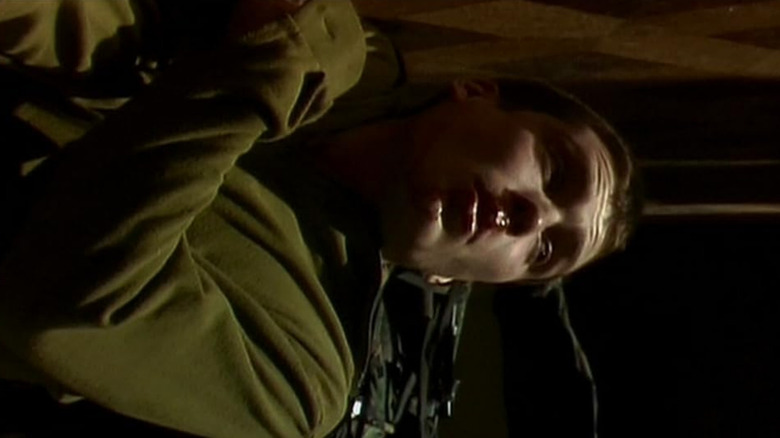
Beyond the filmed variations of 28 Days Later, where Jim dies or survives, there's a third, much stranger ending. But it never made it in front of the camera. On the DVD extras, Danny Boyle and Alex Garland included a series of illustrated storyboards, narrated by the filmmakers themselves. In this alternate ending, the story diverges radically from what the movie ended up looking like. If you need to refresh your memory on how the movie ended, you can stream "28 Days Later" for free on Pluto TV.
Frank (Brendan Gleeson) becomes infected at the military blockade. Instead of being executed by soldiers, Frank is restrained by Jim. Then, the group follows a mysterious radio signal towards what they hope is a cure. Eventually, they find a hidden laboratory where the virus was first developed. A lone scientist survived inside this lab, and he claims he has the cure. A full blood transfusion would reverse the infection. Jim, being the only compatible donor, heroically offers his life to save Frank. That way, Hannah would have her loving father back. In the storyboard's final frames, Jim lies strapped to a table in the lab. He is alone and doomed as the infected close in around him.
Boyle ultimately decided against this ending, because it hinged on a cure that contradicted the movie's rules. According to the story, one drop of infected blood was enough to doom someone. And it was a single drop that infected Frank. Cleansing the blood just didn't fit the established logic of this fictional virus. Still, the storyboard ending remains an intriguing "what if..." It's a darker twist that shows how the filmmakers were willing to push the story.
How the endings might influence the future
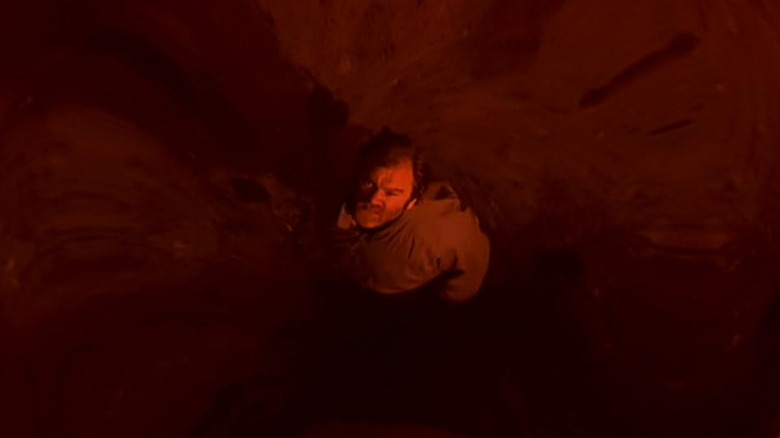
With the great Cillian Murphy, who played Oppenheimer, confirmed to return as Jim in the upcoming "28 Years Later: The Bone Temple," the version of "28 Days Later" where Jim survives isn't just the "nice ending." It became the de facto canon ending of the original story. And that's what finally settled the debate among the fans whether the bleak alternate endings could be the true closure of his character's arc.
The alternate versions were initially considered by Danny Boyle and Alex Garland, and at times even preferred. But the audience made the final decision when they proclaimed them to be too dark. With Jim set to reappear in the sequel that takes place decades later, it's clear that the hopeful finale has more weight than ever. We're not sure if we will learn the destinies of Hannah and Selena, but it's safe to presume hope prevailed, at least for a moment. The theatrical ending that was released with the movie back in 2002 is, therefore, not only the ending we all saw. It's the canonical foundation for new stories that will unfold in the 28 Later universe.