

Kia Is Coming Out With Its Cheapest EV Yet - But There's A Catch
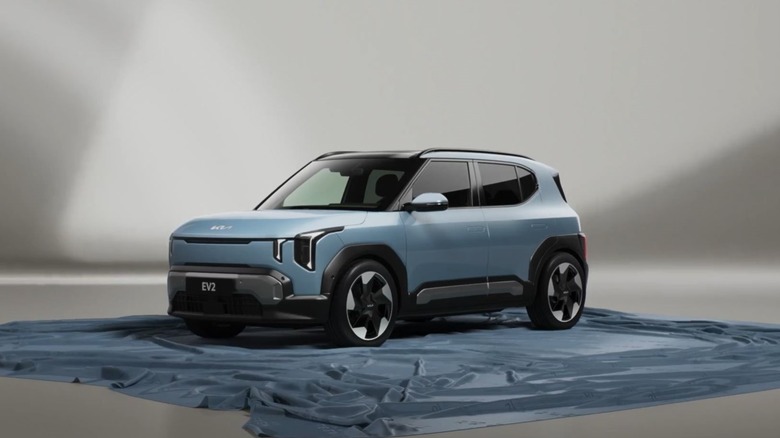
One of the contention points of modern EVs is that they can be expensive, especially compared to their ICE counterparts. Most automakers are now focused on providing accessible options, betting on cheaper cars altogether. Kia is a great example with its latest and cheapest EV launch yet, the entry-level EV2 electric hatchback. It's boxy and urban, yet still stylish, with a starting price estimated at €30,000 ($35,000). But there's one pretty big catch, or snag, if you will. United States consumers may never see it. The standard-range model is said to launch in February, with the long-range and GT-line versions coming in June, just not to the stateside market.
That's a bummer, because it's sleek and affordable, with innovative features U.S. buyers might like. A comprehensive list of driver safety and assistance features is just the start. The standard-range features a 42-kilowatt-hour battery with a 197-mile range. The long-range model features a 61-kilowatt-hour battery with a 278-mile range. It's tech-forward with a large infotainment display, support for OTA software updates, digital key functionality with NFC, Bluetooth, and Ultra-Wideband support. It also touts unique battery functionality like the option to power appliances and home devices thanks to a vehicle-to-load feature.
It is worth noting that Kia has one of the best EVs under $50K, according to Consumer Reports. Moreover, when considering EVs that stand out for reliability, Kia is there, as well. It may not be the best EV automaker, but it has gained a solid reputation. It's unfortunate the new, more affordable EV2 hatchback will not be available in the U.S.
Why isn't the Kia EV2 coming to the United States market?
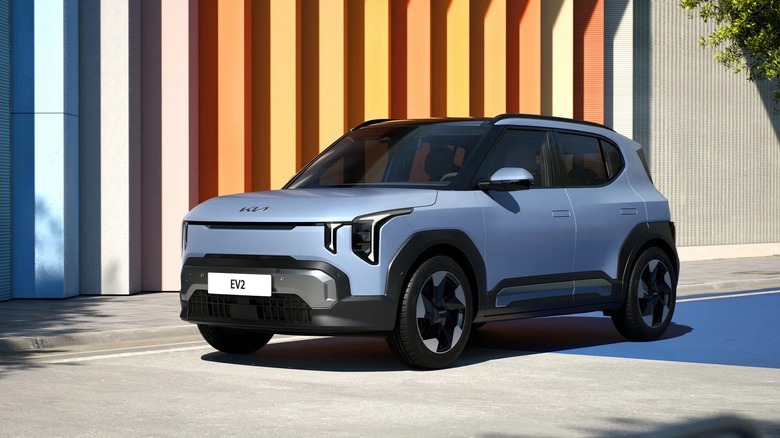
Kia unveiled it's new, compact EV2 at the 2026 Brussels Motor Show, but company officials offered no reason for avoiding the U.S. market. But what makes it appealing (the fact that it's affordable) may be related to the hang-up. Expected to start at roughly $35,000, it would be subject to large, expensive tariffs that would significantly drive up that price tag. That would obviously make it much less affordable and inaccessible to the appropriate audience, but there's also the point that it was never designed with U.S. consumers in mind in the first place.
It's small, like subcompact and tiny small when compared to most SUVs. At around 160 inches long, 71 inches wide, and 62 inches tall, it's not meant to compete with the wider SUV category. Instead, it's more comparable to small vehicles and mini-SUVs like the Peugeot e-208, Renault 4, Ford Puma Gen-E, Hyundai Kona or Volvo EX30, which are not very popular in the United States. Americans want bigger, badder SUVs. That, combined with tariff and other fee increases for pricing — pushing it out of the "affordable range" — and considering it's being manufactured at Kia's Zilina factory in Slovakia, are all reasons we likely won't see the subcompact vehicle in the states. The good news is there are still plenty of electric SUV launches to look forward to in the coming years.