

5 Big Changes That Are Coming To Smart TVs In 2026
There are big changes coming to smart TVs in 2026 that are pushing devices leaps ahead of where they were just one year prior. Many tech innovations were introduced at the 2026 Consumer Electronics Show, but the announcements from TV manufacturers were some of the most exciting. The coming year will bring better-than-ever displays, faster processing, and exciting features that are transforming TVs into so much more than just a screen for watching shows and movies.
Of course, not every new TV is pioneering an emerging technology. Mini LED TVs were introduced in 2019, but they are hitting higher brightness levels and better color accuracy in 2026. One of the most anticipated displays of 2026 is LG's X11L SQD-Mini LED TV. It's an impressive iteration on existing tech, proving that something tried-and-true can certainly stay relevant. If you're looking forward to a future of innovations, though, here are the biggest changes you should keep your eye on in the smart TV market.
Micro RGB technology
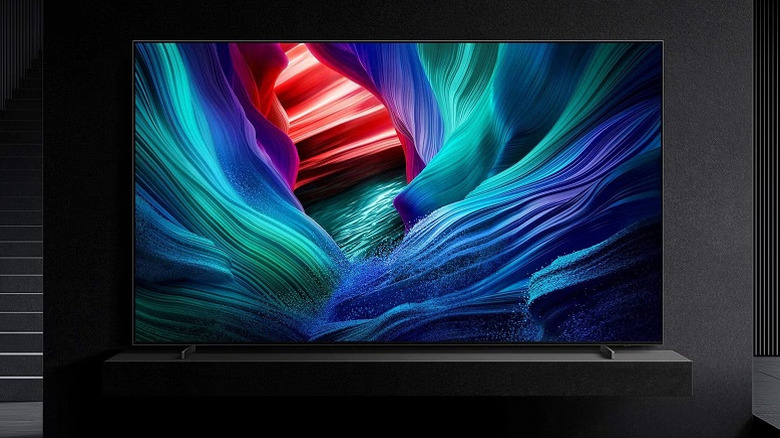
Traditional LED TVs use white or blue-colored LEDs to pass light through an LCD panel, creating the colors and images a viewer can enjoy. Samsung and LG are now breaking new ground with Micro RGB technology. RGB-backlit TVs use "snowflake-sized" red, green, and blue LEDs to display images with more accurate, more vibrant color thanks to pixel-level color optimization. It seems like a common-sense innovation, but actually, it only works now because complex drivers are able to control the myriad LEDs, and advanced AI processing is finally able to manage color and brightness levels in real time.
Samsung launched the first-ever Micro RGB TV in August 2025. LG's Micro RGB evo is also pushing the market forward, and RGB-based backlight systems from Hisense are further advancing the technology. Samsung announced many sizes for its Micro RGB product line, from 55" all the way up to 130", making this beautiful new display type accessible for just about anyone.
OLED advancements
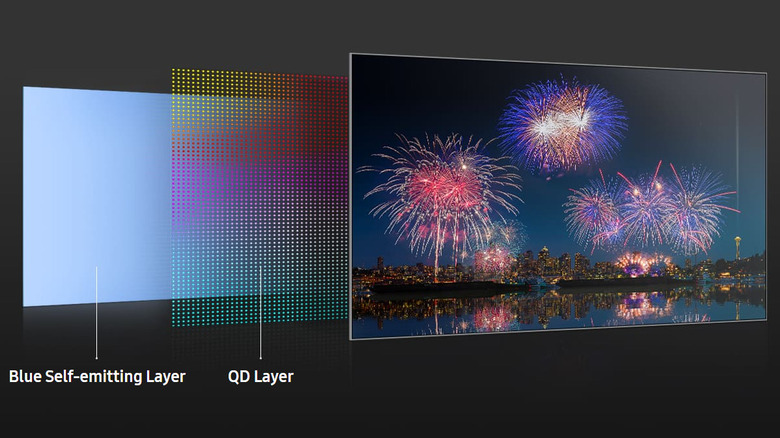
OLED displays are often considered superior to standard LEDs because they allow for darker blacks and greater contrast. There is still much potential to further improve OLED TVs, which is why Samsung is advancing its quantum dot technology. Samsung's QD-OLED TVs include a QD light-emitting layer that produces blue light, allowing for boosted brightness and color volume compared to WOLED (white light) displays. The Samsung S95H OLED, the 2026 flagship QD-OLED model, utilizes quantum dots to achieve a wide color gamut and consistent image quality regardless of viewing angle.
As a competing manufacturer, LG is innovating on OLED in its own way. The G6 and C6 OLED series from LG use a 4-layer Tandem WOLED panel that boosts brightness, improves black levels, and cuts back on reflections. LG claims that its "Hyper Radiant Color Technology" enables current-generation models to achieve luminance levels 3.9 times brighter than conventional OLEDs. Emphasizing panel-focused innovations allows LG to advance OLED displays in a way that is distinctly different from Samsung and other competitors.
Wallpaper TVs
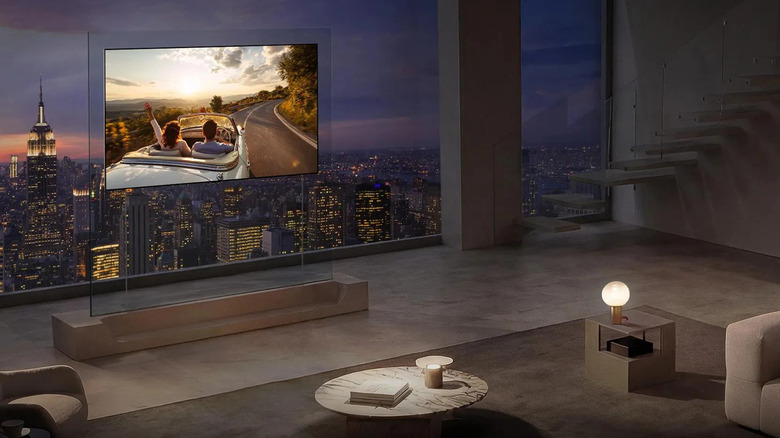
With new TVs achieving unprecedented levels of clarity and color accuracy, the emergence of "wallpaper TVs" is a natural evolution. It also helps that it no longer seems like a pipe dream to be able to afford a massive TV with a nearly wall-sized screen. The LG OLED evo W6 is marketed as a wallpaper TV that strives to immerse you in the picture by removing wires from the equation and prioritizing an ultra-thin, bezel-less design. It looks less like a TV mounted on the wall and more like an integrated part of the architecture, depicting a work of art in absolutely stunning detail.
In fact, ultra-thin form factors will certainly be a smart TV trend in 2026. Not only is this form factor ideal for indoor aesthetics, but it's also integral to Sylvox's new outdoor smart TV. The Sylvox Frameless Outdoor TV is proven to be incredibly resilient against debris and water with its IP56 durability rating. With such a sleek and slim design, it can certainly serve as an outdoor wallpaper that looks right at home near the patio or pool.
Integrated AI
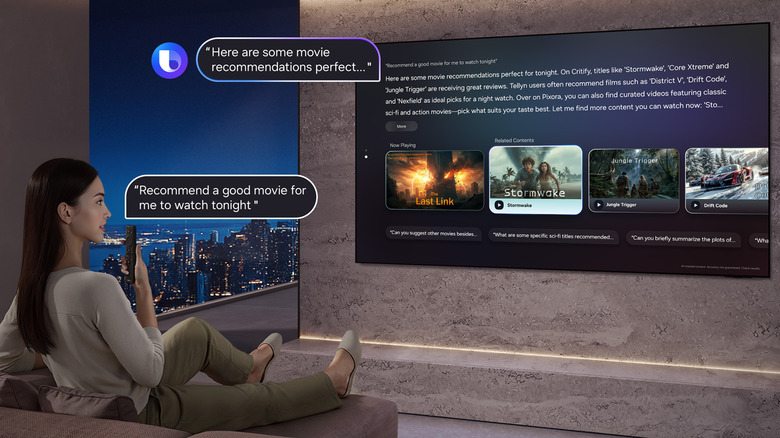
The most widespread change coming to smart TVs in 2026 is the embedding of AI processing in many new models. LG, Hisense, and other manufacturers showcased "AI inside the set" innovations at CES 2026. Dedicated AI engines within the upcoming lineup of smart TVs will improve real-time upscaling, motion processing, HDR tone mapping, and audio/color optimization. The Google TV platform is also rolling out updates featuring Gemini AI, which allows users to interact with the platform with voice commands and engage in curated content discovery.
Samsung is making the widest, deepest push into the AI TV sphere. Samsung Vision AI is a huge change in upcoming models. The Vision AI companion is a native part of Samsung's new line, bringing voice assistant and content curation features directly to the hardware. Vision AI is also integrated into Samsung's SmartThings ecosystem, unifying your preferences across all smart and AI-enhanced Samsung devices.
Enhanced native streaming
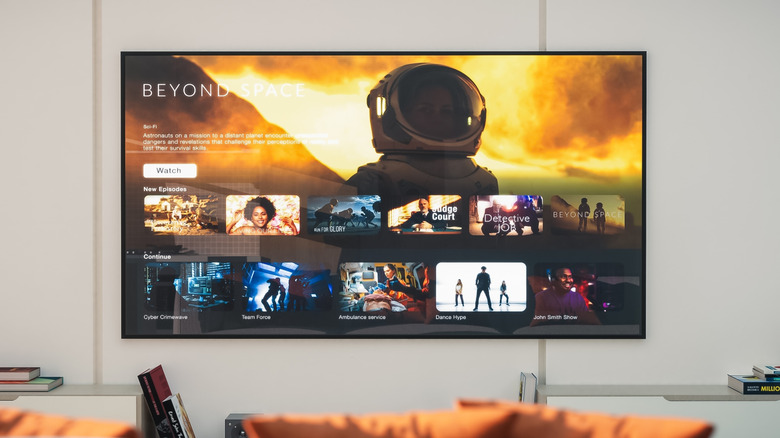
Ultimately, TVs exist to display something entertaining. Upcoming models are getting big changes that will make them much better at doing exactly that — without help from an additional device. The Amazon Fire TV Stick and Roku Streaming Stick, along with similar streaming devices, have been useful companions even in the era of smart TVs. Built-in streaming features are becoming more prevalent and more intuitive in recent models, and this will continue to be the case throughout 2026.
Roku TVs, for example, operate on the Roku OS that streamlines the viewing experience and prioritizes streaming performance. Roku iterated on its TV brand with the Pro Series lineup in 2025. While Google TV pushes this product type forward with its use of Gemini AI, it's practically inevitable that Roku TVs and Amazon Fire TVs will find a way to follow suit. Of course, smart TVs are gaining more processing power across the board. A modern smart TV from Samsung or another major manufacturer will also be better than ever at running streaming apps quickly and smoothly in 2026.