

10 American-Made Electric Vehicles Ranked From Worst To Best
Unlike gas cars, which have had a century of R&D to make the economies of scale work, electric cars simply haven't had that time. Couple that with the high cost of lithium batteries, and the average price of an EV in the US comes out to 20% higher than that of gas cars. While there's no denying EVs are cheaper to run, governments around the world have tried to solve the cost disparity by giving tax credits or rebates. In the U.S., the Clean Vehicle Credit was a great example of such a program, giving EVs assembled in America a credit of up to $7,500.
While the program was canceled late last year by the Trump administration, that doesn't mean you shouldn't invest in a Made in America EV. That's because many states, not all, have their own programs. For example, Illinois, Massachusetts, and Minnesota give rebates not only for new EVs but also for people buying older ones. On the other hand, states like D.C. cover 50% of the equipment cost when installing a home charging station. Unfortunately, choosing which American-built EV to buy can be difficult, as both new-age startups like Rivian and legacy brands compete for the top spot. And to help you join the electric revolution, we've sifted through all American-made EVs and ranked them from worst to the absolute best.
Ford F-150 Lightning
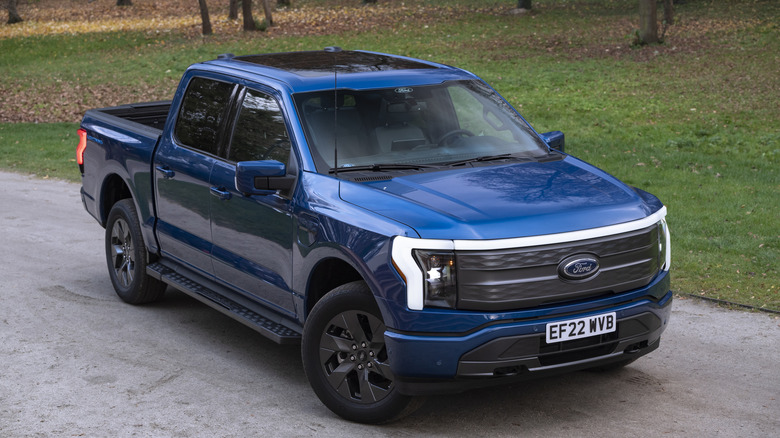
Few cars embody the American spirit as much as the Ford F-150 pickup truck, and for very good reason. They are reliable workhorses, easy to maintain, and, most importantly, affordable. A few years back, Ford announced the electric-powered version of the F-150, the Lightning. The truck doesn't try to look like a spaceship.
Instead, it sticks with the beloved look that appeals to a larger pool of buyers. The F-150 Lightning comes in two trims. The Standard Range variant gets dual motors that combine to produce 452 hp, while the Extended Range version bumps output to 580 hp and launches the car to 60 mph in four seconds. For context, that's quicker than the more expensive F-150 Raptor. While Ford discontinued production at the Michigan factory last December, the 2025 version is still available, starting at $52,375 for the base trim and going up to $87,590 for the Platinum trim.
Experts who reviewed the F-150 Lightning highlighted the refined ride, which benefits from its independent rear suspension. As a result of the batteries placed underneath the floor bed, even the body roll isn't an issue. Unfortunately, that's where the good news ends, and bad news begins with the driving range. Powering the Extended Range version is a 131.0 kWh battery, which Ford said should deliver 320 miles in ideal conditions. In the real world, however, the range drops to 230 to 250 miles. This problem is made worse by towing, as evidenced by Car and Driver's testing, where pulling a 6,100-pound trailer reduced the range to just 100 miles.
Volvo EX90
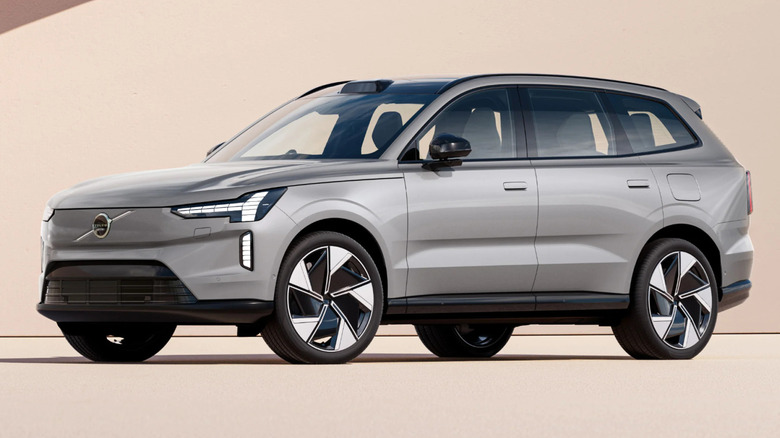
The gas-powered Volvo XC90 has served as the carmaker's flagship offering for families, complete with three rows of seating and a really nice ride. But what if you wanted Volvo's ride and safety features in a car powered by electrons? That's where the Volvo EX90 built in South Carolina comes in. As the name suggests, it's basically the electric version of the XC90, with a similar front and rear design, albeit without the front grill. All versions of the SUV get access to dual electric motors, though the power output depends on how much you spend. For context, the $82,000 base trim produces 412 hp, while the more expensive versions bump the output to over 500 hp, with a 4.1-second zero-to-60 mph launch time.
These performance figures don't take away the fact that the EX90 is a family vehicle at heart. Electrek's review noted that Volvo engineers deliberately softened the acceleration curve for a smoother ride. The insulated cabin cancels out most road noise, while the height-adjustable air suspension and adaptive dampers glide over potholes. Underneath the floor is a 107 kWh battery pack, which Volvo claims should be good for 310 miles.
As expected, the real-world range is indeed lower, hovering around 250 miles. The 2026 version gets an upgraded 800-volt battery architecture that recharges from 20% to 80% in just 30 minutes. There's also improved bi-directional charging, which can power your home for 3 days. Beyond that, the EX90 has a slippery road warning system and next-gen adaptive cruise control.
Genesis GV70 Electrified
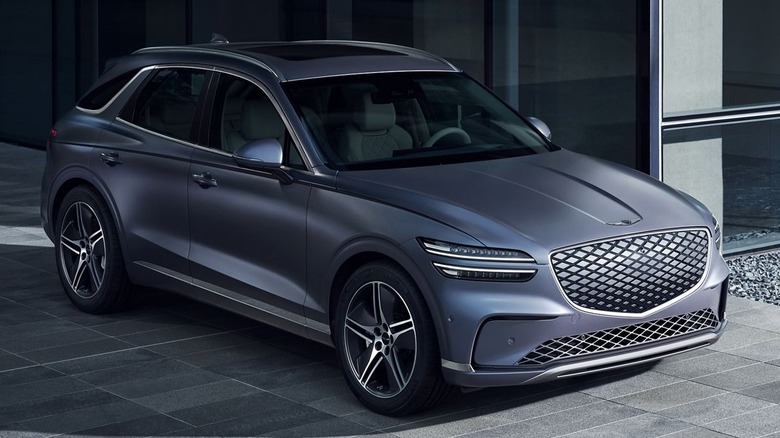
Genesis is the upmarket sub-brand of the Korean automaker Hyundai, which aims to create its own luxury profile, just as Lexus did for Toyota. The GV70 Electrified, which is based on the gas-powered GV70 and made at the brand's Alabama plant, is designed to take on the likes of the BMW iX3 and the Porsche Macan. On the outside, the GV70 EV gets microlens-array headlights, a smoother bumper, and no front grill. The inside reveals a Bentley-like interior made from fancy materials. The 2026 model gets Genesis' new 27.0-inch OLED display, which supports Apple CarPlay and Android Auto.
Unlike others on this list, all trims of the GV70 EV house the same dual electric motors that produce 483 horsepower and launch it from a standstill to 60 mph in 3.8 seconds. The car does all this without sacrificing comfort, as Car and Driver's review noted the light steering feel, coupled with decent cornering. The only complaint that they had was the brake pedal, which wasn't smooth when switching from regen braking to actual brakes. This year, the car is fitted with an upgraded 84.0 kWh battery, increasing the EPA-estimated range to 263 miles. Plus, the new NACS charging port can add 100 miles of range in just 13 minutes. As for pricing, the base version starts at $65,875, while higher trims can reach up to $76,845.
Cadillac Lyriq
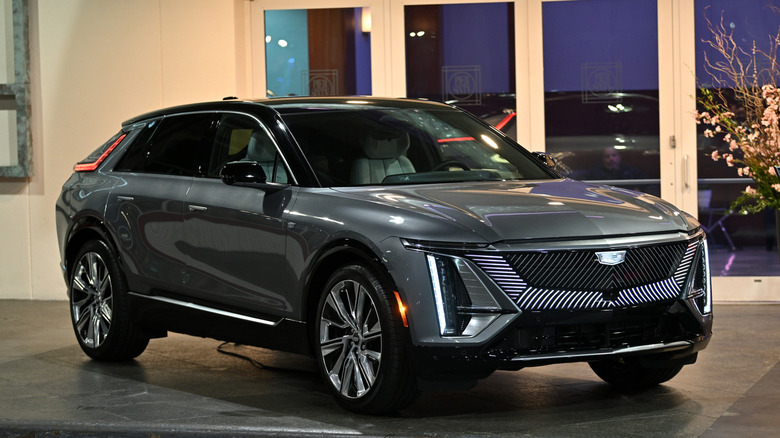
If the Volvo EX90 or the Genesis GV70 are a bit small for your standards, but the big 9,000-pound Escalade EV is too big, then the Cadillac Lyriq is what you need. Assembled in Tennessee, it takes the classic Cadillac SUV design and adds those futuristic EV elements like push-to-open door handles, headlights that put on a light show, and an interior dominated by a 33.0-inch infotainment screen that supports both Apple CarPlay and Android Auto.
While the Lyriq comes in several trims, power options are limited to just two. The entry-level models feature a 340-hp electric motor that drives the rear wheels only. Higher trims get access to an AWD dual-motor with 500 hp. Sure, these numbers might not seem awe-inspiring, but the Lyriq isn't trying to be a Lucid.
Cadillacs have always been cars to be chauffeured around, and the Lyriq does that really well. The ride is plush, hitting the accelerator doesn't snap your neck, and the one pedal drive is usable in everyday life. The only complaint some had was the excessive body roll, which is a consequence of the 6,000-pound weight. Underneath the chassis on all trims sits a 102.0 kWh battery that's good for an EPA range of 314 miles (single-motor version).
Tesla Model 3
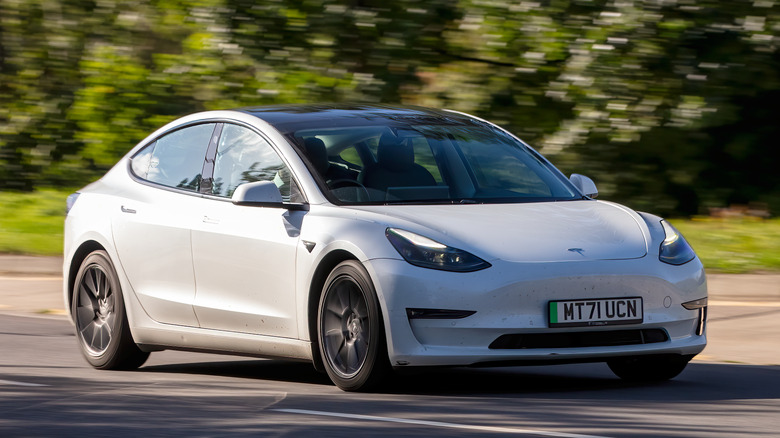
Tesla is essentially the brand that turned electric vehicles from a cool science experiment to real things. And perhaps the best example of this is the Tesla Model 3. The car has been around for so long that you've probably seen one in the wild. Built in California, the Model 3 starts at just $38,630, and for that price, you get a single-motor setup that produces 286 hp. If that isn't enough, Tesla offers a 425 hp dual-motor and a 510 hp performance trim, capable of launching the car to 60 mph in 2.8 seconds. As for range, EPA estimates that the single-motor version should run 363 miles before needing a recharge, while the dual-motor variants can go around 298 miles.
Reviews of the 2025 Performance trim highlighted its improved braking, which was really necessary given its blistering speed. On the road, the car feels planted thanks to its low center of gravity, the steering is super sharp, and it even communicates the road feel. Where things get complicated is Tesla's infamous approach to minimalism, which means you just get access to a 15.4-inch touchscreen that handles all infotainment and car needs. According to real buyers, this system is frustrating to use and easily distracts you from the road.
The lack of physical turn signals stalks is also a headache. The problems continue with reliability as the Model 3 has faced multiple recalls over its lifetime. There is some good news, though, as the carmaker recently moved into the top ten for predicted reliability in Consumer Reports, thanks to newer, better-built models. Even Apple CarPlay support is in the works.
Rivian R1T
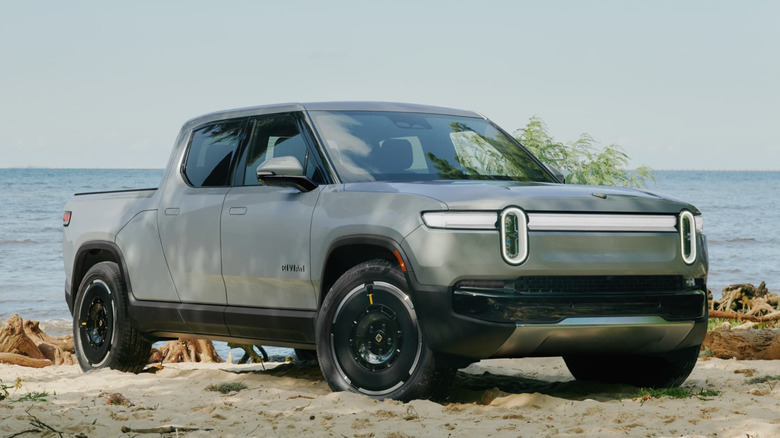
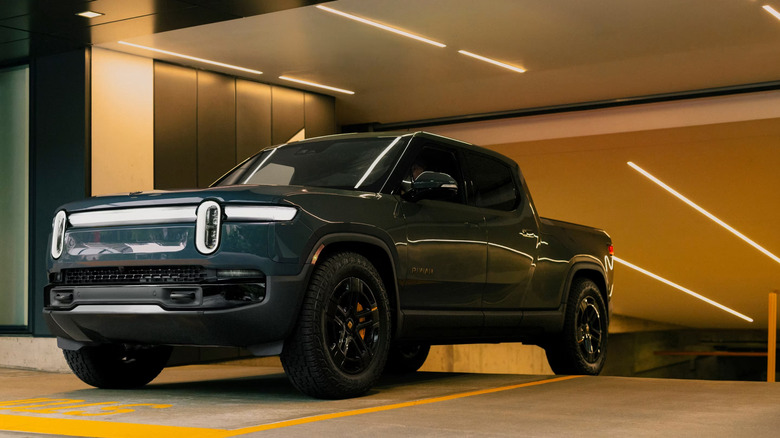
Competition in the electric pickup market, especially in 2026, is super hot. There's the F-150 Lightning, the Cybertruck, and the Silverado, each with its own set of unique offerings. But according to experts, if you want a truck that can handle everything, then the Rivian R1T could be it. Assembled in Illinois, the truck has been around for a few years and has captured the hearts of car enthusiasts in a few different ways. First up are the choices. Buyers can configure the truck with a dual, triple, or quad-motor setup, the fastest of which produces 1,025 horsepower and launches the truck to 60 mph in 2.6 seconds flat. For context, that's Corvette-level fast from a vehicle that weighs over 6,000 pounds.
Throttle House's review of the quad-motor version said that, despite the ludicrous performance, the truck builds power gradually without hitting you in the face. The brakes do a good job of stopping the mass, though you cannot turn off regenerative braking, which can be a concern for some. The adaptive air suspension works well off-road, and even the steering provides decent feedback. Like with any Silicon Valley startup, Rivian also buries everything inside a 15.6-inch touchscreen that omits necessary features like Apple CarPlay, which their CEO said is never coming.
Fortunately, you have plenty of battery options. The smallest is the Standard pack, with an EPA range of 258 miles, while the Max version bumps it to over 400 miles. Charging with a compatible fast charger should replenish the battery from 10% to 80% in less than 40 minutes. Prices for the R1T start at $72,790 and go all the way up to $125,800.
Hyundai Ioniq 5
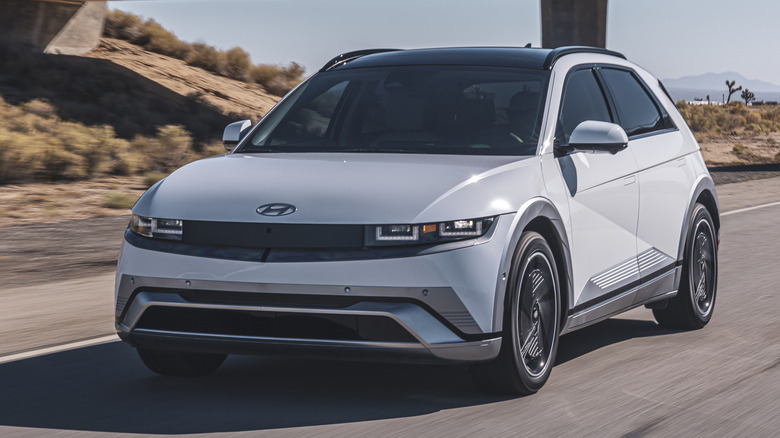
Up until a few years back, when every major carmaker was busy making hundred-thousand-dollar EVs, the only mid-range electric cars on the market that didn't suck were Teslas. Then in 2021, Hyundai launched the Ioniq 5. An EV, built in Georgia, that starts at $36,600 and isn't compromised in any meaningful way. For power, if you opt for the standard 63.0 kWh battery pack, the single motor makes 168 hp. The larger 84.0 kWh battery pack trim makes 225 hp, and there's even a dual-motor AWD version with the power of 320 horses.
Our review of the Ioniq 5 loved the unique styling, which goes perfectly with the retro vibes of the front and tail lights. Despite its hatchback look, the Ioniq 5 feels more like a crossover on the road, with a smooth ride. The good news continues with the multilink suspension, which eliminates body roll.
Inside, the interior features soft-touch materials that improve the premium-ness, and there's loads of space to keep things. A 12.3-inch touchscreen handles the infotainment and supports both wireless Android Auto and Apple CarPlay. While the EPA estimates the Hyundai Ioniq 5 should deliver a range of 245 to 318 miles, Car and Driver's highway testing put the actual range of the dual-motor version at 210 miles, so long-distance cruising could be an issue.
Kia EV9
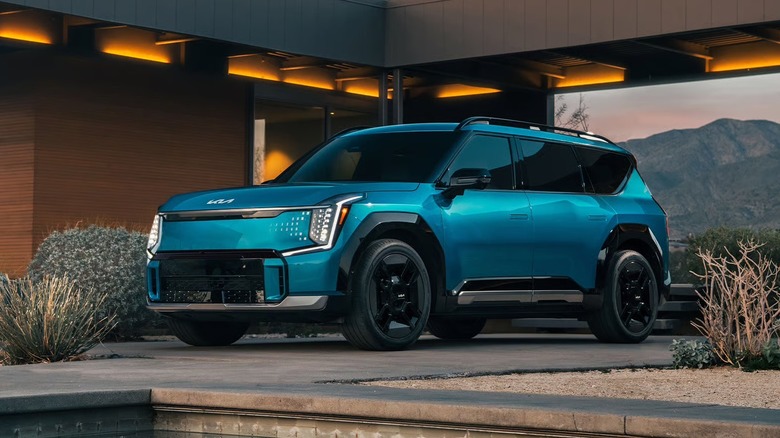
If you're in the market for a three-row family hauler, but the Volvo EX90 is out of budget, then the Kia EV9 could be for you. It's assembled at the same Hyundai plant in Georgia, and starts at a reasonable $56,495. Like the Ioniq 5, power options are plenty, with users getting to choose between an RWD single-motor version that produces 210 hp and an AWD trim that increases output to 379 hp. The top-of-the-line GT trim for 2026 will reportedly make over 500 hp.
Despite the performance numbers, the EV9 is a family vehicle, and it offers plenty of features for that. You get to choose between a 6-seat or 7-seat configuration, and the back rows can fold automatically to create a flat bed for carrying longer items. The interior has plenty of room for all passengers, and the captain's chairs at the back have massaging and ventilation.
Car and Driver's review of the AWD version mentioned that, despite the lack of adaptive dampers, the ride quality is supremely comfortable on both highways and mountain roads. The cabin noise is kept to a minimum, and even the range isn't bad. On that topic, the base model, which features a 76.1 kWh cell, has an EPA-estimated range of 230 miles, while more expensive trims like the Light Long Range and e-AWD get access to a 99.8 kWh cell, which should be good for 304 and 280 miles, respectively.
Lucid Gravity
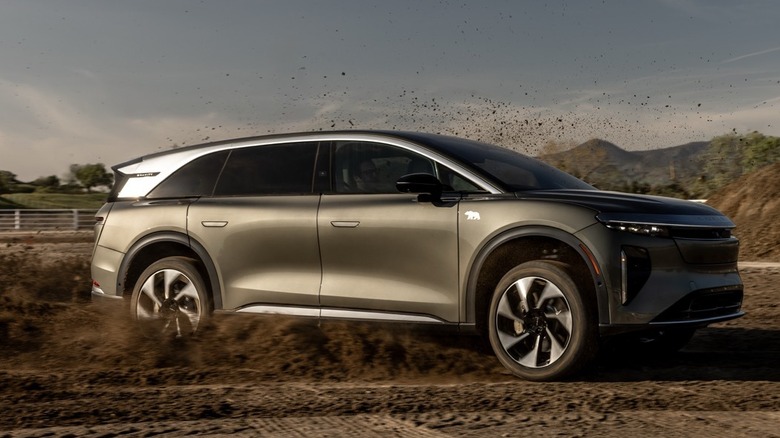
Lucid is the new-age EV startup brand that has made a name for itself in the luxury sedan space. But what if you don't like the sedan form-factor and would much rather have a big SUV? Well, that's exactly the problem the Lucid Gravity aims to solve. Assembled in Arizona, the Gravity allows buyers to configure it in either two or three rows of seating and weighs over 6,000 pounds. But that doesn't mean it's slow. The SUV comes in three trims, all of which include dual motors and AWD. The base Touring version gets 560 hp, while the Grand Touring outputs 828 hp. At last, there is the Dream edition, which turns up the power to four digits (1,070 hp to be exact) and has a zero-to-60 mph time of 3.1 seconds.
Since the Gravity is a ground-up EV, it has many clever features and tricks. For example, instead of a small frunk that can barely fit a charging cable, the SUV's frunk opens into a seating deck for two people, with comfortable seats. If you opt for the three rows, the back row can not only fold down automatically but also hide beneath the floor.
The interiors are filled with fancy materials like leather, and tons of room for just about everyone. Jalopnik's review of the GT model described the Gravity as being two cars in one. In the regular Smooth mode, the car is stable, handles potholes, and keeps everything comfortable. However, the off-road mode turns the Gravity into a dirt trail monster by tightening everything up. In terms of range, the base Touring model is equipped with an 89 kWh battery for an EPA-estimated range of 337 miles, while the Gravity Grand Touring model (123 kWh) should offer 450 miles of range.
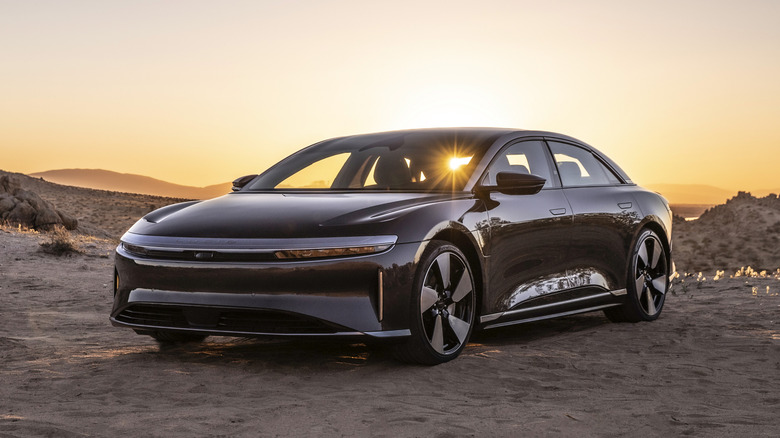
Lucid Air
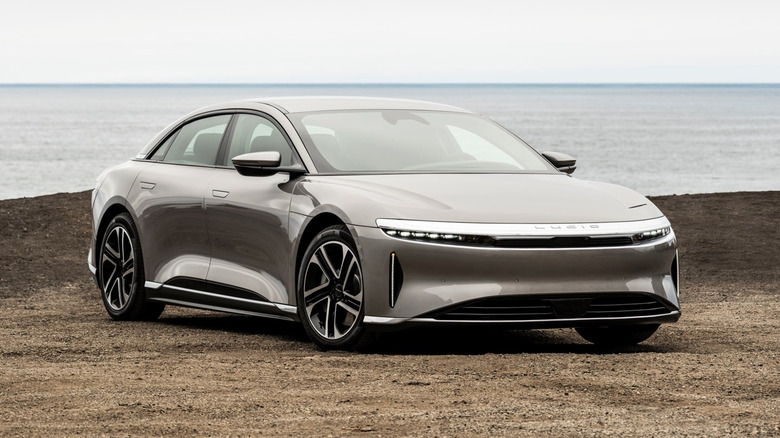
For a lot of people, the biggest reason they haven't switched to an EV is range anxiety. The thought of being stuck in an unknown place because a charger wasn't working is scary. Well, that's not a problem with the Lucid Air. That's because the Air's Grand Touring trim is the longest-range EV on the planet, capable of going 512 miles before needing a recharge. And the car isn't just about the range. It offers several power options, including a 430 hp single-motor, a 620 hp dual-motor, a 1,050 hp dual-motor, and a ridiculous 1,234 hp triple-motor version with a zero-to-60 time of 1.98 seconds. Inevitably, this insane performance also makes the Air one of the fastest-accelerating electric cars, only behind electric hypercars like the Rimac Nevera.
Throttle House's review of the Sapphire version mentioned the insane performance the triple motors deliver, to the point that launching the car feels nauseating from the amount of whiplash. Keeping the launch out, the Air is a super-comfortable, well-riding sedan. The steering communicates road feel brilliantly, and the car handles well at city speeds, except for the road noise, which can be irritating from the 21-inch tires. Inside, the Air is luxurious, complete with wooden panels and leather. Unlike Tesla, the two 34.0-inch and 12.5-inch touchscreens do support both Android Auto and Apple CarPlay. Prices for the Air start at $72,400, while the Sapphire version tops out at $250,500.
Methodology
The definition of American-made EVs is a bit complex. To qualify for state tax credits, EVs only have to be assembled in America, meaning components can fly from all over the globe, and as long as they are being put together in the US, it's an American-made car. Fortunately, most carmakers already have their final assembly plants in the country, so finding the cars wasn't a big challenge.
We then looked up the best-of EV lists from major car media outlets like Car and Driver and Top Gear to see which cars they liked and why. Once we had a definite pool of 10 cars, we searched the internet for expert reviews from both legacy and new-age media channels, focusing on factors such as performance, range, handling, interior, and, most importantly, value. Cars are a significant investment, so reliability from actual users also played a key deciding factor, which is why cars like the Tesla Model 3 were ranked lower.