

The Reason Why Cheap TVs Look Far Better Than They Used To
We may receive a commission on purchases made from links.
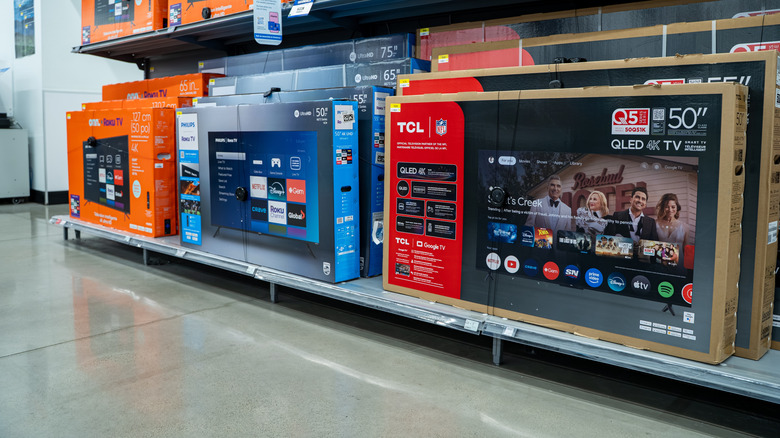
The television landscape has changed quite a bit over the last several years. The cheap and affordable smart TV models are more capable than ever, allowing folks to get a solid TV viewing experience without necessarily shelling out the big bucks. The premium televisions still offer superior processing, higher peak brightness, the latest technologies, and better picture quality; however, the cheap TVs have reached a level where you can be happy with your TV's performance.
There are several reasons why cheap TVs look much better than their counterparts of a decade or two ago. For example, many affordable TVs in 2026 use technologies such as quantum dot-based color filtering, Mini-LED backlighting, and full-array local dimming, which were earlier only seen in expensive models. Similarly, manufacturers have gotten more efficient, especially the relatively newer Chinese TV makers, at pumping out display panels more efficiently. This has brought down the price of TVs. Here's a look at all the reasons that have made modern cheap televisions better.
Trickle down of advanced TV technologies
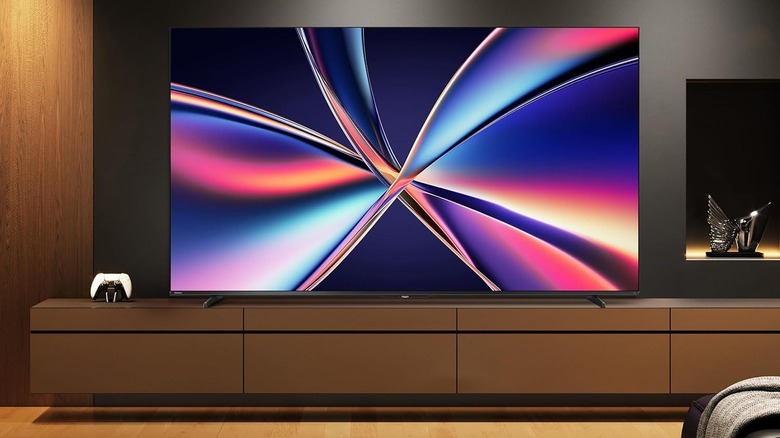
Many advanced TV technologies that have helped significantly improve the overall picture quality of LCD and LED TVs have trickled down to budget models in recent years, elevating their overall performance. For example, Hisense's E6 Cinema Series TV, which sells for less than $300 for its 55-inch model, comes with quantum dots, which were earlier used in many high-end TVs to produce the three primary colors (red, green, and blue), instead of traditional color filters. Quantum dots are much more efficient and deliver lifelike colors. But with quantum dots in Hisense E6 and other similarly priced budget TVs, you can expect similar color fidelity.
Mini-LED backlighting is another TV technology that has reached many affordable TVs, such as the Roku Plus Series, and has become a game-changer, as it allows it to deliver brighter pictures and better contrast when combined with full-array local dimming. With deeper blacks and brighter whites, budget TVs have more color volume, allowing them to display more colors accurately, resulting in better visual performance.
Moreover, affordable TV models these days have features like HDR support, surround sound formats, and AI-enabled upscaling; you couldn't find similar advanced technologies in budget TVs of the past. Each of these features helps improve a TV's performance, and the inclusion of this technology is why many of the best cheap Smart TV brands can hold their own against pricier models.
Manufacturing efficiency and hidden subsidy

In addition to advanced TV technologies, many modern budget TVs are better than their older counterparts because manufacturers can make TVs more cheaply, allowing them to include superior components and better features. A reason for this is that the cost of cutting display glass for TVs has gone down, which means TV manufacturers can acquire the displays — which is one of the most expensive parts of a TV — at a lower cost. Plus, as 4K has become the standard resolution for modern TVs, including most budget models, manufacturers are not wasting money running multiple production lines for different resolutions, resulting in better cost efficiency.
As explained earlier, most budget TVs these days have tons of advanced features that were previously reserved for high-end models. While the cost of these features has certainly come down, many manufacturers now include them because they can put advertisements in the TV's interface, collect data about you by spying on your TV activities, and use the revenue from all this to recoup some of their costs. Basically, some of your TV's cost is being subsidized by the TV manufacturer. So you get better hardware in your cheap TV, and in return, you are forced to watch some ads.