

5 Gadgets From The '80s We Can't Help But Love
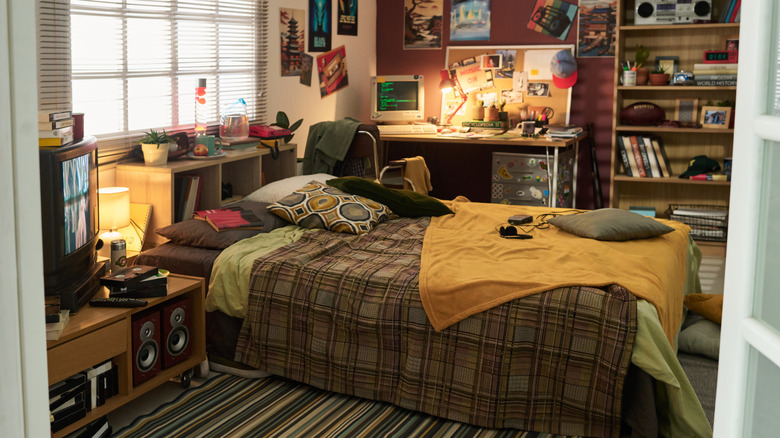
The 1980s were a golden age for some of the coolest gadgets that were more than just functional. They sparked pure joy. From chunky portable boomboxes to convenient clappers, the '80s devices defined a generation's relationship with technology. They were tactile, playful, and a little bit weird in the best possible way. Even today's brands are leaning into that legacy with retro-inspired tech that brings a smile to anyone born in the analogue decades. Although nostalgia plays a big part in this resurgence of '80s technology, it's not the only factor.
The '80s were a decade of bold colors, cassette tapes, and gadgets that felt alive in your hands. It's no wonder retro gadgets are trending again among younger generations that never had the chance to experience the originals. Nowadays, everything is digital, in the cloud, or comes in a boring and uninspiring shade of gray. As we dive into five iconic gadgets from this colorful decade, it's clear that they're not just relics of the past. These devices are cultural touchstones that draw nostalgic smiles, but they can also be enjoyed today.
The VCR
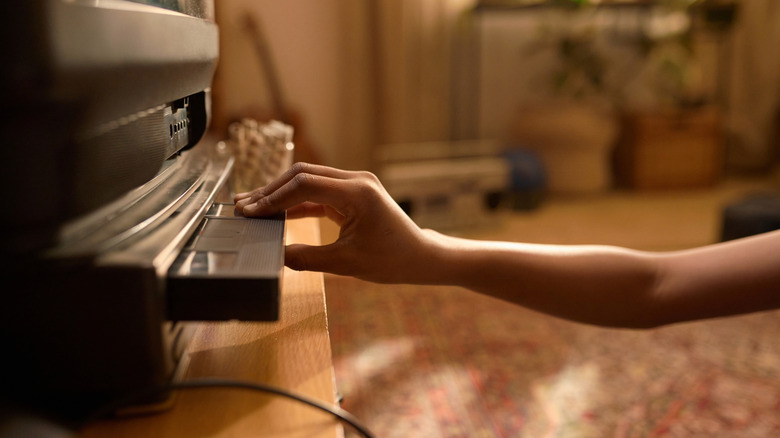
Remember the satisfying tech sound of a VHS tape sliding into a video cassette recorder? If you're too young to remember but you got your hands on a collection of tapes, now is the time to step into this time machine. By the mid-1980s, videocassette recorders became a household gadget. Families could record TV shows, play rented movies, and rewind memorable moments over and over.
Owning a VCR in the 80s was a sign of status. Early models were costly, and sometimes families had to spend close to a year's worth of groceries to buy one. Renting a VCR was a common first step before committing to buying a family model. Since we're talking about renting, how about the vibrant, smelly hubs that were the rental stores? Wandering through aisles of chunky VHS boxes, reading dramatic blurbs, and debating whether to get "Top Gun" or "Indiana Jones" was as much part of the experience as the movie itself.
The VCR changed how we watched and remembered movies. Friday nights became family events, and sleepovers turned into small film festivals. The blank VHS tapes slowly filled with birthday parties and beach vacations, and those tapes, even today, evoke fuzzy, warm nostalgia that streaming simply can't replicate. Even modern apps, such as Snapchat and TikTok, are trying to copy the retro feel of VHS tapes with filters. The bottom line is that VCRs slow down the experience of watching videos, which can help you enjoy and appreciate them more. Streaming movies today is a huge convenience, but it lacks the heart, soul, and meditative qualities that came with using analogue tech.
Disposable cameras
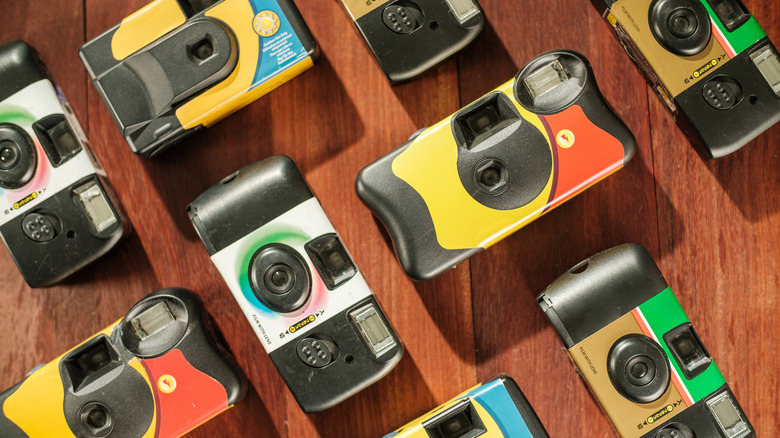
Before smartphones and endless digital photos, there was something magical about snapping a moment with a simple, single-use camera. In the mid-80s, lightweight disposable cameras like Fujifilm QuickSnap and Kodak Fling burst onto the scene. These old-school gadgets gave everyday people a point-and-shoot way to capture memories without worrying about film, settings, or fancy gear. Disposable cameras were affordable, and they democratized photography by making it easy and fun for anyone to snap a photo of important (and not so important) moments.
What made disposable cameras special wasn't just their simplicity, but the experience wrapped around them. They were compact and easy to take on the next family vacation or a field trip. You didn't have to hassle with preloading the film roll or winding it up for each next snap. And there was no instant preview, only anticipation. You had to wait until you finished off the film and take it to the photo lab for development. The suspense was real. But that little delay between capture and reveal made every photo feel like a real treat.
The chunky plastic bodies, the satisfying click of the shutter, and the slightly imperfect colors now bring nostalgic feelings for many who grew up in the era. But the aesthetics of the retro '80s photos are popular with the new kids, too. All the Instagram filters in the world can't bring back the magic of holding an old disposable camera in your hands. That's why you can still buy them today and enjoy the rush of capturing the moment.
Chess robots
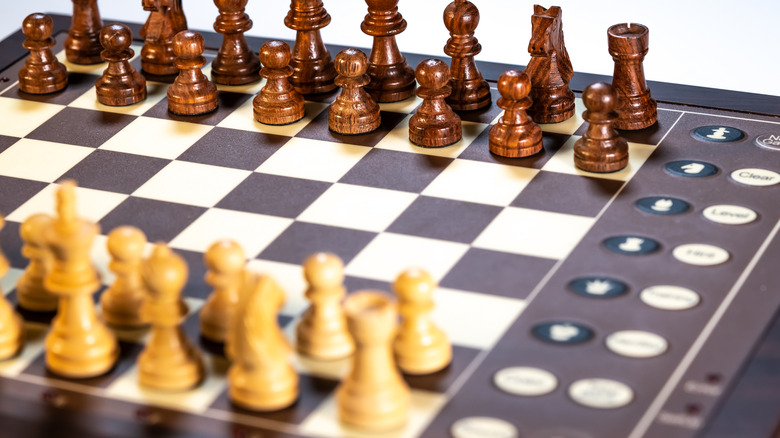
Long before gaming apps and online chess games, the 1980s had a geek-dream version of playing against a machine. It was a robotic chess computer that actually moved the piece on the board for you. It was nothing like today's AI that refuses to play chess against another AI. These chess gadgets were full-size chessboards with mechanical motion. In the '80s, it felt like something out of Star Trek.
The first of these wonders to hit the stores was the Novag Robot Adversary in 1982. A clever little mechanical arm would fold out and pick up the pieces after it calculated the moves. A year later, Milton Bradley's Grandmaster came out, expanding the popularity of chess robots. Instead of a mechanical arm, it had magnets under the board, which would slide the pieces into place. Suddenly, many homes had one, as it became a hit in the U.S. and Europe.
These chess robots felt alive, which made them especially cool. They were little electronic brains thinking and then physically taking an action. That's the kind of gadget that can make people lean into the game and feel completely immersed. And the mix of mechanical whimsy and strategy still makes some collectors and enthusiasts smile when they see one. Robotics chess is a reminder of a time when computers were less omnipresent, and every piece's move felt like a tiny marvel of electromechanical ingenuity.
The clapper
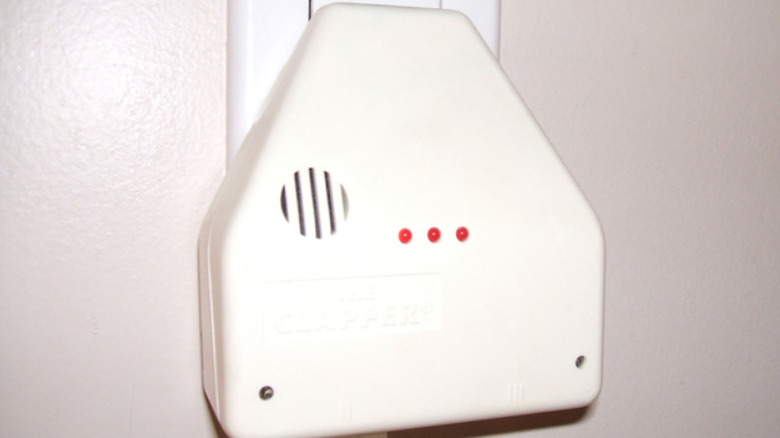
Before Alexa, the Clapper was the closest thing many '80s homes had to hands-free automation. Plugged into a wall outlet and paired with a lamp, TV, or a radio, this quirky little box would respond to the rhythm of your hand clap. Two claps to turn the lights on, and a couple more to turn them off – it was that simple. The Clapper was futuristic but also a lazy way to control gadgets, which is what made it so popular among kids and adults alike.
The Clapper was introduced in the mid-80s, and it was sold through repeated TV commercials. It tapped into the same spirit that later fueled smart home tech: eliminating physical switches. In that sense, the Clapper was one of the first mainstream smart-like home gadgets and gesture recognition tech.
Of course, reality is sometimes more amusing and less practical. This device was easily triggered by dogs barking, music beats, or even loud conversations. But it's this imperfection that adds to the charm. And even if you didn't own one, you still grinned at the commercial and sang along to the jingle "Clap on, clap off ... The Clapper!"
The boombox
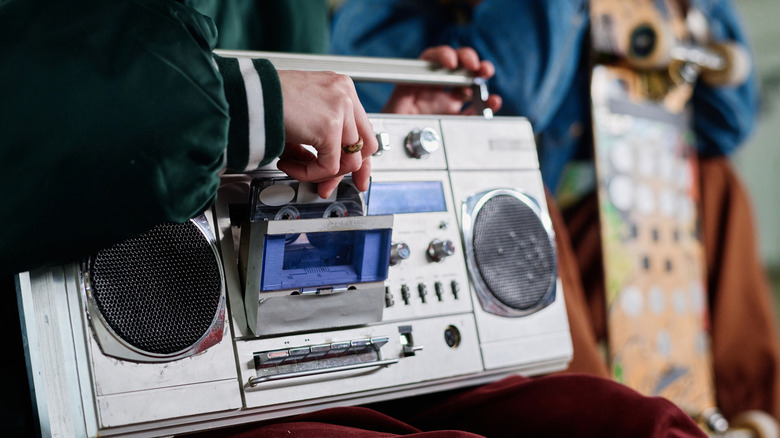
Nothing said "cool" in the '80s quite like hoisting a boombox onto your shoulder and strutting down the street to your favorite tune. These chunky stereos, packed with big speakers, cassette decks, and booming bass, were more than just entertainment gadgets. They helped shape early hip-hop culture, giving DJs and MCs a way to make their art public and portable. After all, boomboxes were the light of every party, and they became fixtures at parks and street corners where people could blast beats and share mixtapes.
Some boomboxes even became a status symbol. The bigger the better, and the louder your box was, the more respect you reaped from your friends. Models like Sharp GF-77 or JVC RC-M90 are still legendary among enthusiasts for their power and swagger. Check your attic, because you might have rare vintage tech still worth thousands. That said, the boombox represented freedom and self-expression. Back in the day, it was popular to decorate your boombox with stickers or give it a personal touch with bright colors. Not to mention that everyone recorded their custom mixtapes that mirrored their personal musical tastes. Before Bluetooth speakers and streaming playlists, this is how art was shared.