

3 Clever Uses For Your Old Video Game Controllers

We may receive a commission on purchases made from links.
For lifelong gamers, figuring out what to do with piles of aging game controllers from past platforms can be a challenge. Is it worth keeping controllers from unused consoles? What about years' worth of third-party controllers for PC gaming or even mobile gaming? At what point are those peripherals no longer useful for their intended purpose? And once that happens, what should you do with those outdated hunks of plastic?
Many products we buy are part of a system designed around disposability, and gaming hardware is no exception. Over the last few years, gaming peripherals like controllers have flooded the market to meet growing consumer demand, and the global market for gaming peripherals is expected to hit $16.6 billion by 2030. For the past 20 years, most modern controllers have used potentiometer-based analog joysticks. These joysticks are cheap and keep manufacturing costs down, but they're also prone to stick drift. This is in stark contrast with Hall-effect joysticks that use magnets to avoid wear and tear. However, manufacturers of first-party console controllers still use pot-based analog joysticks, and Sony, Microsoft, and Nintendo have all been sued for stick drift issues.
Before spending more money on another gaming controller for mobile, PC, or console, you should consider these three useful ways to repurpose your old gear. Whether you want to future-proof outdated peripheral designs, breathe new life into your favorites, or simply get your old game controllers out of the house for good, this roundup is for you.
Recycle or sell your used controllers
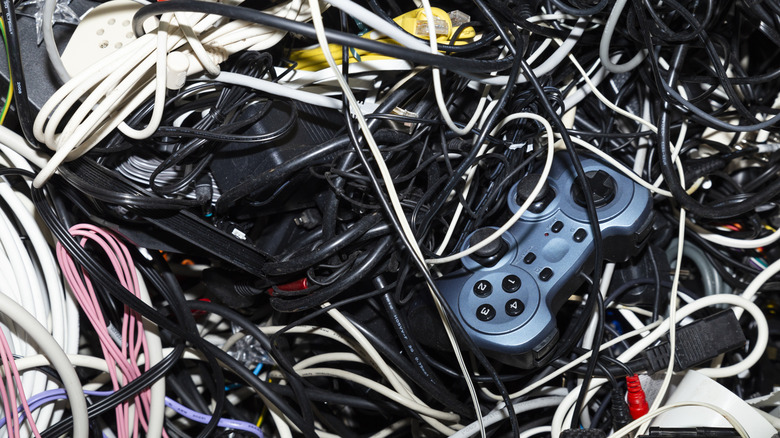
Whether you have new or old game controllers collecting dust somewhere in your house, you have several options for getting rid of them. To do away with old controller e-waste, you can recycle or resell the gear. Thanks to the internet, both options are perfectly plausible regardless of your location, so the choice is yours.
Electronics recycling is a simple way to get rid of several unwanted game controllers at once. Although it limits drop-offs to three items per day, Best Buy has one such program. Staples offers a similar program, and Lowe's will also accept batteries for recycling. Depending on where you live, other private businesses or municipal services can also recycle electronics. If you'd rather avoid making the trip, though, Best Buy allows customers to mail in their electronics for recycling. To do this, you'll have to purchase shipping boxes directly from Best Buy (with prices starting at $22.99), but that route is a solid option for those living outside urban areas.
If your used controllers are eligible for trade-in and in good shape, you could also sell them to Best Buy instead of recycling them. Most recent first-party controllers, such as PS5 DualSense controllers, would be eligible for sale. But if you're planning to sell retro pieces like NES or SNES controllers, you'll have to deal with GameStop or use reseller sites like eBay. No matter what option you choose, just don't wait until your storage containers are overflowing with old game controllers.
Use old console controllers for PC and mobile gaming
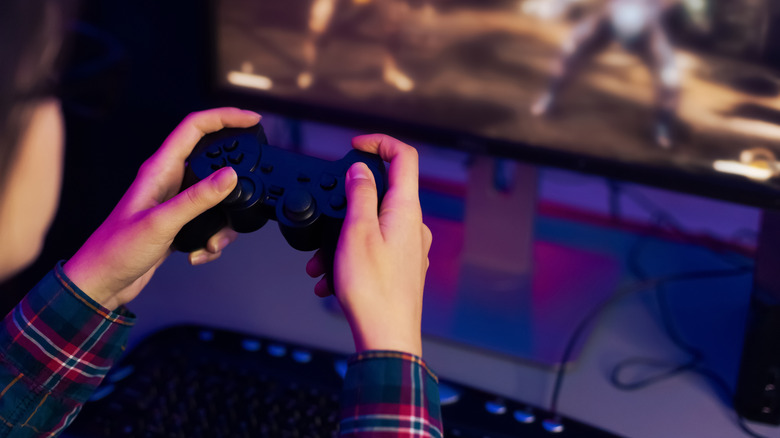
Just because a controller was made for a previous generation, that doesn't mean it can't be useful outside its intended platform. Sony is a perfect example — while its first-party controllers are proprietary, you can use them for both PC and mobile gaming. Microsoft's Xbox controllers are also supported natively across PC and mobile. So even if you're no longer using your old PS4 or Xbox One controllers, you can repurpose them for playing games on different hardware.
If you're looking to reuse a retro controller for PC or mobile gaming, you'll have a much harder time, given you'll have to mod it so it can connect wirelessly or via USB. However, there's a large retro gaming modding scene out there, so things like the NES Controller Wireless Upgrade Kit are both readily available and highly affordable. Keep this in mind, though: the more people mod retro consoles and peripherals, the less original hardware will exist for future generations to enjoy. This type of consumer-driven scarcity can also drive up prices (looking at you, Pokémon).
Regardless, with some gumption and know-how, you can repurpose both new and old controllers for use on mobile and PC. Many first- and third-party controllers will work for this purpose, with no extra software required. Steam, Android, and iOS all offer controller profiles for both DualShock and DualSense. Xbox Wireless Controllers can also be used on multiple platforms. Third-party controllers can vary in compatibility, but more often than not, they do support multiple platforms — including PC and mobile — out of the box. So, rather than buying a new controller for mobile or PC gaming, why not cleverly repurpose an old controller from a previous console?
Tear down your old controllers for spare parts
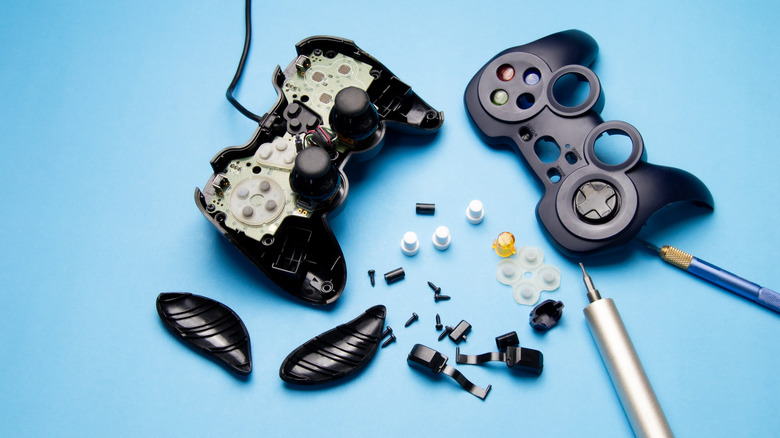
Hall-effect sticks and triggers are commonly used in modern-day controller modding, as well as clicky, switch-based buttons over rubber membranes for things like D-pads and face buttons. There's no shortage of hardware combinations you can use to mod controllers, and many people in the modding scene experiment with all sorts of components when designing gear modifications.
You can even mod in Hall-effect sticks like the BRONAL TMR Hall Effect Joystick for the Switch and Switch Lite, and for handheld devices, the modification potential doesn't end there. So rather than tossing your old controllers, you can break them down and save their individual components. While we don't advise doing this with retro controllers (so as not to put a dent in their already limited stock), anything from the last three generations should work well, given they contain generally cross-compatible parts.
Next time your favorite controller gets stick drift, try harvesting a joystick from an older controller you've got lying around instead of buying a new device or replacement stick. The more spares you have, the better, especially if you've managed to collect a handful of third-party controllers containing Hall-effect sticks and mechanical buttons. Whether or not you're interested in modding as a hobby, having spare parts in the house can always come in handy should you want to extend the lifespan of your current gear.