

Big Changes Are Coming To Apple In 2026
Apple's yearly schedule is somewhat predictable for fans of the company. Apple has fixed annual events, such as software announcements at WWDC in June and hardware updates like new iPhones in September. The iPhone maker also releases iPads, Macs, and other products throughout the year, with the February-March and October-November windows being closely watched for such releases, while the regular iOS updates are expected throughout the year. In many ways, 2026 will be similar, as Apple will hold the same events and spread product launches across those months. But some longtime Apple product owners may already know that Apple could run a unique play this year.
It's not just about the foldable iPhone, expected in the second half of the year as part of a revamped iPhone 18 series. First, Apple is expected to release the next-generation Siri voice assistant that will behave more like Gemini and ChatGPT. Apple may also unveil new home products this year, part of a bigger smart home push. Later in 2026, Apple's first MacBook Pros with OLED screens and touch screen displays are expected. Finally, Apple could enter a new product category directly tied to the Siri AI efforts: smart glasses that work with the iPhone in your pocket to bring AI into everyday use.
If that's not enough, this year will also answer an Apple question that wasn't necessarily on the mind of many this year: Will Tim Cook step down as CEO of Apple, or will he stay there for a few more years?
Apple's succession plans
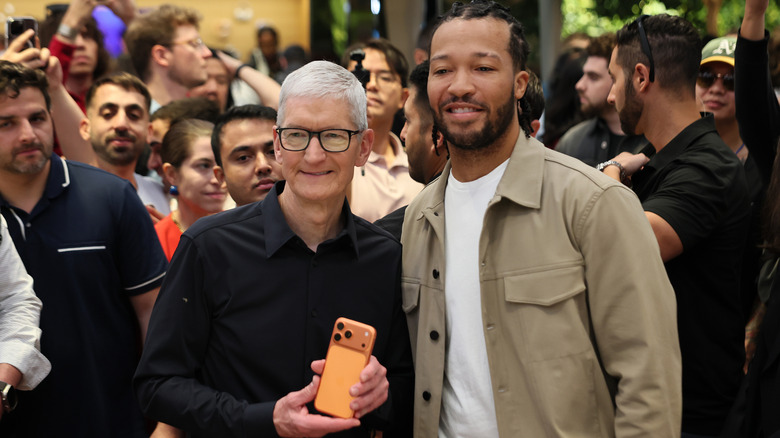
Tim Cook has been leading Apple for almost 15 years, turning the company into the first to reach $3 trillion market value along the way. He oversaw the launch of several new Apple products, including the AirPods, Apple Watch, the M-series chips for Macs and iPads, and Apple Vision Pro, while he continued to refresh all of the company's product lines that started under Steve Jobs, including the Mac, iPad, and iPhone. Apple's smartphone continues to be the driving force behind the company's strong earnings. In the fiscal quarter ending in December 2025, the smartphone lineup generated $85.3 billion in revenue, more than half of the $143.8 billion for the period. Both are records for the company, with the iPhone 17 being the main driver for the record quarter.
This performance suggests Tim Cook has no reason to retire in 2026, despite several rumors in late 2025 that indicated that Apple may announce John Ternus, Apple's Senior VP of Hardware Engineering, as Cook's successor this year. Bloomberg's Mark Gurman disputed the reports about Tim Cook's purported departure, saying the CEO is unlikely to leave this year and should stay on as Apple's leader.
You can't talk about Apple's big year ahead without considering the possibility of Cook handing the reins over to one of his lieutenants. However, Cook may want to leave Apple only when his legacy is complete. The rare Siri blunder that played out about a year ago needs correction, as does Apple's late entry into AI. Also, Tim Cook may want the foldable iPhone, a device that may revolutionize the foldable industry, to be part of his legacy. The same could be true for the first-generation smart glasses that Apple is reportedly making, as these devices may one day replace the iPhone.
The Siri revamp and Apple's first chatbot
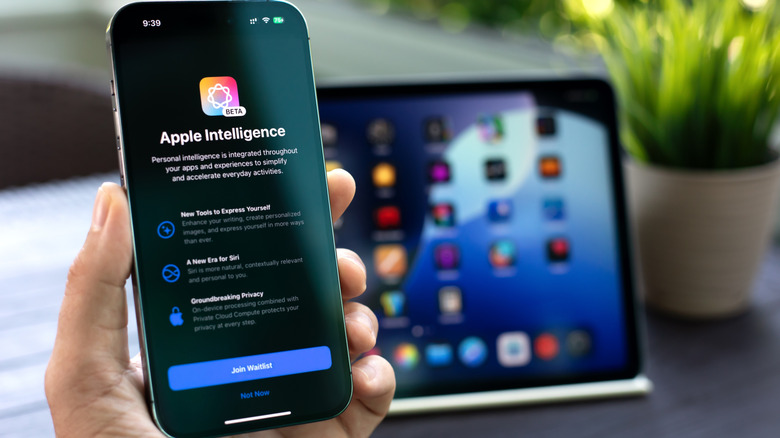
Apple unveiled a new Siri experience at WWDC 2024, one that would bring advanced AI functionality to the often-criticized voice assistant. Those features were not be ready for the fall of 2024, when the iPhone 16 series launched, but were expected to arrive in the spring of 2025. Apple Intelligence was the focal point of Apple's iPhone marketing despite that delay. Last year, Apple had to postpone those features by another year, and the upgraded Siri is now expected to arrive with the iOS 26.4 update in spring 2026.
Powering the new Siri experience will be a custom version of Google Gemini, according to Mark Gurman for Bloomberg. Apple has partnered with Google to use its best AI model for Siri, which would be as powerful as, but not equal to, the Gemini 3 chatbot most people can access. Instead, Apple will tweak the model based on its own needs, and the tool is likely to run it on Apple's privacy-preserving AI infrastructure unveiled at WWDC 2024 for AI tasks Siri can't run on-device.
The Siri revamp may be delivered in two phases this year, with the smarter Siri promised in 2024 comeing first. According to The Information, Siri will be able to understand questions asked in conversational language and provide answers similar to ChatGPT and Gemini. The assistant will see your screen contents and be aware of context by accessing your personal information privately. The new iOS 27, which will be unveiled in June at WWDC 2026, will deliver further Siri improvements, including chat memory and a more complete chatbot experience. Codenamed Campos internally, this Siri chatbot will be available across Apple devices. Campos Siri will also be powered by Google's custom Gemini model.
The home hub and Apple smart glasses
Apple placed a spatial computer on the users' faces with the $3,500 Apple Vision Pro, but it did not become a commercial success. More recent rumors claim Apple will not release new Vision models in the near future, instead focusing on AI smart glasses like competitors' products. Ray-Ban Meta smart glasses are the best example of such a product, with Google and Samsung expected to launch Android XR glasses this year to compete with it.
Leaks mention Apple's N50/N401 product, an internal codename that stands for smart glasses. The company is expected to launch these devices in 2027 or even late this year, ahead of their in-store release.
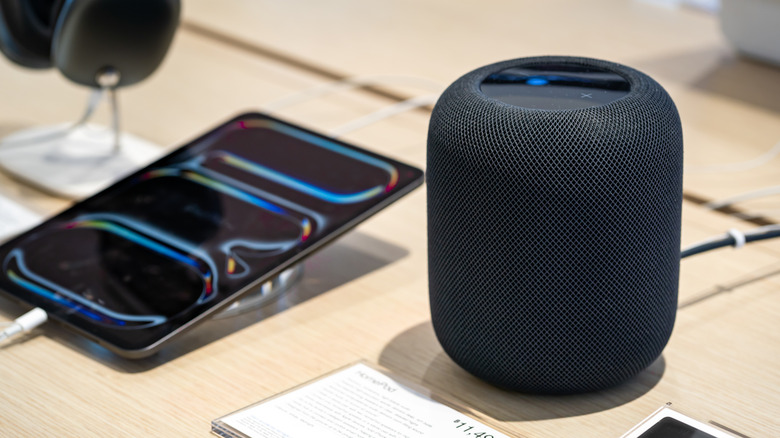
More likely than the Apple glasses' release are new Home-branded devices that would also depend on the Siri revamp. The assistant would have to understand commands issued via conversational language to control a smart home. At the center of Apple's push for smart home gadgets is a new smart display or home hub product that may rival devices like the Amazon Echo Show and the Google Nest Hub. Apple's smart display would become the command-and-control station of users' smart homes, mounted on the wall or on a base and featuring a screen with fast access to apps and widgets. A tabletop robot that follows you around to ensure during FaceTime calls to ensure the screen is in view may launch in the future. Apple's smart home push may also include a few other products, such as a new Apple TV box, upgraded HomePod speakers, and a home security camera, a first for Apple, although it's unclear whether the camera will be available in stores this year.
New iPads and the major MacBook Pro refresh
An iPad 12 tablet may launch this spring, featuring the same A19 chip as the iPhone 17. Apple may also update the 11-inch and 13-inch iPad Air models to the M4 chip. The second half of the year could mark the release of the iPad mini 8, featuring an OLED screen similar to the iPad Pro's and a new A-series chip, either A19 or A20. The iPad Pro received its M5 upgrade in 2025 and isn't expected to see a refresh in 2026.
On the other hand, MacBooks could receive significant changes this year, starting in the spring of 2026, when a low-cost MacBook Air may be launched, according to analyst Ming-Chi Kuo. The device should feature a 12-inch display and the A-series chip that powered previous iPhone models. This laptop would become Apple's cheapest model, with a price starting under $999. After launching the base M5 MacBook Pro in late 2025, Apple could unveil the M5 Pro and M5 Max versions of the 14-inch and 16-inch MacBook Pro models also in the spring of 2026. The M5 versions of the 13-inch and 15-inch MacBook Air may also be revealed in the first half of the year. Desktops, including the Mac mini, Mac Studio, and iMac, are expected to get their own M5 versions this year.
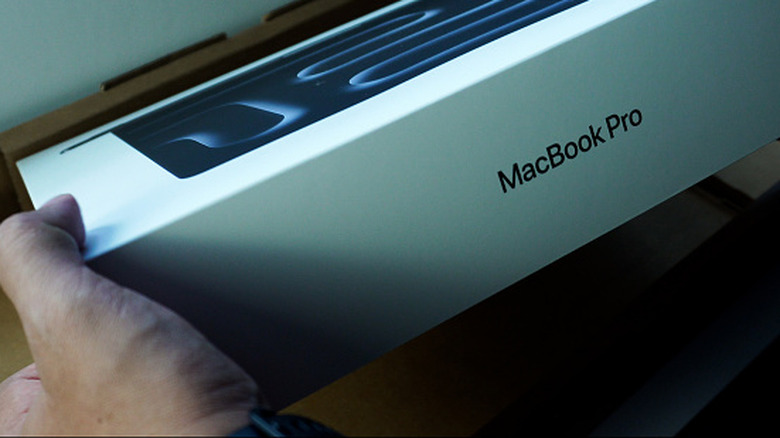
Buyers eyeing the M5 laptops may want to wait. In late 2026, Apple should update the MacBook Pro again, this time bringing a major redesign to the line. The M6 Pro and M6 Max versions may feature OLED displays and touch support, the first models in the MacBook series with such a feature. This would be a notable change by Apple, which has resisted using touch screens in laptops for years. This rumored redesign may be delayed to 2027.
Foldable iPhone and the iPhone 18 reshuffle
Unofficially named the iPhone Fold, Appe's book-style foldable phone could be a direct rival to the Samsung Galaxy Z Fold 8, set to launch before Apple's September 2026 iPhone event. In other words, Apple is seven years late to the foldables party, but when its model arrives, it should make a massive splash. Analysts at IDC expect the iPhone to reinvigorate foldable smartphone sales overall, and Apple's device might take the lion's share of revenue. The handset should feature a 7.8-inch foldable screen and a 5.3-inch cover display. The crease that appears in the middle of most foldable phones is expected to be invisible. Apple's foldable should also feature an unusual aspect ratio of 1422 pixels by 2088 pixels, being shorter and wider than other Fold models. The resulting tablet experience in unfolded mode may be similar to the iPad mini.
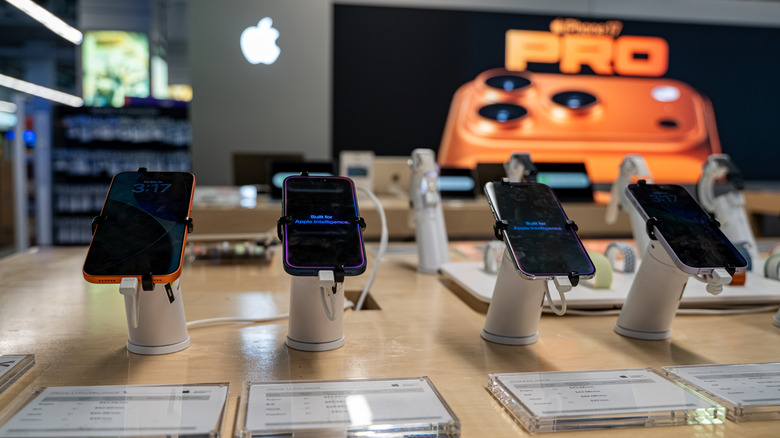
Buyers who don't plan to spend up to $2,400 for an iPhone Fold may be limited to only two iPhone 18 models: Pro and Pro Max. The phones may feature smaller Dynamic Island cutouts, but they'll otherwise be similar to their predecessors' design. Customers will only have access to a basic iPhone 18 model in the spring of 2027, when the even cheaper iPhone 18e model could be released.
Budget-conscious iPhone users will have to either buy the $799 iPhone 17 this year or wait for the iPhone 17e, a low-budget alternative Apple is expected to release in the spring of 2026. The phone may feature the same Dynamic Island design as the rest of the iPhone 17 series, but its display will be limited to a 60-hertz refresh rate. As for the ultra-thin iPhone Air 2, The Information reports Apple may have delayed the next ultra-thin iPhone version to 2027 due to poor sales of the first model.