

Why PC Monitor Makers Are Switching To OLED Displays
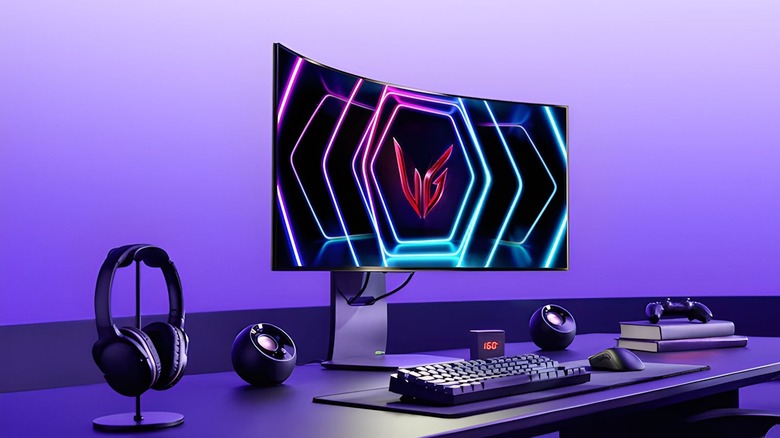
The rapid expansion and adoption rate of organic light-emitting diode (OLED) panels in PC monitors is a combination of market economics and performance advantages. For manufacturers, OLED monitors have higher financial margins, better production efficiency, and the benefit of wild-west pricing due to the lack of a large established market. A big bump in OLED adoption comes from gamers, thanks to its color accuracy and motion performance that VA LCD panels struggle to match.
Ching Tang and Steven Van Slyke of Kodak introduced OLED technology to the world in 1987, which eventually surfaced in working TVs by 1996. It was then adopted by the consumer market in 2013. Since then, there have been advances in reducing screen burn-in and other teething problems.
History lessons aside, OLED technology is the future of not just PC monitors, but TVs, phones, and anything with a screen. As manufacturers move into OLED panel production en masse, it'll become even cheaper and more efficient to make. Plus, OLED panels have the technology to make use of high dynamic range (HDR) without washing color out of a PC monitor, thanks to their inky blacks and color accuracy out of the box. That's high brightness, contrast, and a wide color gamut for the initiated.
OLED performance advantages are reshaping consumer demand
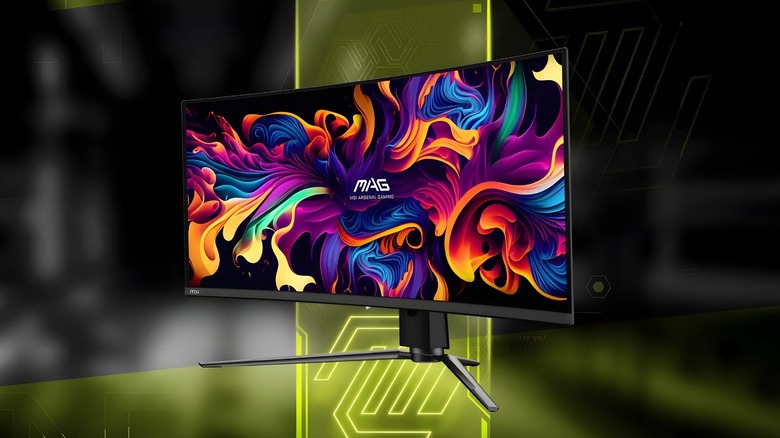
Global OLED monitor panel shipments are expected to shoot up by approximately 3.2 million units in 2025, representing 64% growth from 1.95 million units in 2024. Forecast to grow by more than 50% in 2026, positioning OLED computer monitors as the fastest-growing OLED application, overtaking TVs as that market matures. OLED monitor panels deliver higher profitability than TV panels on a per-area basis and achieve better production yields, resulting in less material waste, predictable margins, and a shift in focus for manufacturers. Common monitor sizes between 27 and 34 inches can reach glass utilization rates above 90%, compared to roughly 60% to 70% for TV panels.
These shifts are already influencing the market, with Samsung expanding its QD-OLED monitor production. Meanwhile, LG increased OLED monitor panel shipments from roughly 100,000 units in 2023 to around 400,000 units in 2025. Chinese manufacturers, including BOE and TCL CSOT, are also investing heavily in IT-focused OLED production, which should increase competition and improve value for consumers over time.
While economics drive manufacturer interest, performance is driving adoption. OLED panels are self-emissive, allowing each pixel to turn on and off independently, unlike VA LCD panels that rely on LED backlighting. This enables near-infinite contrast ratios, true black levels, and the elimination of haloing around bright objects. OLED also offers near-instantaneous response times and clearer motion, while VA panels can suffer from black smearing. However, VA and IPS panels are great when it comes to sustained brightness, burn-in resistance, and text clarity, making OLED best suited for gaming and media-focused users.