

Can AI Build You A Gaming PC? Here's The Truth
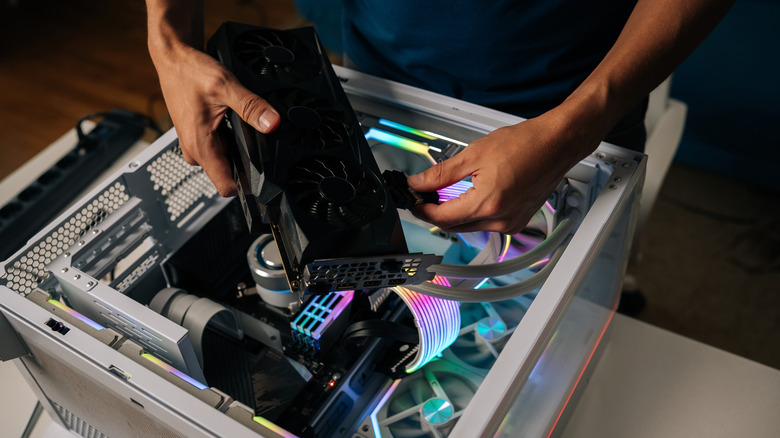
When shopping around for new PCs, many people prefer to purchase prebuilt computers. These come with all the components and software most users need to get started. However, some people, especially gamers, prefer to purchase components and programs piecemeal and assemble them into their ideal machines. This method is often cheaper than buying a pre-made PC (although some prebuilt computers available through Costco actually beat DIY computer prices). Plus, you have more minute control over the hardware installed under the hood, but that raises the question of how to decide what components to use.
If you are new to the world of PC building, research will only get you so far, since you will inevitably hit roadblocks. When that happens, you should seek advice, so why not use an AI? After all, it has access to the totality of internet knowledge and can compartmentalize this information into easily digestible chunks within seconds.
You could save time and money that way...except not really. Turns out, AI isn't that reliable in the PC components recommendation department, and several experienced PC builders have the evidence to prove it, or at least demonstrate that AI has a long way to go before it can replace Geek Squad members at your local Best Buy.
AI tends to either give bad advice or hallucinate
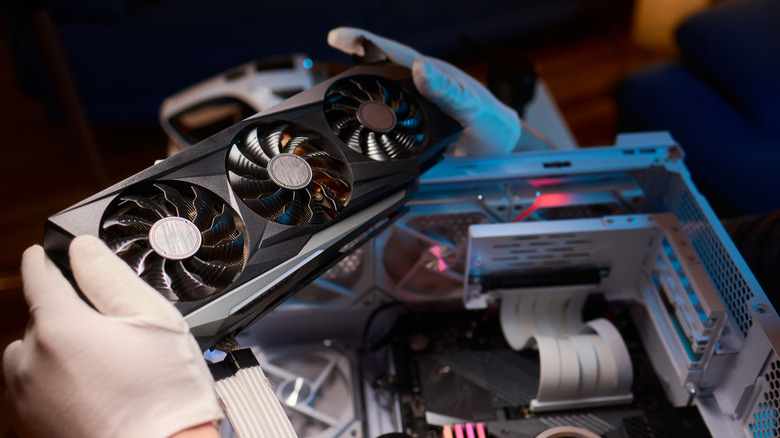
An AI is only as good as its prompt, but even when given specific information and instructions, chatbots tend to provide false facts. A year ago, a user on the r/buildapc subreddit stated they asked AI for advice on PC components. This person said they wanted a small-form gaming computer that could "play new games for the next few years at least," and the algorithm constructed a list of parts, including an NZXT H1 V2 case, an AMD Ryzen7 7800x3D/Intel Core i7-13700K CPU, and an NZXT Kraken x53 AIO cooler. The user then asked fellow redditors if the advice was sound, and they chimed in with a resounding "NO!"
According to comments, the AI-manufactured list is full of issues. One user pointed out that the recommended CPUs were infamously overpriced (and you should never try to save money by purchasing a used CPU). Meanwhile, another mentioned that AI has a limited grasp on hardware conflicts — it can't determine if the cooler it recommends will even fit inside the case in the list it provides.
Of course, purchasing components is only part of the process; you still need to build the PC. While you can ask AI how to assemble the hardware, the results are equally unreliable. When Linus Tech Tips experimented to see if an AI could help build a PC, he ran into multiple issues. The AI didn't tell him when to install certain components and stated that a Thermaltake Core V1 Mini-ITX case could fit an Asrock B5550 PG Riptide Motherboard (which it can't). This wasn't a one-off scenario; other tech-based content creators, including ShadowGamingPC and PC Builder, tried similar experiments with similarly bad results — and advice.
Rely on fellow builders for advice, not AI

While AI chatbots can come across as knowledgeable thanks to their eloquence, their outputs only sound convincing, even (or especially) when they are wrong. For instance, an algorithm can recommend cases and motherboards that stick within certain budgets, but the AI can't take into account factors such as physical compatibility.
However, humans, especially those with PC-building experience, are less likely to make these mistakes since we can fact-check our own work. If you ask for advice in one of Reddit's numerous PC building subreddits (e.g., r/buildapc and r/buildapcforme), you will find no shortage of people willing to help with spot-on knowledge. Plus, they generally know if a certain GPU can fit inside your motherboard of choice — and how to avoid other common PC setup mistakes.
Another reason to seek advice from PC builders instead of AI: Humans tend to have more up-to-date information. Granted, AI chatbots can scour the internet for info at the speed of light, but they are still limited by the information used to train them. Case in point, during PC Builder's experiment, the AI he used said an AMD Radeon RX 7700XT (12GB) was the "best bet". However, that card had been discontinued in 2024, the year before he made the video. Newer, more powerful GPUs were available when he asked ChatGPT for its advice, and while they might not have been cheaper, these graphics cards would have been better candidates for the title of "best bet." Moral of the story? When you want to build a gaming PC, ask humans for advice.