

What Causes Your Car's Engine Oil To Turn Black?
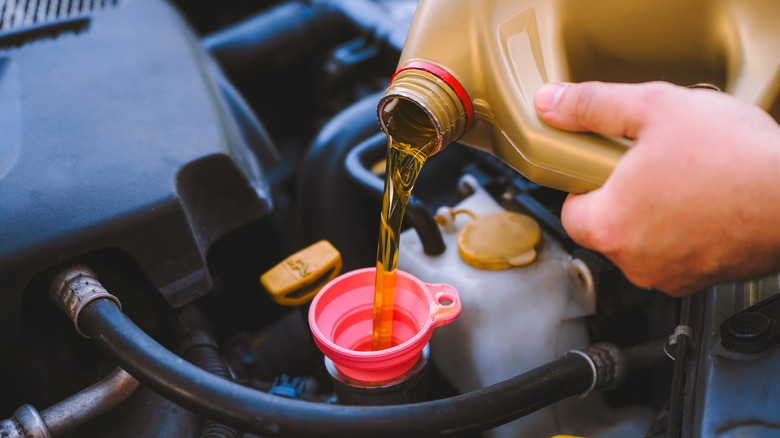
It's a common misconception that engine oil being dark is a sign that it needs to be changed, but in reality, this is usually more of an indication that the oil is doing what it's supposed to be doing. You see, engine oil is a lubricant, but it also doubles as a decontaminant, removing smaller particles like dust, debris, and soot. Moreover, the intense heat that the oil is exposed to also contributes to the darkening of additives contained within it.
As oil circulates through the engine, it touches nearly every internal component. That constant movement is how it picks up whatever is left behind from the combustion process, and a big part of why it darkens over time. Fuel type can also speed that process up — for instance, diesel combustion typically produces more soot than gasoline, which can turn oil dark much faster.
In short, looking at the color of your engine oil isn't a great way to know when it's time for an oil change. The best practice is to simply follow the guidelines set by your vehicle's manufacturer for oil changes — that applies whether you drive something niche or one of the best-selling car brands in 2025. For most cars, the recommended oil change interval is between every 7,500 and 10,000 miles driven for full synthetic oils, or around 5,000 to 7,500 miles for synthetic blends.
How do you know when there's a problem with your engine oil?

While you can't generally tell what's going on in the engine by the color of the oil alone, you can make some observations to discern various things happening. For example, if you see oil that's brown and bubbly, almost lighter in color, that could mean coolant has leaked into parts of the engine where it's not supposed to be. Milky-colored oil could also mean a blown head gasket, cracked engine block, or faulty oil cooler — all serious problems that require prompt attention. Oil leaks, the oil itself making its way out of parts of the engine it shouldn't, are another concerning sign.
Engine maintenance is a big reason why it's cheaper to drive an electric vehicle nowadays, but the upshot is that gas cars generally cost less to repair than EVs. So the tradeoff is more scheduled service, but generally less sticker shock when something breaks. Either way, it's still important to keep an eye on the dipstick for obvious red flags — just don't rely on color alone to tell you when it is time for an oil change.