

These Are The 5 Best Gaming TVs, According To Experts
Gaming TVs are just TVs with specifications that complement the fidelity and performance of the game someone wants to play. Input lag needs to be near-zero, refresh rates need to be at least 60 Hz for smooth frame rates, and HDR needs to be solid when OLED screens are part of the equation. Players need their Nintendo Switch 2, PlayStation 5, Xbox Series X, and gaming PC to look their best, especially with gaming rigs being capable of outputting 144 Hz refresh rates and beyond. Simply buying a new game console prompts some people to upgrade their TV.
There are plenty of options depending on the preferences and budgets buyers have in mind. OLED panels are the best options as far as motion clarity, contrast, and color accuracy go, but Mini LED panels output unmatched brightness, particularly in well-lit rooms. It's easy to make common mistakes when buying a new TV in general, with the market beginning to mature in recent years. That also means it's cheaper than ever to pick up a gaming TV that's more than capable.
Of course, there are insanely expensive options, but with brands such as TCL and Hisense putting premium panels in their latest TVs for a fraction of a big brand flagship price tag, market competition only drives competitive pricing. This was proven in a shock partnership between Sony and TCL, with the budget TV manufacturer set to take on Sony's home entertainment business.
Best luxury gaming TV: Samsung S95F OLED
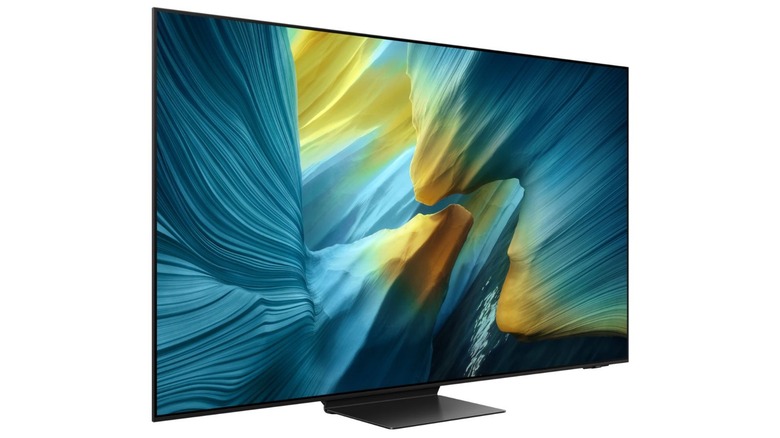
Samsung's S95F OLED sits at the top of the gaming TV market, combining cutting-edge responsiveness with high HSR performance for an OLED panel. Pricing reflects its feature set, too, as it can cost nearly $2,000. PC gamers will be pleased because they can hook up their rig and play at 4K resolution while taking advantage of its native 165 Hz refresh rate. It also leaves room for current-gen consoles to run at 4K/120 Hz, both with low latency. Input Lag is around 10 ms at 4K/60 Hz and roughly 5 ms at 4K/120 Hz, which is near-instantaneous for most players.
HDR gaming performance is also impressive, with brightness exceeding 2,000 nits. This gets bright effects to pop rather than being toned down. Rtings gave it a lofty 9.3 score for gaming, stating, "The Samsung S95F is an incredible TV for gaming. It delivers an extremely responsive gaming experience thanks to its nearly instantaneous response time and low input lag. It supports a wide range of gaming features, including VRR, and it has a fast 165Hz refresh rate for PC gamers."
Other luxury TV go-tos include LG C5 OLED at $1,199, including Dolby Vision Gaming and Sony Bravia 8 II starting at $1,999.99with solid tone mapping, through Samsung S95F OLED wins out with its stronger overall HDR brightness.
Best premium gaming TV: Samsung S90F OLED
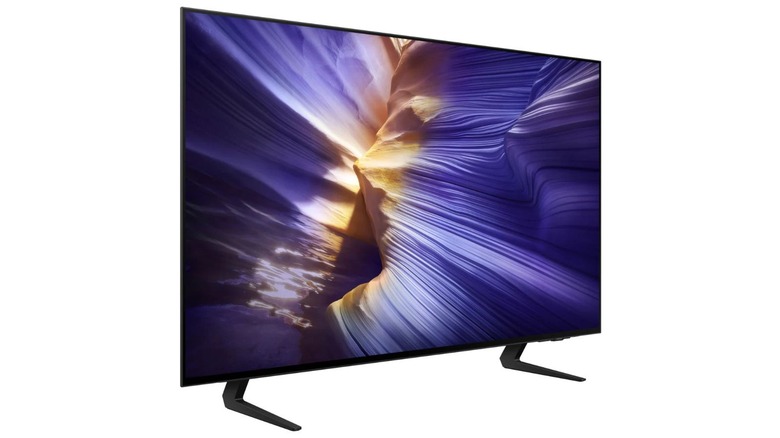
The Samsung S90F OLED packs in most of the gaming features found in the S95F, but at a lower price point. Starting at around $1,300, it's only right that this gaming TV tops the best premium gaming TV tier. It has a native 144 Hz refresh rate, making it perfect for 4K 120Hz console gaming and competitive-friendly 144 FPS PC gameplay. Input lag is also similar, clocking around 10 ms at 4K/60 Hz and 5 ms at 4K/120 Hz.
HDR gaming brightness is also strong, with Wired giving it a nine out of 10 while praising the panel's deep contrast, shadow detail, and detailed, clear image processing. The Samsung S90F ultimately earns the top spot for a premium gaming TV by offering best-in-class HDR backed up by good brightness and color intensity. It's a very responsive panel, and has solid gaming setup support for multiple consoles, thanks to four HDMI 2.1 ports supporting up to 4K 144Hz.
If you're a staunch console gamer or won't be hooking up a gaming PC to it, current-gen consoles can't display over 120 Hz, with most games not going past 60Hz, so the drop in refresh rate prowess is a non-issue. It's a great deal for gamers, with key gaming features from S95F, with a $700 saving going off base model pricing.
Best mid-range gaming TV: LG B5 OLED
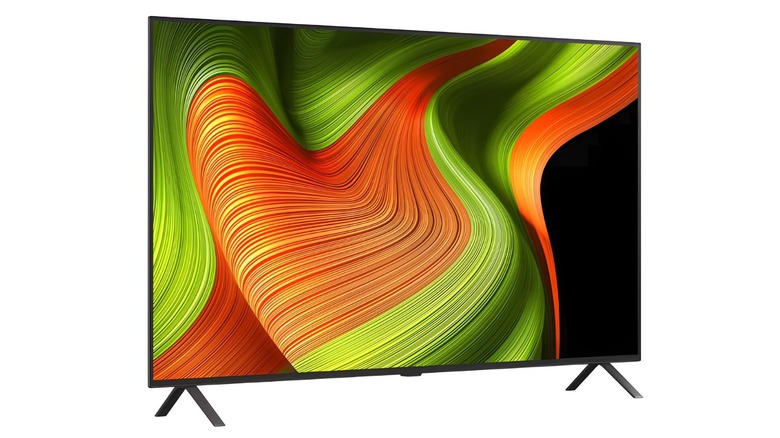
The LG B5 OLED is a balanced option for gamers who want OLED performance without suffering brand tax. It starts at around $1,000, making it one of the most affordable OLED panels with full current-gen gaming support. It can handle 4K resolution at 120 Hz across all four HDMI 2.1 ports and only has a 5 ms input lag at 4K/120Hz, so it can handle 4K 60 FPS and 120 FPS like a walk in the park. Motion Clarity is on-point, too, thanks to the native properties of OLED panels, specifically independent pixels responding to color and light pretty much instantly.
This is also another LG TV that supports Dolby Vision gaming at 4K/120Hz. Wired framed this perfectly in its eight out of 10 review: "Perfect black levels and excellent shadow detail add up to great contrast". If a brighter screen is needed for light environments, the TCL QM8K Mini LED starts at $999.99 and offers dramatically higher HDR brightness, going just over 2,000 nits in Game Mode.
There are some trade-offs, such as blooming and slower pixel response, but that's just a case of it being compared to an OLED panel. For the same price, the LG B5 OLED is the best mid-range gaming TV option, thanks to its clearer motion, inky blacks, and reliable HDR presentation over TCL's QM8K Mini LEDs' brightness factor.
Best affordable gaming TV: TCL QM7K
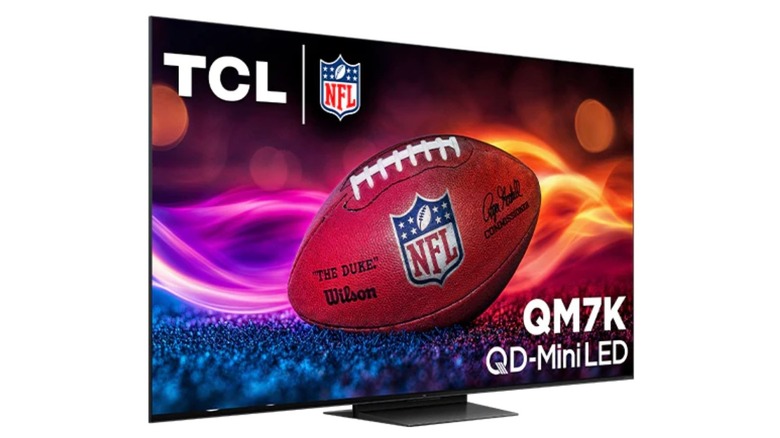
TCL's QM7K offers some great gaming TV features at a reasonable starting price of $599. It's a dark horse, offering 4K gaming at 144 Hz and a staggering 288 Hz at 1080p, which is fantastic for competitive games such as "Fortnite" and "Apex Legends" where every frame counts. Input Lag is solid when Game Mode is enabled, and screen brightness hits a peak of around 1,500 nits, although some loss of detail occurs at this level. But still, solid performance on a QD-Mini-LED panel at this price point.
PCMag agrees, giving it a four out of five in its review, saying, "TCL QM7K is a mini-LED TV with impressively wide contrast, little light bloom, and a strong feature set for gamers". TCL has the affordable gaming TV market in its pocket, with little in competition. Hisense U8N is only worth it if you can find it on sale (usually starting at $920 on Amazon for the 75-inch model), for example.
Unless buyers want to settle for fewer features for a lower price point, TCL is dominating affordable Gaming TV offerings. High refresh rates, strong brightness, and stable gaming performance are great features to have for under $600.
Best budget gaming TV: TCL QM6K
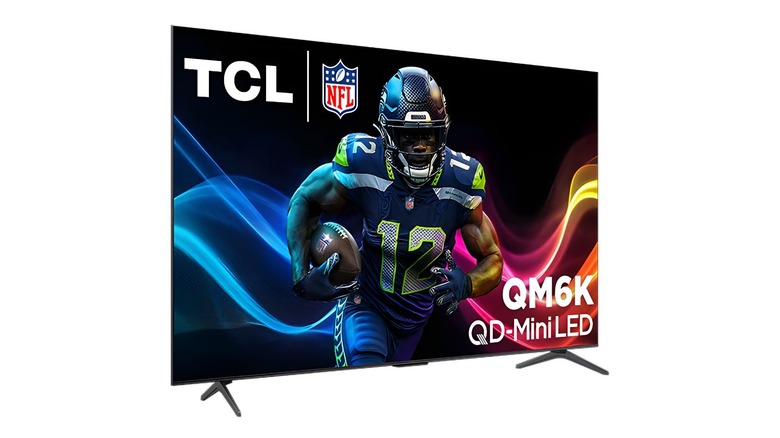
The TCL QM6K is the most capable true budget gaming TV at the time of writing, starting at just $449.99. Don't let that low price deceive you; it supports 4K gaming at 144HZ and 1080p at up to 288 Hz, with input lag as low as 3 MS at 1080p/288 Hz. That means this budget TV is also perfect for competitive play on the big screen, especially if it's being used alongside a gaming PC that can hit 144 frames per second or more.
It even sports Dolby Vision gaming and decent Mini LED local dimming, which sets a new standard for budget gaming TVs. TechRadar gave it four out of five stars and said that it's "A solid mini-LED TV that punches above its price class." The only other gaming TV that comes close to it in terms of budget is the Hisense U6N, starting at $429.99, but it doesn't have half the bells and whistles the TCL QM6K has.
It's restricted to 4K/60Hz gaming over HDMI 2.0, with VRR restriction at higher frame rates. Putting these budget gaming TVs side-by-side makes for an easy buying decision. The TCL QM6K has genuine future-proof gaming features, most notably high refresh rates, extremely low input lag, and a price that's accessible. It would be nice to have an OLED panel, but at this price point, who cares?