

Can You Really Tell The Difference Between Cheap And Expensive OLED TVs?
We may receive a commission on purchases made from links.
When it comes to color accuracy and unbeatable black levels, it's hard to beat the performance of an OLED TV. Over the last several years, brands like LG, Samsung, and other reliable TV makers have been producing some great OLED sets. That also means there are numerous models to choose from when shopping for a new TV, which may lead some to question whether you can actually tell the difference between cheap and expensive OLED TVs. The short answer? Yes. The longer answer? Also yes, but the most discernible differences are reserved for those willing to push a 4K OLED to its limits.
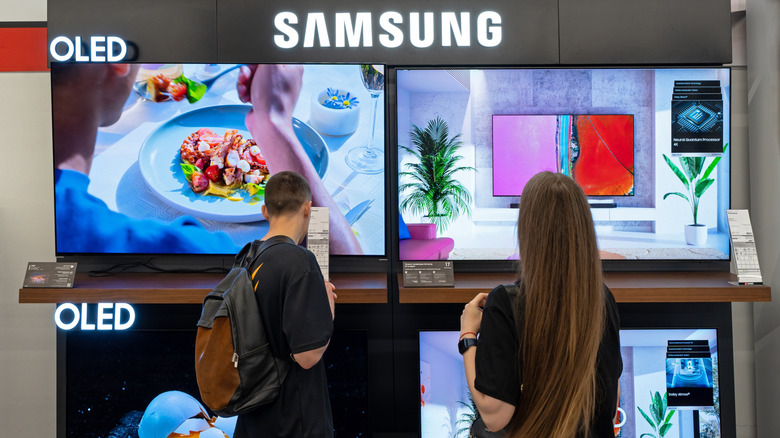
To further unpack this, we're going to compare a few key specs of the Samsung S90F, a premium OLED, and the LG B5, an entry-level set. On paper, both TVs are up to par with modern connectivity. They each have four HDMI 2.1 ports and important gaming features like Variable Refresh Rate (VRR) and Auto Low Latency Mode (ALLM). Both sets also bring perfect black levels and infinite contrast ratios to the table. Admittedly, if the S90F and B5 were side-by-side and playing the same SDR content, the picture quality would be similar — until we look a bit closer.
The S90F uses a QD-OLED panel, while the B5 sticks to the more traditional WOLED display. The former screen type is well-regarded for its peak brightness and wider color gamuts, and test results show the S90F delivers stronger out-of-the-box HDR and SDR brightness than the B5, as well as better HDR and SDR color volume. Side-by-side, it might be tough to tell the difference between the two TVs, but switching over to HDR, eagle-eyed viewers would likely notice that the Samsung S90F is brighter and more colorful than the LG B5.
Pros and cons abound, but the ultimate decider is how you think a TV looks
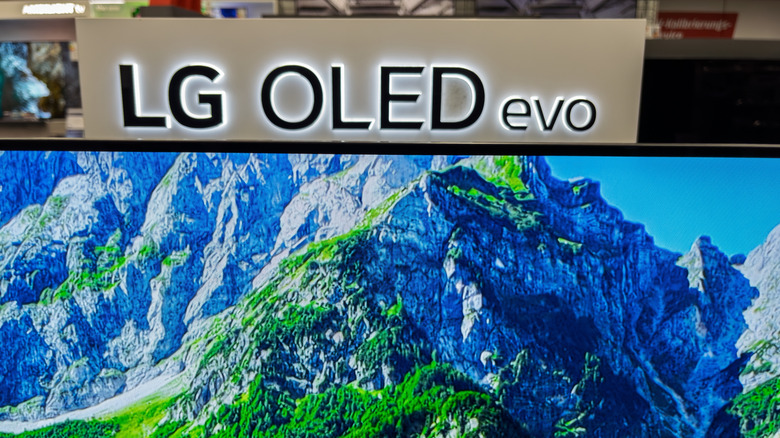
OLED TVs perform best in a dark room, and neither the Samsung S90F nor the LG B5 are exceptions here. But what's visually different is how each panel handles glare and reflections caused by ambient lighting. The anti-glare coating used on the S90F's QD-OLED screen is stronger than the one used by LG for the B5 Series, so lamps and other light fixtures are less distracting. The S90F also has a near-perfect viewing angle with minimal brightness loss when viewed from the sides, whereas the LG B5 starts losing color accuracy when not viewed head-on.
As far as gaming, sports, and other fast-action content go, the premium S90F boasts a native 144Hz refresh rate. The LG B5 isn't too far behind with its native 120Hz panel, but those planning to hook up a gaming PC or PlayStation 5 will notice less ghosting and blur on Samsung's OLED. But we also understand that not everyone can afford the higher cost of the S90F and other flagship models, which makes the LG B5 a compelling, budget-friendly OLED option for those looking to save a few bucks.
At the end of the day, what's most important is what you personally think of the picture quality. Spec-wise, and in action, the S90F is objectively better than the cheaper B5. But if you're happy with saving hundreds of dollars and think the B5 looks just fine, who are we to stand in your way?