

China Is Using Predators To Train Their New AI Weapons - Here's Why
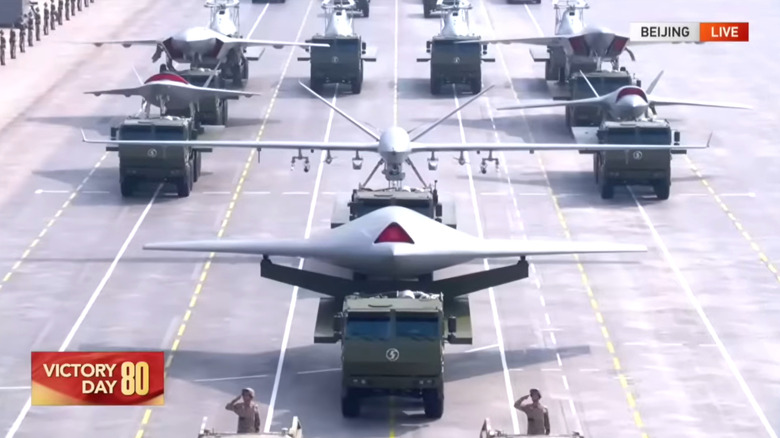
Global militaries are desperate to gain an advantage in the escalating AI race, as rapid developments in largescale data analysis, robotics, and large language models increase the effectiveness of autonomous weapons systems. At the center of this trend is the growth of unmanned autonomous vehicles (UAVs), which have been deployed to devastating effect in Ukraine and Gaza, two conflicts functioning as a quasi-testing ground for the world's largest military powers. China, in particular, is at the forefront of this development. Heavily invested in both drone technologies and the AI operating systems, Beijing hopes to revolutionize the effectiveness and scale of UAVs.
Central to drone warfare is the ability to orchestrate mass sorties of UAVs. Known as swarm attacks, the tactic is particularly difficult to defend against using conventional weapons systems, forcing militaries to experiment with novel defense systems ranging from high powered microwave weapons to advanced laser guns. In addition to evolving defense tactics, swarm technologies poses difficult questions for engineers looking to better coordinate drones. A key question concerns organizing their behavior, namely, how to create a sense of awareness between weapons systems. According to a January 2026 report by The Wall Street Journal, researchers in China have turned towards the animal kingdom to teach drones how to hunt and evade potential targets, soliciting the behavior of hawks, wolves, and coyotes into their AI systems.
The development points to broader trends in Beijing's drone development program. With dual-purpose economic and research infrastructure, Beijing has utilized its robust manufacturing wing to generate high-tech drones efficiently and more cost-effectively than other countries. With a chokehold on global commercial drone production, China is leading this global revolution, potentially posing major consequences for both its rivals and warfare more broadly.
Hawks, wolves, and drones, oh my
According to the WSJ, engineers at Beihang University — one of seven institutions with strong links to the China's military — used the behavior of birds to train UAV evasion and pursuit tactics. The idea was simple: by modeling drone's behavior after the attack patterns of hawks, and, subsequently, the evasion tactics of doves, researchers could move closer to automating UAV swarm behavior, increasing the ability to identify, attack, and evade adversaries in coordinated groups. The test rendered interesting results, as hawk-trained defense drones neutralized their dove counterparts in just 5.3 seconds. Although first patented in April 2024, recent People Liberation Army demonstrations, in which swarms of 200 drones were launched and controlled by a single soldier, have observers speculating that Beijing's swarm technologies may be moving beyond their infancy, according tge South China Morning Post.
The report, which looked at patent filings, government tenders, and university research papers, opens a window into the PLA's pursuit of AI-empowered robotics and drone systems. Part of a broader push to incorporate natural patterns into autonomous systems, as researchers across the country have trained AI systems on a variety of other animals, including ants, sheep, coyotes, and whales. In another notable instance, Beihang's esearchers trained AI systems to mimic the eyes of eagles and fruit flies to alleviate drone perception issues.
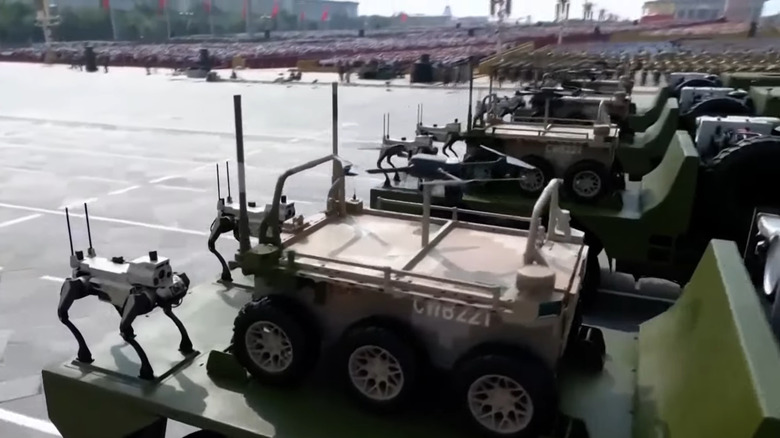
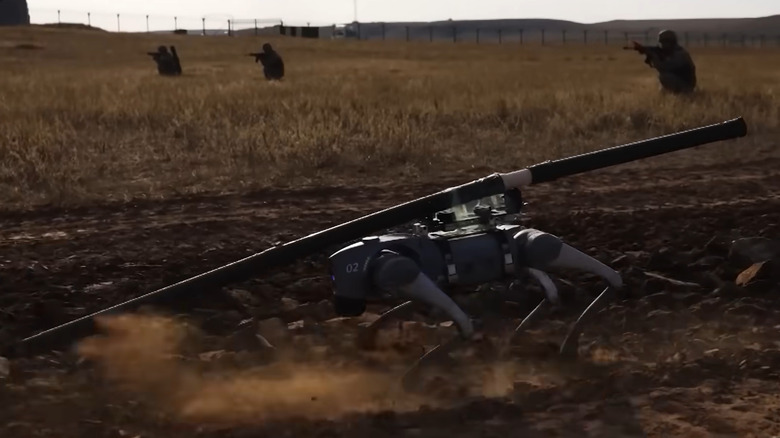
The use of predator-trained AI systems has extended to ground warfare. For instance, China South Industries Group, a state-owned weapons manufacturer, has designed weaponized "robot wolves." Designed to be deployed in concert with aerial swarms and foot soldiers, China Central Television captured training exercises deploying the wolf drones. Fashioned for both attack and support roles, the technology is reminiscent of Ukraine's increased deployment of unmanned ground vehicles.
The epicenter of drone warfare
These programs encapsulate the potential of China's drone development program. Beijing has touted such weapons systems as the next frontier of military development for years, placing AI, largescale data processing, and drone development at the heart of its 2021 five-year plan. One simplified means of gauging China's progress is through their respective patent filings. According to data procured by WSJ Chinese military researchers have filed for over 930 swarm-intelligence patents since 2022, compared to only 60 by U.S. engineers.
China's drone strategy looks to employ its superior manufacturing and supply chain infrastructure to quickly and cheaply produce drones at scale. As it stands, China's dual purpose manufacturing sector dominates global drone production. According to a 2025 Association for Uncrewed Vehicle Systems International (AVUSI) white paper, China manufacturers supply roughly 90% of the consumer drone market. This dominance has shown up in Ukraine, where both sides are dependent on Chinese drone manufacturers. Russia, for instance, purchases the majority of its attack drones wholesale from Chinese manufacturers. In Ukraine, meanwhile, where domestic production has been a strategic priority, 88.9% of its UAS component parts come from China despite Beijing's ban on western drone sales. Even the U.S., which launched its Blue UAS program to spur domestic drone production, largely relies on Chinese-manufactured engines for its UAVs, reported DefenseScoop.
Some believe that UAVs may help China offset the PLA's technical, financial, and battle-experience discrepancies with the U.S. Key to this development will be the country's ability to integrate advancements in everything from logistics mapping to photography into its weapons development pipeline. Ultimately, Beijing's dual-purpose economy may transform the budding AI war into the next great arms race. What role predator-based models play in that equation, however, remains a matter of speculation.