

The iPhone Will Go To The Moon For The First Time On Upcoming NASA Mission
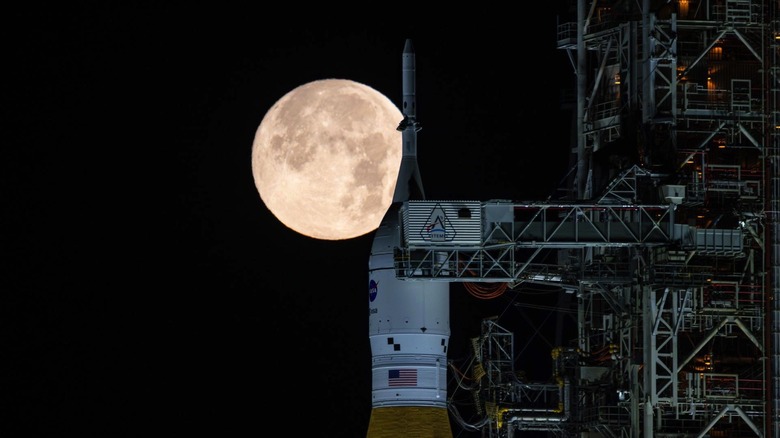
Smartphones go everywhere we go, and they're rarely out of our hands. Whether it's an iPhone or an Android device, we need to have them close by at all times. Come March, when NASA's upcoming crewed mission to the Moon is supposed to take off, smartphones will go to the Moon for the first time — at least to lunar orbit. The astronauts won't land during the Artemis II flyby mission, but they will be able to use their iPhone and Android phones to shoot high-quality photos and videos during the 10-day trip to the Earth's satellite and back. This isn't the first time an iPhone or Android phone has gone to space, as NASA has done it before with International Space Station (ISS) missions. However, this marks the first time that iPhone and Android devices will travel farther in space than ever before. Also, these devices might be more similar to commercial devices than to the customized iPhone and Android units that NASA engineered over the past 15 years.
NASA astronauts will soon fly with the latest smartphones, beginning with Crew-12 and Artemis II. We are giving our crews the tools to capture special moments for their families and share inspiring images and video with the world. Just as important, we challenged long-standing...
— NASA Administrator Jared Isaacman (@NASAAdmin) February 5, 2026
NASA Administrator Jared Isaacman shared a message on X a few days ago, announcing the agency's decision to allow astronauts to carry personal devices like smartphones in space. "NASA astronauts will soon fly with the latest smartphones, beginning with Crew-12 and Artemis II," Isaacman wrote. "We are giving our crews the tools to capture special moments for their families and share inspiring images and videos with the world." He revealed another goal for NASA, in addition to having astronauts use the latest iPhone and Android smartphones to capture unique moments in space. Isaacman explained that the agency is trying to overhaul procedures required to ensure that high-end devices like the newest smartphones are brought to space safely. "This is a small step in the right direction," the administrator concluded.
Why bringing an iPhone to space is problematic
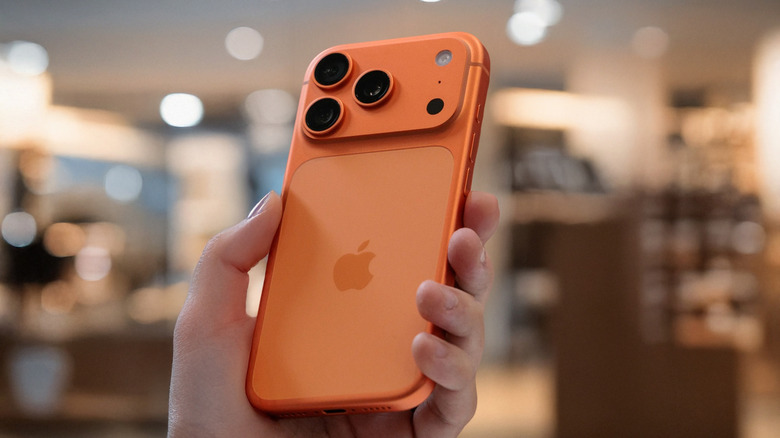
While we're taking smartphones for granted on Earth, we're routinely reminded of the potential dangers they pose to our safety. For example, flight crews on commercial airplanes will often tell you to turn on airplane mode, and some airlines may advise against charging the phone via portable power banks during the flight. Smartphones can be a bigger danger in space for multiple reasons. The chips inside the handset can cause interference. Phone batteries can overheat and explode – something that can happen on Earth — which can result in smoke and fire in a confined space like a space station or spaceship. Then there's the risk of glass breaking in a zero-gravity environment, which makes collecting the resulting debris difficult.
The iPhone 4 and Google Nexus S phones that were sent to space in 2011 were customized to reduce the risk of accidents. For example, the iPhone 4 units had wireless connectivity disabled, and the internal batteries were swapped for external battery packs certified for space. Similarly, the Nexus S phone used for NASA's Smart SPHERES program was significantly altered. The GSM chip was removed, as the 850 MHz frequency was not safe for the ISS. The phone's lithium-polymer battery was replaced with alkaline batteries that needed to be shipped regularly to the space station. Teflon tape was added to the Android phone to contain any glass that would break.
Separately, Russia's space agency sent iPads to the ISS in late 2011, though it's unclear if they were modified in any way. iPods were also available to astronauts at the time. Unlike the iPhone 4 and Nexus S phones, these devices were intended for the personal use of astronauts rather than scientific experiments.
Which iPhone and Android models are going to the Moon?
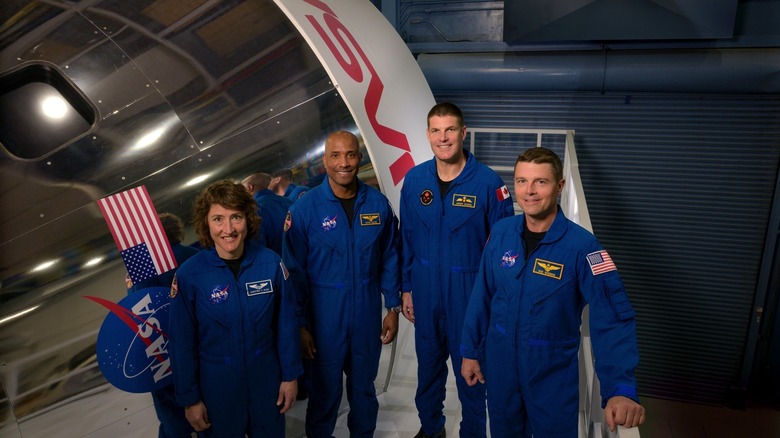
While Isaacman didn't say which iPhone and Android models will reach the Moon's orbit, it's likely we'll soon find out if all goes well with the current mission plan. NASA is targeting a March launch for the Artemis II mission, after dropping the previous February window.
Also, it's unclear if the iPhones and Android devices going to the Moon will see similar alterations. Isaacman's remarks on X suggest NASA will let the four Artemis II astronauts (seen above) bring the smartphones of their choice on board, instead of picking from specific models the agency may have customized for space use. Hardware alteration aside, NASA's social media channels should be on your radar if you're passionate about space exploration. Some of the newest iPhone and Android smartphones feature advanced camera systems that may deliver stunning views of the Moon and the Earth, unlike anything captured before.