

5 3D Printing Projects That Can Actually Be Profitable
We may receive a commission on purchases made from links.
There's probably no need to explain why a 3D printer is an incredible investment if you love to create and tinker. You can use them to make virtually anything. Believe it or not, the U.S. Navy is even using 3D printers on aircraft carriers and warships to build complex parts.
Moreover, depending on the printer you choose, and the filament – the materials used to print – you can make objects with a ton of materials from wood and plastics to metals and beyond. While it's always great to make things you can use at home, and maybe give away to friends and family, there's a whole other aspect to the technology. As long as you're not making protected items, and you've made the print files yourself, you're generally within your rights to sell things you create. If you're downloading free files from places like Thingiverse, distributed under a Creative Commons license, most of those are for non-commercial use.
However, it's important to note we're not lawyers and do not have the authority to give proper legal advice, so you should definitely seek out guidance or a legal consult if you have questions. That aside, if you have the skills, there are some pretty cool projects you can undertake to make a small profit on your prints.
Solve a need or modify
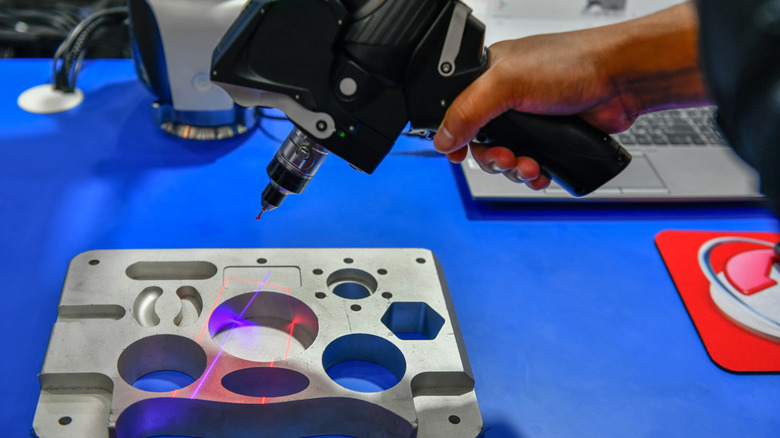
One of the more obvious ways to use a 3D printer is to solve a particular problem that you're having or that you notice people commonly run into. It's also a great way to think outside the box, printing parts, modifications, and add-ons for products or gadgets you use regularly. While not widespread, you can actually 3D print things like automotive parts. In fact, one father and son combo 3D printed an entire Lamborghini Aventador, proving how far you can go with the technology if you're willing to put in the time.
Bear in mind, for things like car parts, you'll need to select materials that can withstand high heat, UV exposure, and mechanical stress. You may also need a high-end printer to work with those enhanced materials. Polyether Ether Ketone, or PEEK, is a good example. It's so good that it's used in aerospace and medical industries. It's resistant to heat, wear, has a high chemical resistance, and has dielectric properties. As for what else you can make besides auto parts, one resourceful aerospace engineering student printed a specialized mount for the DJI Mini 4 Pro that allows users to carry the drone and manually operate it like a handheld camera.
He is currently selling that mount, which was incredibly popular and is now on back order. He came up with the idea after realizing the drone was a perfectly good camera that he was unable to use in certain places because of flight restrictions. The mount allows him to operate it more like a handheld video camera for ground shots. To repeat the lead, use your skills to create something that solves a need or addresses a problem. If it's common, people will support you.
Accessorize anything and everything
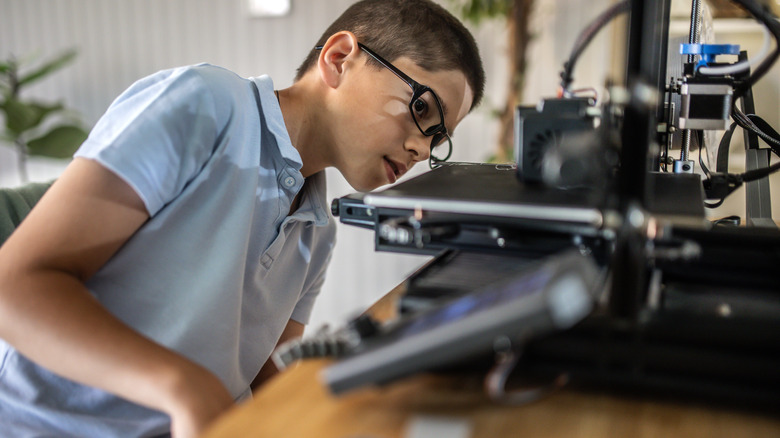
Phone cases, charms, mobile grips, cable holders, there are a ton of Steam Deck accessories available on Etsy, all with 3D printed designs, too. It goes without saying, but accessories, for nearly anything, are another great way to capitalize on your 3D printing skills. Even if you're not selling for a profit, they can vastly improve your daily experiences.
Imagine a 3D-printed watch band, replacing one you broke. Cosplay accessories, like masks or custom armor, to make your con outfit more charming or authentic. Keychains, Raspberry Pi and mini PC cases, pet accessories, fidget toys, phone holders, the list goes on.
As long as you're using a custom file and design, you can also sell your items on Etsy, locally, and across various shops. Maybe even just offload some of your own 3D printed collection of accessories you've created and accumulated, rather than building them specifically to sell.
Make some unique collectibles
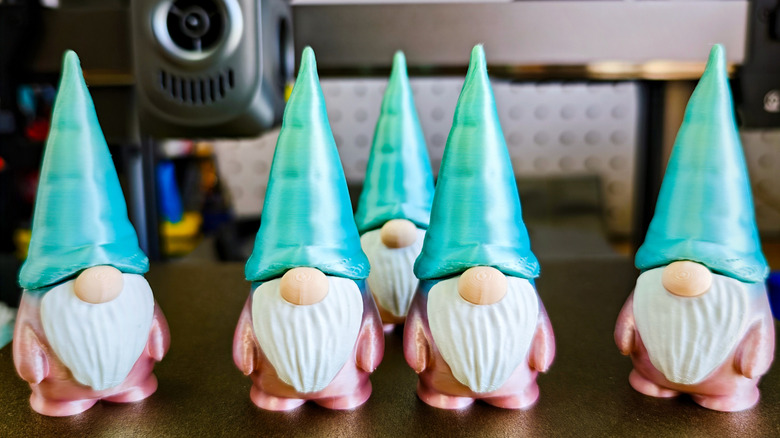
If you're good at designing models and parts, you can create your own unique collectibles and themed gear to share. No, you probably can't print Pokémon or Ninja Turtles figurines to sell, but you could come up with some original characters or something that wouldn't be a copyright infringement. Articulated and 3D-printed flexible snakes are popular. In the same vein, there are robots, dinosaurs, axolotls, hedgehogs, jellyfish, and dragons. Don't be afraid to get real weird with it.
The great thing about collectibles is that they can be very similar in design, making it easy to restyle reprints and iterations, but with unique colors and small variations. Add stripes to a dragon versus a solid color. Put more spikes or a longer tail on a lizard. Adjust variation rarities and give your collectible set an RNG feel.
That way, every time your customers open the package, it's like a dice roll, and they never know which figurine or style they're going to get. People love to collect sets of items, often even when they're really not all that original. You never know, you could be responsible for the next Beanie Baby craze.
Decorate for the occasion
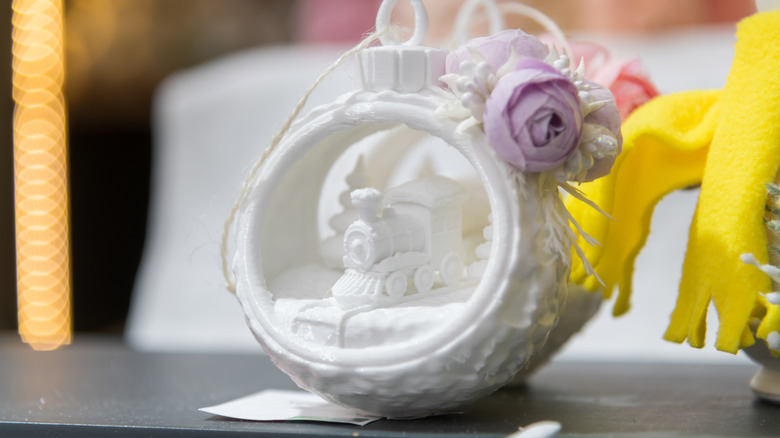
Yet another simple but easily crafted set of items is house or office decor. While you can't copy or clone them directly, Printables has a great library of home decoration plans. You can use it for inspiration to get some ideas. A few notables include 3D-printed clocks with moving parts, knick-knack and junk bowls, pottery, picture frames, wall art, wine holders, and other fixtures. The items in this category don't necessarily have to be functional. They can simply be attractive and placed for the aesthetics alone, depending on what you create.
Over on Etsy, you can find beautiful 3D printed artwork. If you're artistically inclined, it would be a fantastic way to show off your drawing and modeling skills. Create a block or frame and then imprint your visual flair — just like the 3D-printed tree artwork. Others have taken the same approach and simplified it, creating maps and topography with realistic visualizations.
The sky is the limit here, but that's what makes 3D printing so intriguing. You might not be 3D printing an entire building — which is possible, by the way — but you could create desirable art and decorations to make homes that much brighter.
Personalize with custom gifts
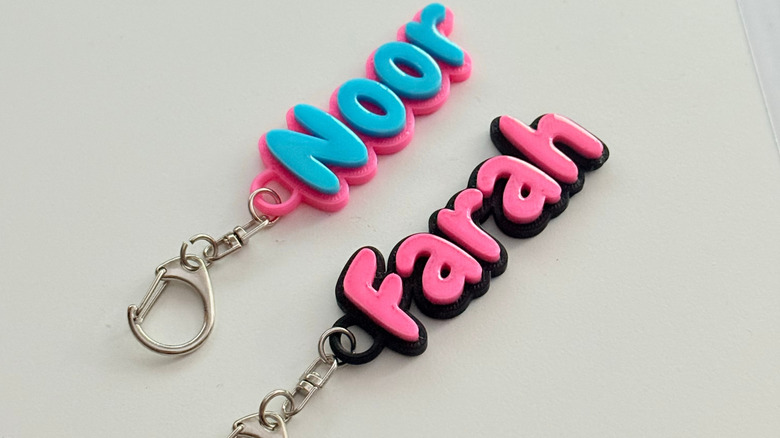
Finally, and this may be one of the best choices overall if you're giving items away to friends and family, is the idea to create personalized gifts. Conceptually, this could include everything else on this list and a host of other categorical items, including accessories, artwork, decorations, ornaments, and collectibles. Basically, anything other people are interested in. Bonus points if you use a 3D printer to create named items for those who have unique names — those are tough to find in collectible and storefront displays.
You can find ideas on the usual storefronts like Etsy, or Printables for printing files, but also Amazon Handmade, which includes custom handmade goods from local sellers. Inspiration is the idea again. It's always the idea, actually, especially if you're making a profit from what you create. Ultimately, you have the power and freedom to build what you want, how much you want, and also sell it where you want. That's probably why a lot of people are drawn to building and crafting their own goods.
Choose the filament based on the project. Most can use ABS or PLA plastics, but other types include PETG, TPU, recycled nylon, and conductive options. They also each have their own properties and resistances, which could make one better for things like decorative items, which aren't handled as much, versus parts that need to be more durable, or accessories that need better tolerances, and so on.