

Android's Next Big Evolution 'Aluminium' Isn't Coming Soon (And It's Clear Why)
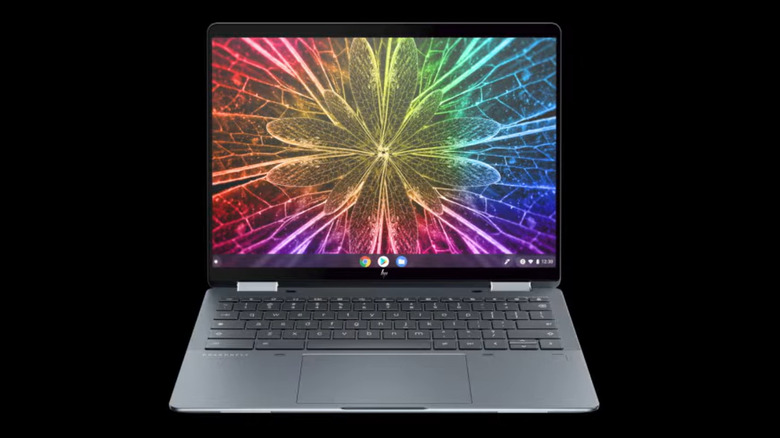
When images of Google's Aluminum operating system leaked online, Android users jumped for joy at the possibility of combining ChromeOS and Android into a single operating system. While Google has kept its PC and smartphone systems separate, the new operating system points to a more ambitious outlook in the PC space. Company officials have touted the system as delivering on Google's extensive AI investments, and it will likely host a series of new Gemini AI features that look to catapult Google's computers ahead of Mac and Windows on the premium PC market. Whether users will welcome such features, however, is another discussion entirely.
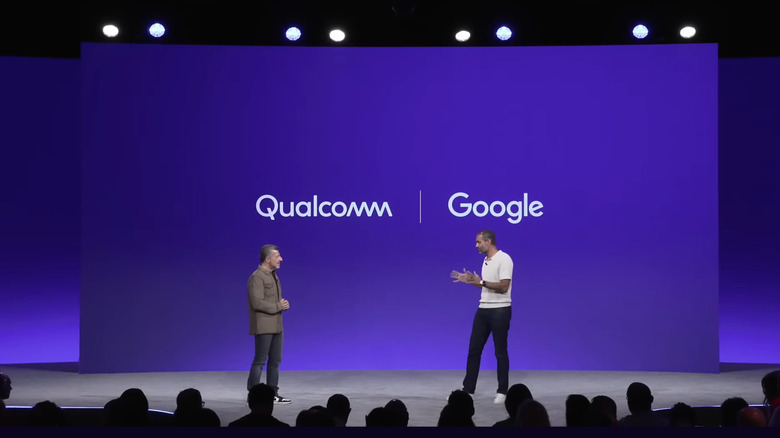
In September 2025, Android Ecosystem head Sameer Samat said during a talk at Qualcomm's Snapdragon Summit that combining the two systems was "something we're super excited about for next year." When describing said merger, Samat noted that Google was "taking the ChromeOS experience and re-baselining the technology underneath it on Android." The description, admittedly, was vague. However, a recent leak of the operating system, first reported by 9to5Google, gave fans their first preview of the new platform.
To date, rumors expect that Aluminum will run on the high-powered MediaTek Kompanio Ultra-powered tablet Sapphire and the Intel Panther Lake-powered Ruby. However, a recent report by The Verge has called into question the optimistic predictions of Aluminum's 2026 commercial rollout. Citing previously undisclosed court documents from Google's recent antitrust case, The Verge reported that Aluminum OS isn't one of the big changes coming to Chromebooks this year. Instead, the court transcript sets a more realistic timeline of 2028. In addition to these release details, the transcript details a roadmap for Google's current Chrome OS devices, with several implications for both current and future customers.
The fastest path to releasing Aluminum OS
The revelations stem from the Federal government's antitrust case against Google, in which regulators attempted to force Google to sell off its Chrome internet browser due to continued monopoly concerns. According to a court transcript released to The Verge, while Samat told the court that Google was "working hard" on releasing the product in 2026, transcripts suggested that the quick release was more of a dream than a defined goal. Instead, Google-filed documents stated that the company's "fastest path" would be to release test versions of the operating system to select, "trusted" commercial users by the end of 2026. As such, wide releases, including those to the "enterprise and education sectors," where ChromeOS has a particularly strong presence, are currently slated for 2028.
The report also detailed the timeline for Google's operating system succession plan. According to Google's lawyers during the case, the company is beholden to its 2024 promise to provide "10-year support" for current Chrome OS users, meaning the company will maintain its support for the operating system through at least 2033. Although this wasn't new, court documents clarified that Google plans to "phase out" the system almost as soon as this obligation ends, which means ChromeOS support would be gone starting in 2034. Whether these customers will be able to migrate from Chrome to Aluminum remains uncertain. As Google's VP of Product Management for Chrome OS, John Maletis told Chrome Unboxed in January 2026, not all these devices will automatically migrate to Aluminum OS due to differing technical specifications. However, that doesn't mean that new customers will need to start calculating how long their Chromebook will last, as Google will reportedly be "working on an ability" to migrate newer models to Aluminum.
Aluminum at a glance
Essentially, the ChromeOS and Android merger will allow users to operate Android apps on their laptops, leading to cross-device compatibility similar to that offered by Apple. At the Qualcomm Snapdragon Summit in 2025, Google VP of Devices and Services Rick Osterloh described the project as a "common technical foundation" between Google's two products, noting that the move will allow the tech giant to "leverage all of the great work we're doing together on our AI stack bringing Gemini models—bringing all of our application and developer community into the PC domain." Ultimately, Google hopes its Aluminum OS system will stand as a true peer of macOS and Windows 11 operating systems in the premium PC market.
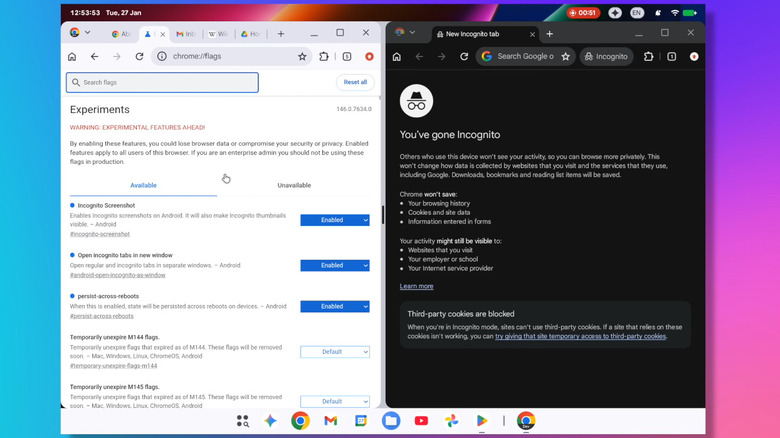
Android fans got a sneak peek of the developing operating system in January 2026, when 9to5Google reported on two videos that accidentally leaked previews of the operating system's user interface. Posted to a bug report on the Chromium Issue Tracker, the videos show screen recordings of a split-screen Chrome development window running on an HP Elite Dragonfly 13.5 Chromebook. Although limited in scope, the recordings show Aluminum as the aesthetic and functional lovechild of Chrome OS and Android 16. Observers speculate that Aluminum will likely follow Android's big-screen model, with some cosmetic changes such as a taller taskbar and elements of both operating systems incorporated into the design. Even though the leaked footage is rather vague, experts are quick to point out that both the Android 16 icon and the Aluminum OS build number are clearly visible in the video.