

This Chinese Phone Company Does A Lot More Than Just Android Smartphones Now
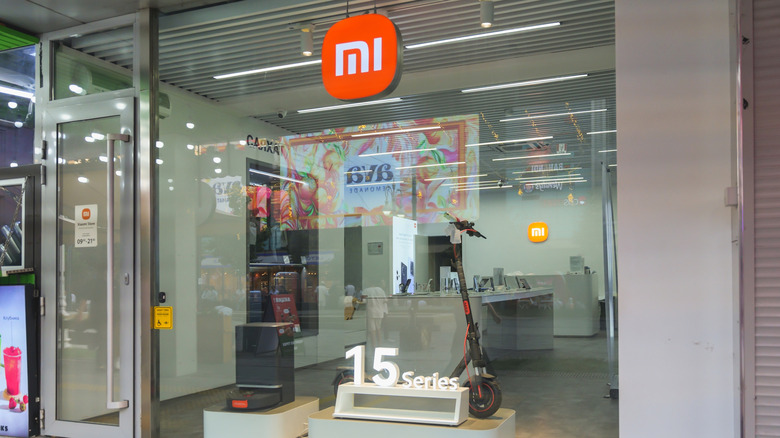
Xiaomi is one of the go-to brands for affordable Android phones that punch well above their price bracket. Founded in China in 2010, the company launched its first phone a year later, in 2011, and since then has experienced massive growth that now sees it rank among the major smartphone manufacturers in the world, even though it doesn't sell its phones in the United States. According to data from analytics firm Counterpoint Research, Xiaomi has regularly ranked third in global smartphone shipments behind Apple and Samsung.
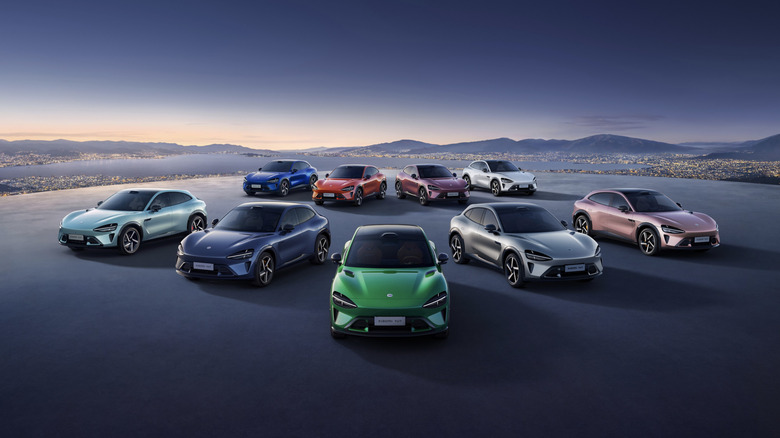
If you've seen Xiaomi phones in tech media or online marketplaces like eBay, you may have mistaken the company for a dedicated smartphone manufacturer that doesn't produce anything beyond phones and phone accessories. But you'd be wrong, because this Chinese tech company has its fingers in a lot more pies than you can imagine. Xiaomi isn't just competing with the likes of Apple and Samsung in the smartphone industry — it even has its sights set on the top EV brands like Rivian and Tesla.
Xiaomi has diversified its portfolio of products by expanding into more categories, some of which are quite unusual for a company that built its reputation for producing phones that offer good value. The firm is now making electric vehicles (EVs), smart home devices, wearables, laptops, and even devices that fall into the lifestyle category, like toothbrushes, hair dryers, and screwdrivers, to name a few.
Xiaomi's product line goes well beyond smartphones
One of the fascinating things about the Chinese tech behemoth Xiaomi is that its first product wasn't even a smartphone. The company started by introducing an Android skin, dubbed MIUI, in 2010, which offered unique customization options. MIUI was well received by Android aficionados, so it's no surprise that the company's phones still ran on the OS for years before it was finally replaced by HyperOS in 2023. But Xiaomi has expanded beyond its Android roots and now has four different categories of products that it sells.
In the wearables category, Xiaomi sells smartwatches, fitness bands like the Xiaomi Smart Band 10, earbuds, and smart audio glasses that allow you to listen to music in a unique way. Its smart home gadgets category is one of the most diverse, with a wide variety of products ranging from TVs and soundbars to air conditioners, washing machines, vacuum cleaners, kitchen appliances, smart lights, Bluetooth speakers, and home security gadgets.
In addition to its tentpole mobile category, which includes phones, tablets, and laptops, Xiaomi also has a robust lifestyle lineup. This is where the company sells some everyday products that you might not expect from Xiaomi. That includes toothbrushes, hair clippers, hair dryers, soap dispensers, and office equipment like routers, power strips, and Wi-Fi range extenders. But there's a burgeoning fifth category that needs to be addressed here: EVs.
Xiaomi's next big leap has it poised to become a top EV maker
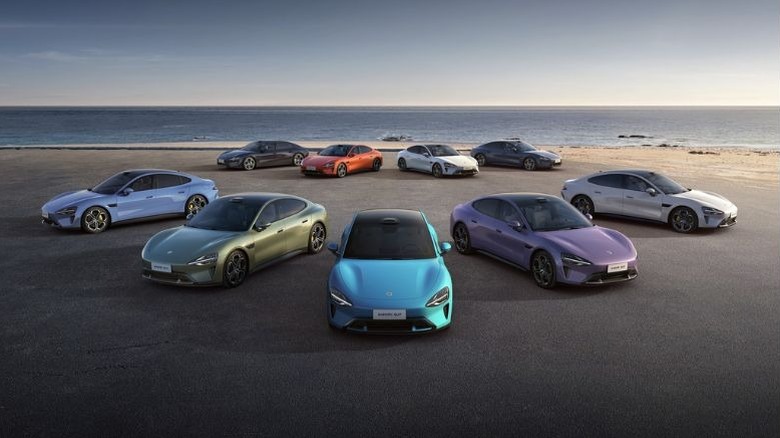
Xiaomi's most daring foray has been into the automotive industry as an EV manufacturer, spearheaded by its car sub-brand, Xiaomi Auto. The company unveiled the Xiaomi SU7, its first EV, in December 2023, with ambitious plans to become a market leader. However, it wasn't until 2024 that the EV arrived in the Chinese market with a price range between $30,000 and $40,000. The SU7 is a sedan with three trims to pick from: SU7, SU7 Pro, and SU7 Max. The base model claimed to offer 434 miles of range (based on China's Light-Duty Vehicle Test Cycle) from a 73.6 kWh battery, while the highest trim promised 503 miles from a 101-kWh battery.
But Xiaomi didn't stop there. It unveiled its second EV in 2025, dubbed the YU7, a luxury SUV aimed at dethroning Tesla's best-selling car in China, the Model Y. Like the SU7, the YU7 is available in three trims, starting at around $35,000 for the base model, $39,000 for the Pro, and $46,000 for the top-of-the-line Max trim. According to CNBC, citing data from the China Passenger Car Association, the YU7 was the best-selling model in the market in January 2026, with 37,869 units sold, almost twice as many as the Model Y's 16,845.
According to a post on Weibo by Lei Jun, the company's founder and chairman, Xiaomi Auto has already sold over 600,000 vehicles since April 2024. The company is already eyeing an expansion of its EV business beyond China, with plans to launch showrooms in Europe in 2027. All that said, the next time you see the name Xiaomi, know that this isn't just a smartphone manufacturer, but a diversified company with a wide portfolio of products.