

The 4 Best And 4 Worst Smoke Alarms For Smart Homes, According To User Reviews
We may receive a commission on purchases made from links.
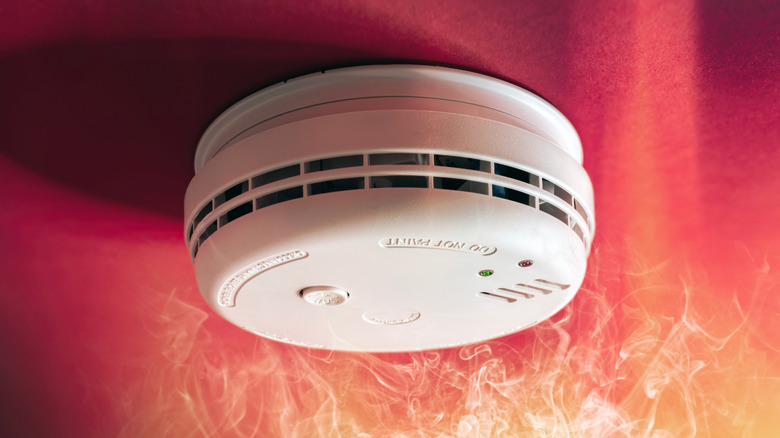
Smoke alarms are a vital bit of kit in every home. After all, fire risk doesn't just come from obvious sources like forgotten candles, but also everyday gadgets like your dehumidifier or power bank. According to the National Fire Protection Association (NFPA), having working smoke alarms reduces the risk of dying in a home fire by 60%. They have been commercially available since the early 1970s, and the core technology behind them hasn't changed much since, though new features have come in to offer some modern touches.
For instance, the ability to connect to the home Wi-Fi network means they can send notifications to the owner's phone when triggered, and they can be linked to other alarms in the home so that all of them sound if smoke is detected in any room. Connected smoke alarms also help cut down on false or nuisance alarms — a common reason people disable their smoke detectors — and that's led to them quickly becoming an essential smart home gadget.
However, not all smart smoke alarms are created equal. Some can be restrictively expensive. The more complex technology also opens the door for technical issues that can't be solved with a simple reset. Other downsides may be more inconvenient than dangerous, like failing to connect to your smart home's ecosystem, be it Amazon, Google, or Apple.
BGR has rounded up some of the best and worst smart smoke detectors on the market, so you don't have to find out if you made the right call when you need it most.
How do smoke alarms work
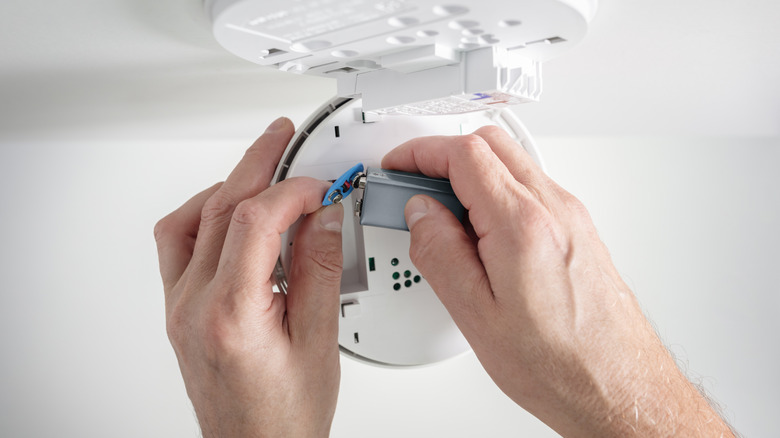
A smoke alarm's job is straightforward: detect smoke particles in the air and sound an alarm early enough for people to escape. While modern ones may boast fancy features, most have always worked in one of two ways — using ionization or photoelectric (also known as optical) sensing.
Ionization alarms contain a tiny amount of shielded radioactive material positioned between two metal plates. As it naturally decays, the material releases particles that knock electrons off nearby air molecules, turning them into charged particles called ions. These ions allow a small electric current to flow between the plates. But when smoke from a fire enters the chamber, the particles attach to the ions and interfere with their movement, reducing the current. If the current drops below a preset threshold, the alarm is triggered. Ionization detectors are particularly quick to respond to fast-flaming fires, which produce large numbers of tiny soot particles that disrupt the current more rapidly. Fun fact: ionization technology was actually a NASA invention.
Photoelectric alarms use a light beam and a sensor inside a chamber. The sensor is positioned at an angle to the beam, so that under normal conditions the beam does not hit it. When smoke particles enter, they scatter the light, triggering the alarm only when enough light is detected. These detectors are generally more responsive to slow, smoldering fires, which produce lighter-colored particles that are more reflective. Each technology has its strengths, so the NFPA recommends having both in a household, and many modern smoke alarms use dual-sensor setups.
What makes a great smoke alarm
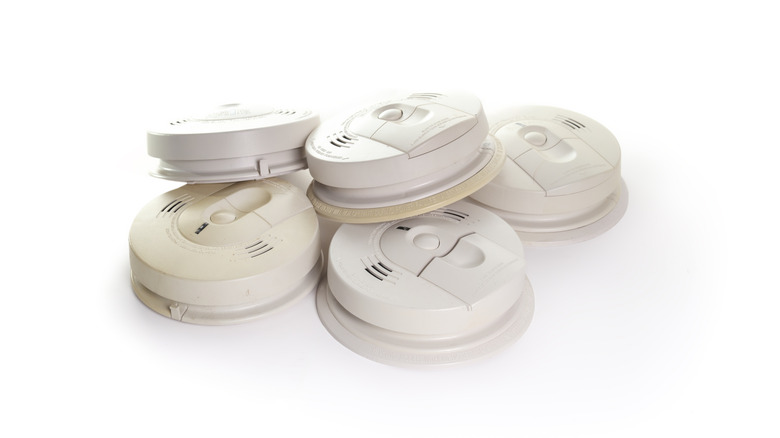
There are hundreds of different smoke alarms on the market, and it can be easy to feel overwhelmed when shopping around. Of course, its ability to detect a blaze and alert the household quickly is the priority, so opting for a dual-sensor alarm is ideal.
Power source is equally important. You don't want to have to replace it too quickly, or find out it's not working during an emergency situation. Many models come with long-life lithium-ion batteries. Others are hardwired into your home's power, with a backup battery to keep them running during outages. Some have sealed batteries to stop the user from removing them and forgetting to install replacements.
Other useful features include a large, clearly visible test button which makes it easy to check that the alarm is working, and the ability to detect carbon monoxide as well as smoke.
Smart smoke alarms offer a variety of additional features, so it's important to choose a model that fully integrates with your home's digital ecosystem to make the most of its capabilities. Top-of-the-range devices will offer smartphone alerts, low-battery warnings, and self-testing capabilities. In-app silence buttons will quickly put a stop to any false alarms and save you from frantically trying to reach the physical reset button while the siren blares around you. Quality devices will also connect to other alarms on the network, which is helpful in large houses where one alarm may not be audible from all rooms.
Best: X-Sense SC07-MR Smart Smoke & CO Alarm
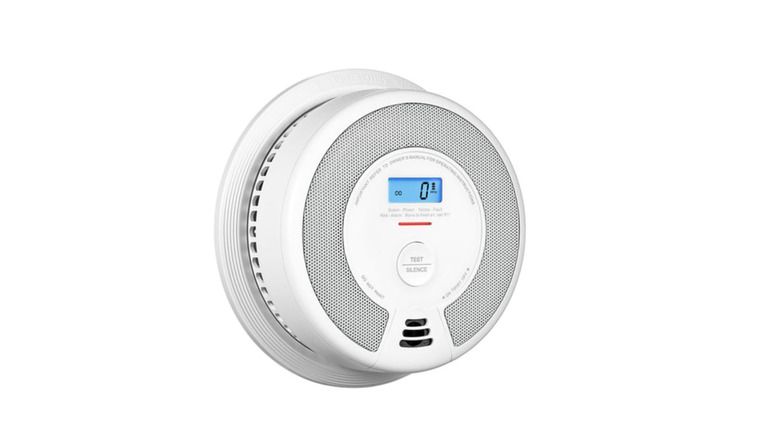
The best smart smoke alarm on BGR's list is the X-Sense SC07-MR Smart Smoke & CO Alarm. At a glance, the $45.99 device looks like nothing to write home about, offering the typical loudness of 85 dB at 10 feet away and no integration with any of the top three smart home ecosystems of Apple, Amazon, and Google. The manufacturer guarantees a 10-year lifetime, which is fairly standard, and the device is powered by a single replaceable CR123A battery rather than connecting to the mains.
However, the added features put it at the top of our list. When paired with the SBS50 base station (which will set you back an additional $22.99), the alarm volume increases to a powerful 100 dB, and it can connect to the X‑Sense Home Security app, enabling notifications, remote monitoring, and the ability to silence the alarm from your phone.
The alarm uses both ionization and photoelectric sensors to detect smoke, so it's extra safe, and it even has the ability to automatically alert a 24/7 professional monitoring center as soon as the alarm is triggered. An agent will contact someone from the household, either via a phone call or message, and can quickly dispatch emergency services if the emergency is verified. Note that to access this service, users must subscribe to Protect+ Premium for $4.99 per month, which offers automatic emergency dispatch. The basic $2.99 plan will provide the same service, but you must manually alert the monitoring center by pressing a button in the app.
Best: Meross MA151
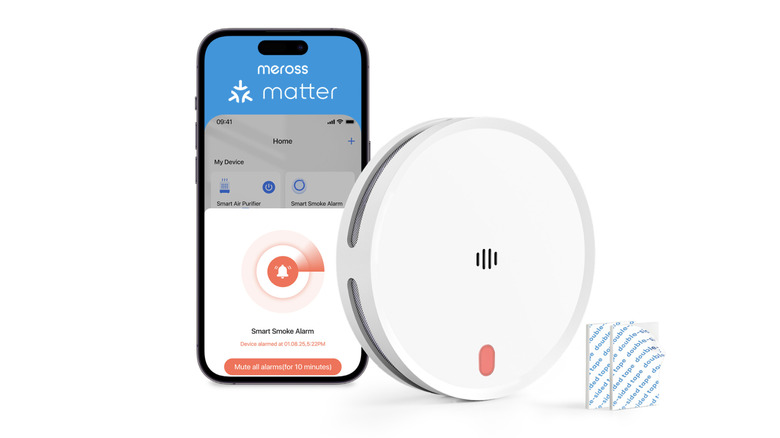
Another great smart smoke detector option is the Meross MA151, available for $41.99 without the base station or $61.99 with it. Like the X-Sense model, by itself the alarm is not hugely impressive, offering a volume of 85dB, no ecosystem integration, and a 10-year lifetime. It is not dual-sensor either, though it does have two optical sensors within the sensing chamber to increase accuracy.
With the Matter hub, however, the alarm can connect to Amazon Alexa, Apple Home, Google Home, and Samsung SmartThings. It also boosts alarm volume to a whopping 110 dB and allows it to connect to up to 16 other alarms in the household. If you also have other sensors for your doors and windows, the alarm can double up as a security system that is triggered when an intrusion is detected.
The Matter hub allows the MA151 to connect to the Meross app for real-time alerts, including those for low battery and tampering. On the negatives, it does not offer emergency service integration, and you do need to buy the Matter hub to utilize the coolest features. The two AA batteries are replaceable, but this has the disadvantage of meaning that you are the one who needs to replace them, which can be a chore.
Best: Sensereo MSC-1
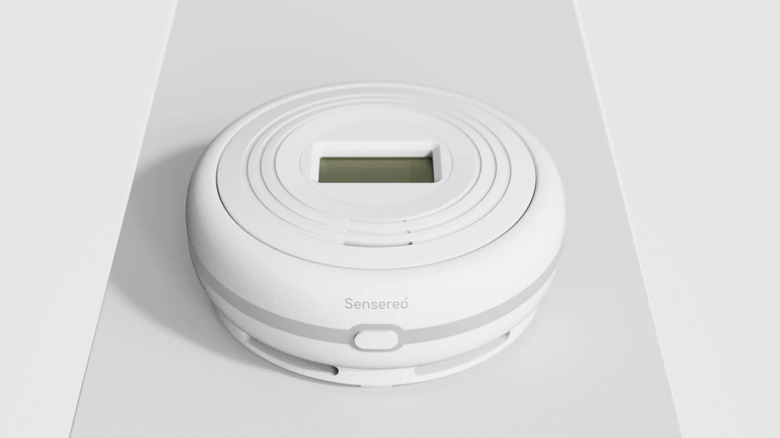
Our next best smoke alarm is the Sensereo MSC-1, which is a little more expensive at $69.99. We must caveat that currently this device is only certified for use in the U.K. and EU, but a U.S.-certified version will be released at a later stage. Indeed, you can order it to the U.S. and U.S. owners have reviewed the device, but using it there could nullify insurance claims.
Like the Meross MA151, this alarm can pair with a Matter hub to boost the number of ecosystems it is compatible with, but unlike the Meross option, it detects carbon monoxide as well as smoke. In fact, it displays the exact ppm on its built-in screen. Its built-in alarm is the standard level of 85 dB at 10 feet, and the Matter hub does not increase this.
The MSC-1 is not a dual-sensor device, relying only on photoelectrics to detect smoke. That being said, the manufacturer does boast that it has an "optimized chamber structure" designed in a way that minimizes interference from external light to reduce false alarms. Reviewers say that it takes about 20 seconds to detect smoke during tests. It requires one replaceable CR123A battery to function, which may be preferable to the more expensive mains power connection, or less preferable if you really don't like changing alarm batteries.
Best: Owl Wired
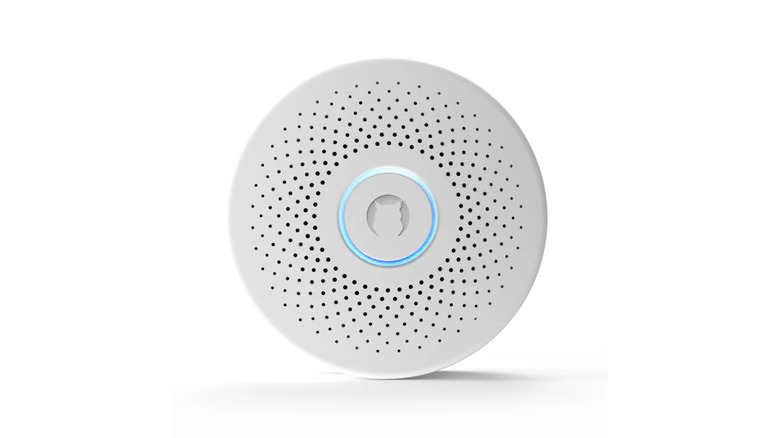
Our final choice to round out the top four is the Owl Wired. While this option detects smoke using only a photoelectric detector, it contains a host of other sensors to pick up carbon monoxide, motion, noise, temperature, and humidity. Motion and sound detection help with security, as the device can alert you in the case of unexpected activity, while temperature and humidity readings are useful for assessing potential for damp or mould.
The detector connects to three smart home ecosystems without the need for an additional hub: Apple, Google, and IFTTT. The latter is especially good for automating smart actions based on sensor triggers, such as turning on lights when motion is detected or sending you an emergency call in the case of smoke or carbon monoxide. Even if you don't use Apple HomeKit or any of the other setups, the Owl Home app will also display readings from the sensors.
The Owl Wired is powered by your home electricity, so owners won't have to fiddle around changing batteries every few years, but the initial setup will be more technical and more expensive. It does have an internal backup lithium battery for use in a power cut, but the manufacturer says this only has a lifetime of about a week (it is looking to improve this via an over-the-air update.) You can connect up to 20 detectors in a household, but this will cost you, as each device retails for $169. They do come in a sleek black color as well as white, though, which is unique.
Worst: Kidde Smart Smoke & Carbon Monoxide Alarm
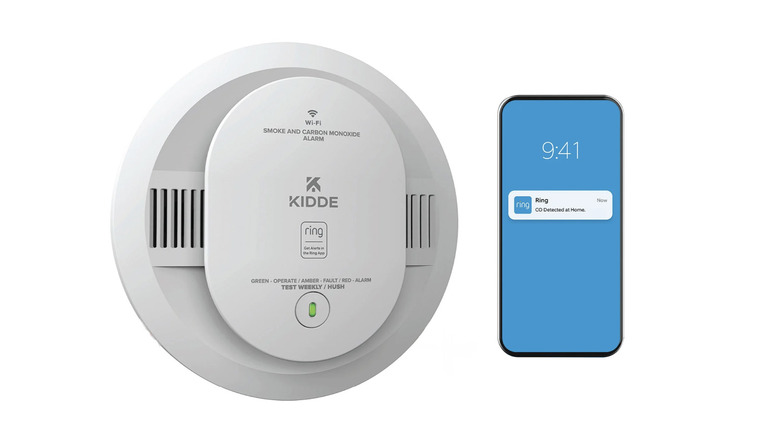
It wasn't easy to single out the worst smoke detectors, as most models still offer useful features, but the first on our list is the Kidde Smart Smoke & Carbon Monoxide Alarm. Retailing for about $75 on Amazon, this dual-sensor device can connect to Amazon Alexa and Ring systems, and with a subscription to Ring's smoke & CO professional monitoring plan, it also provides access to a 24/7 monitoring center that can contact emergency services if an incident is confirmed. On paper, it ticks a lot of boxes for a smart smoke alarm.
However, BGR found a significant number of reviews highlighting frequent false alarms, often in the middle of the night and without any obvious trigger. Furthermore, the alarm emits a persistent beeping at the end of its 10-year lifespan, which some find frustrating, especially given instances where it apparently began less than a year after initial purchase. The brand is also let down by its customer service, as it has received widespread criticism on TrustPilot, with many describing support as unhelpful or slow.
Worst: First Alert SC5
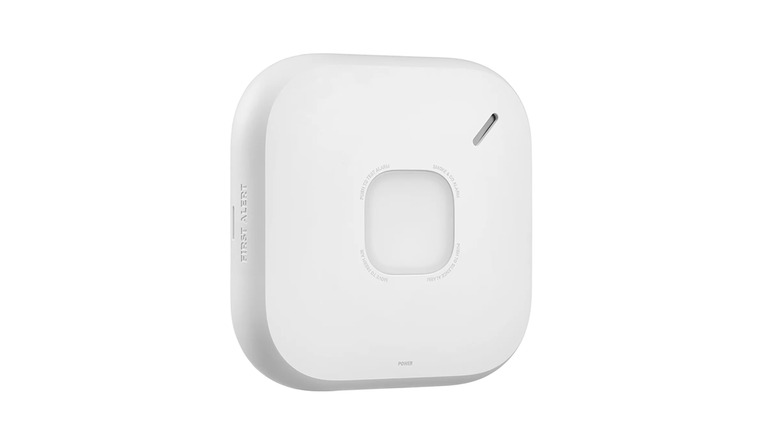
Like the Kidde detector, the First Alert SC5 has several strong selling points. It includes a carbon monoxide sensor, voice alerts that state what type of hazard has been detected and where, and built-in integration with Google's smart home ecosystem. That compatibility made it a popular replacement after Google officially discontinued its Nest brand in March 2025. On paper, the SC5 looks like a natural successor for households already invested in Google Home.
However, the alarm also suffers from many of the same complaints as the Kidde model. Despite retailing at a not-cheap $129.99, it has attracted numerous reports of false alarms. Some former Nest users on Reddit have described it in harsh terms, calling it "junk" and "garbage," particularly due to alarms that trigger without an obvious cause. Several reviewers also claim that silencing the alarm can be frustrating, with the app insisting there is "too much smoke" even when there isn't. Others mention unexplained network disconnections that undermine its smart functionality. Despite a straightforward setup and self-testing features, the volume and consistency of negative feedback suggest this is one to avoid.
Worst: Place Any Space
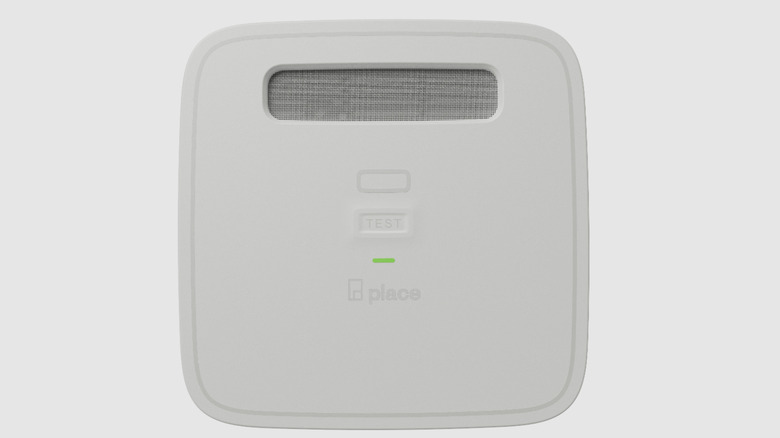
The Place Any Space smoke alarm is quite new to the market, having been released last summer, meaning that the reviews should be taken with a pinch of salt. However, for a price tag of $138.95, it is not massively impressive. The Any Space model comes with just photoelectric detection technology and does not natively integrate with any of the main smart home ecosystems. It is only available as a hardwired model, limiting installation flexibility. It won't alert the emergency services to a fire automatically, and It's not even that loud, with a volume of 79 db at 10 feet.
Not everything is bad, though — many reviewers say it has a good motion-sensing night light feature. It also has temperature and humidity sensors like the Owl Wired, and voice alert options like the SC5. Improvements could be on the horizon, too. Last summer, the manufacturer told The Verge it is working toward Matter hub and Google Home functionality. However, it might be a good idea holding off on investing in the Place Any Space before that happens.
Worst: First Alert Z-Wave Plus Smart Smoke and Carbon Monoxide Alarm
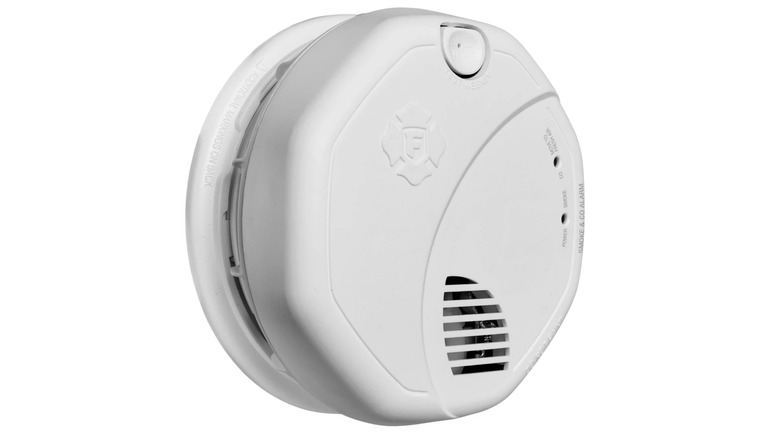
Rounding out the four worst smart smoke alarms is another model from First Alert; the Z-Wave Plus Smart Smoke and Carbon Monoxide Alarm. The first red flag is that the word "Monoxide" is spelled "Monxide" on the vendor's official website at time of writing. Its specs are also relatively unimpressive, with the standard offering of 85 dB and a 10-year lifetime, no ionization-based sensor, and native support for only one smart ecosystem, Ring. The Ring integration does mean that users can take advantage of Ring's 24/7 monitoring service, as with the Kidde device, but this will, of course, mean forking out for a Ring-branded alarm or base station as well as the Ring Protect subscription itself. A Z-Wave gateway hub can provide other smart home integrations, but it will also necessitate an added cost, on top of the roughly $59 alarm.
Just like many of the others on our list, this First Alert device is prone to unexplained false alarms, according to online reviewers. The manufacturer recommends vacuuming it out once a month, which seems an excessive level of ongoing maintenance.
Methodology
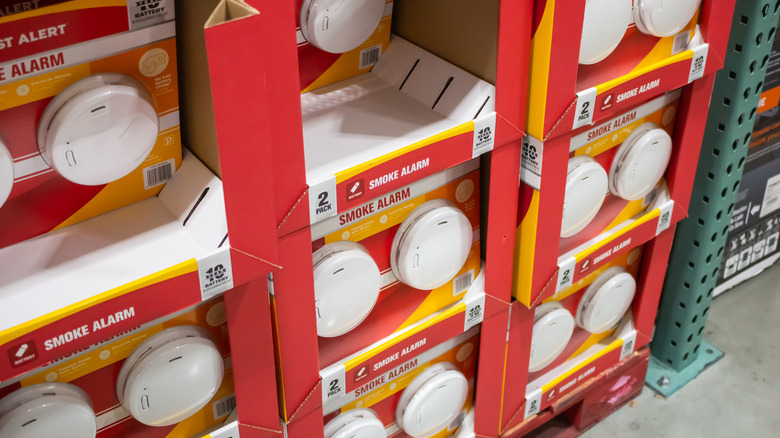
BGR began by compiling a long list of smart smoke detectors frequently discussed in user reviews across forums such as Reddit and technology review sites. From there, each model was evaluated and ranked using a set of objective criteria, which included the price, the number of compatible smart home ecosystems (such as Amazon Alexa, Google Home, and Apple HomeKit), whether the device offers emergency service integration, whether it features dual-sensor technology (with both ionization and optical detection), battery life, and maximum decibel rating.
Beyond technical specs, BGR also considered more subjective themes in user feedback. Factors like ease of installation, app reliability, and connectivity stability were taken into account when they appeared consistently across multiple reviews. BGR identified the four highest-performing models and the four lowest-performing models from the longlist for featuring in this article.