

Can You Use A Google Nest Thermostat Without Internet?
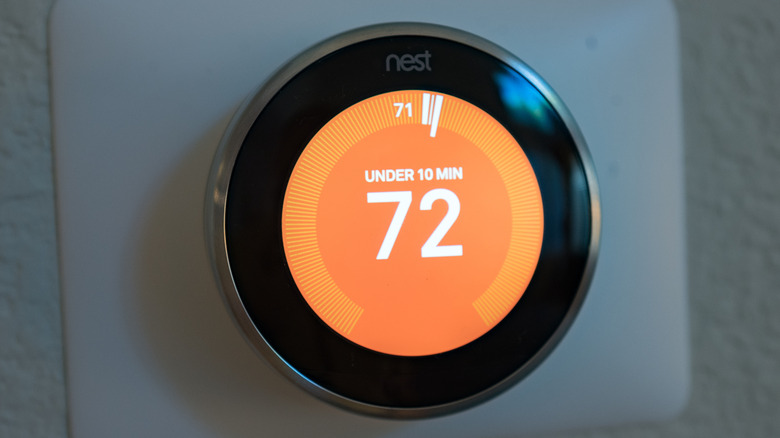
Smart home devices, like Google's Nest learning thermostats, are meant to be connected to the internet and offer a host of convenient features because of it, like remote access. But given the fact that Google has discontinued its Nest brand in favor of Google Home, and has also ended support for 1st and 2nd gen Nest thermostats, it brings up an important question. Can you use a Google Nest thermostat without internet, and if so, what can and can't you do while offline?
The short answer is yes, a Google Nest thermostat will continue to function just fine without internet. However, some features won't be available and it will work like a traditional thermostat instead, with manual control of heating and cooling modes. You won't be able tap into it via mobile apps, which means no remote access to change settings.
You also won't receive notifications while the device remains offline, nor will you be able to use cloud-based features or voice control. Any smart schedules you've setup should continue to trigger without internet, but if you want to make any changes you'll have to do that directly from the thermostat. This is similar to other devices from the company, like the Google Home Hub, which does work offline, but only in a limited capacity.
Your Nest thermostat doesn't need the internet for basic functions
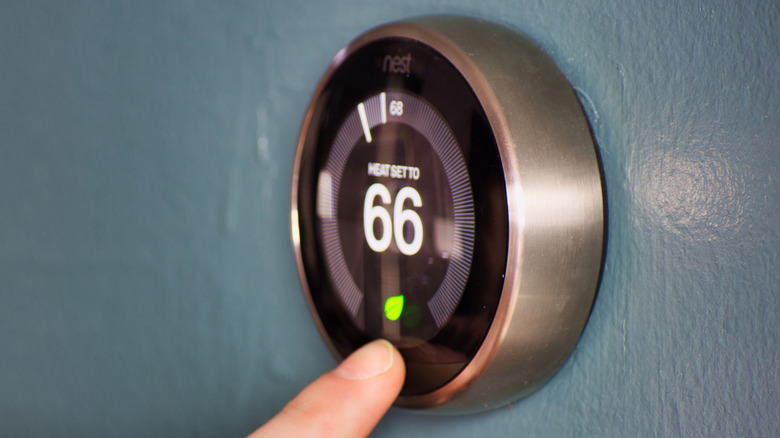
If the internet goes out, Google Nest thermostats will continue to function as traditional, manually-operated units, but will lose access to advanced features. For example, you can't use your Google Home speaker or voice assistant to turn down the temperature if there's no remote access, nor will you be able to control it with the Nest or Google Home mobile apps.
But there is a way to setup an offline accessible smart home using Matter- and ZigBee-compatible devices. Newer Nest learning thermostats — 4th gen and above — support the Matter protocol, which works with smart home platforms beyond Google's ecosystem, like Apple Home. Matter devices use a local network — your home's Wi-Fi versus the open internet — to communicate and function when there's a service outage.
The downside is that if you have an older Nest thermostat, including 1st, 2nd, and 3rd gen models, you'll have to upgrade for Matter support. One of the most common mistakes people make when setting up a smart home is locking themselves into a single ecosystem. Going with something like Matter- or Zigbee-friendly devices means you can use multiple systems and often connect devices interchangeably.