

Waymo Wants To Deploy In This State, But It Hit A Legal Speed Bump
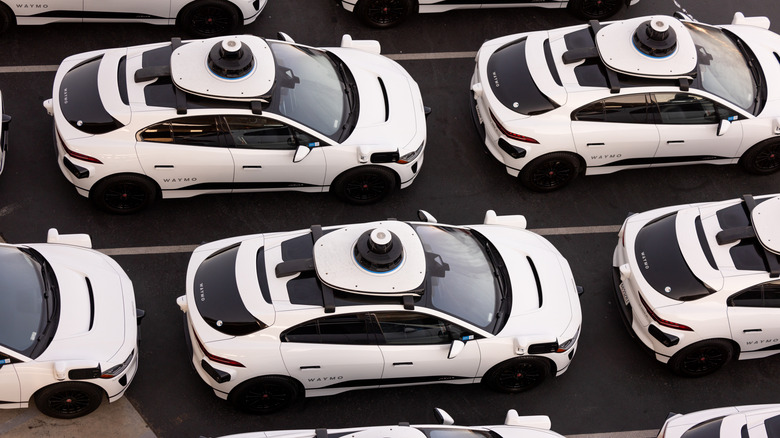
Self-driving car company Waymo is looking to continue expanding its robotaxi service across the United States. With a mission to make streets safer, Waymo is now looking to launch its vehicles in Massachusetts. The city of Boston is specifically targeted, and Waymo had already begun to scope out the city in 2025 and the unique challenges it will present for robotaxis. However, there is a hurdle Waymo has to overcome. As of the time of this writing, there is no Massachusetts state law that explicitly authorizes fully autonomous vehicles with no human drivers. Before Waymo is able to operate in Boston, legal action has to open the door for it to do so.
Waymo has some support in coming to Boston. There is proposed legislation allowing for autonomous vehicles so long as they meet state-defined standards for operation and safety. Waymo also has the support of Massachusetts State Representative Dan Cahill, who serves as Chairman of the Joint Committee on Public Safety and Homeland Security. Cahill is aiming to update transportation laws to allow Waymo to operate while focusing on a future of safety as autonomous vehicle technology continues to evolve. However, Waymo is still receiving plenty of pushback that could prevent it from expanding into Boston as it wants to.
Opposition against Waymo in Boston
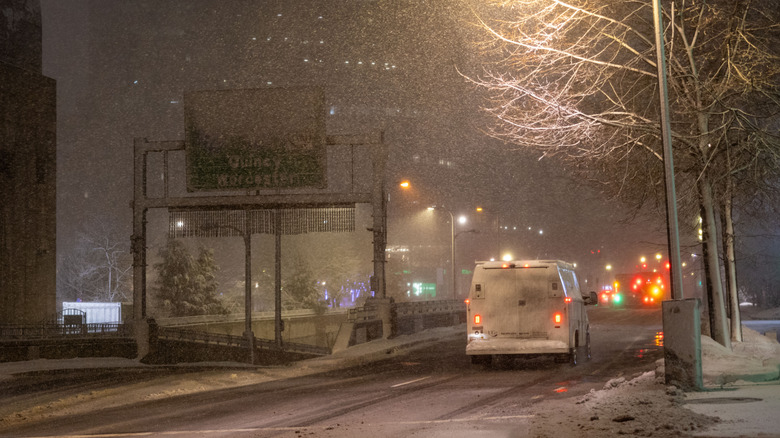
Waymo has certainly created some controversy in wanting to operate in Massachusetts. Even as early as summer of 2025, there was already organized opposition to this move. Boston city councilors worked toward prohibiting autonomous vehicles altogether unless it was determined they were completely safe not just in terms of vehicle crashes, but also for the workforce. There were protests regarding Waymo taking away the jobs of drivers within the city, including by workers from Uber and Lyft that provide human-driver taxi services.
There is concern about the unique driving challenges Waymo cars would face in Boston. Narrow streets, heavy traffic, intense snowy seasons, and frequent construction are all issues Waymo needs to be ready to address. Given the bustle of Boston, there is also the concern about how Waymo cars will handle double parking. This issue recently reared its head when a driverless Waymo car hit a child who ran past a double-parked SUV near a school.
The Teamsters Local 25 union, which represents over 13,000 area workers, held a rally against Waymo in Boston. President Tom Mari stated, as recorded on Teamsters' website, "Waymo is steamrolling into cities throughout our country without concern for workers or residents. They're doing this because they want to make trillions of dollars by eliminating jobs."
What is the future for Waymo in Boston?
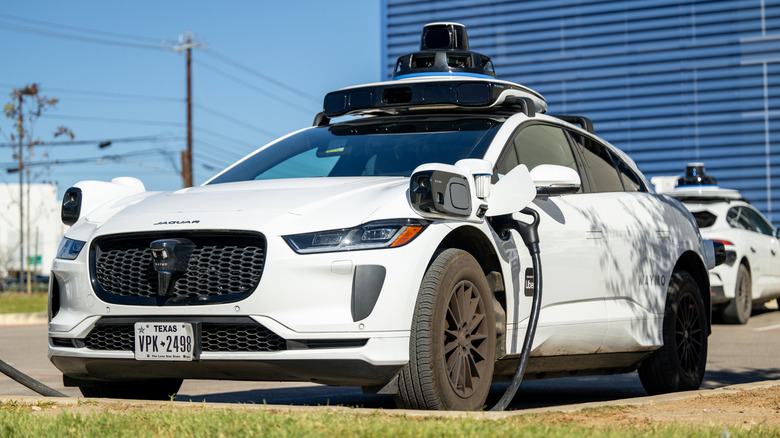
Waymo is confident about its future in Boston. It has plans to begin its initial phase of having its robotaxis go around the city with human drivers to learn and train on the roads, especially ensuring that its driverless cars work in the snow. It's also optimistic about working with Massachusetts state officials and lawmakers to make this happen. Waymo will initially need to complete an application with the Massachusetts Department of Transportation that will allow it to test its vehicles in the city. As of the time of this writing, Waymo has yet to do so.
Though Waymo has some support on a government level, there is still plenty of pushback. Waymo will need to prove its robotaxis can handle the challenges of Boston without incident. It will need to fulfill its goal of making the roads safer than with human drivers to justify to local unions the potential loss of driver jobs. In an earlier interview with Waymo chief product officer Saswat Panigrahi, the goal of Waymo to prioritize safety over everything else, even worker concerns, was highlighted. Panigrahi stated, as recorded by AOL, "The safety case alone is sufficient because I don't think we should be accepting something that kills 40,000 people a year in a developed market," and that, "I think that alone is a sufficient case to be going all in [on autonomous vehicles]."