

Here's What The HDMI Port In Your Car Is Actually For
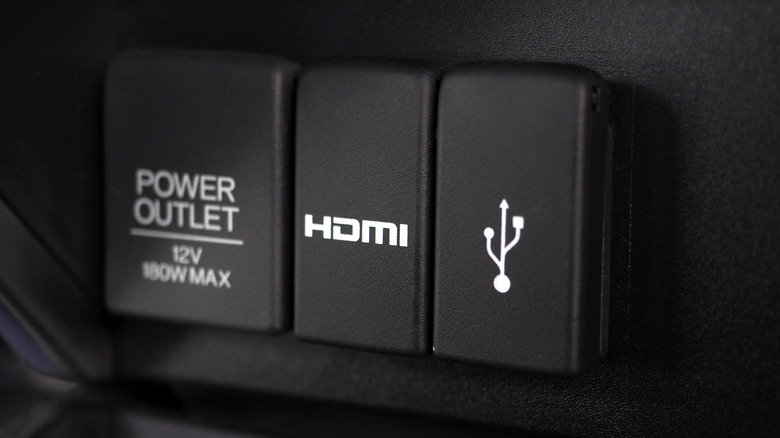
10 years ago, cars started to appear on the market with an interesting new addition: HDMI ports. While these vehicles seem to have been limited mostly to Honda, the appearance of HDMI ports in cars led to some interesting Reddit posts, where people talked about using the connection to play Nintendoand Google Stadia. Though vehicles with HDMI (short for High-Definition Multimedia Interface) ports generally do allow for video playback on the factory infotainment system, they typically require the vehicle to be in park. So why did these vehicles have HDMI ports in the first place?
Although Honda wasn't the only company to offer HDMI ports in it cars, the feature was widespread in the automaker's portfolio circa 2010. But instead of entertainment, this inclusion of HDMI ports appears to have been tied to a pre-Android Auto and Apple CarPlay system that sought to mirror your phone's features onto the car's infotainment display. Reports suggest that the feature was met with mixed results, and obviously it didn't take off, as evidenced by the current popularity of Android Auto and Apple Carplay.
Honda's precursor to smartphone mirroring
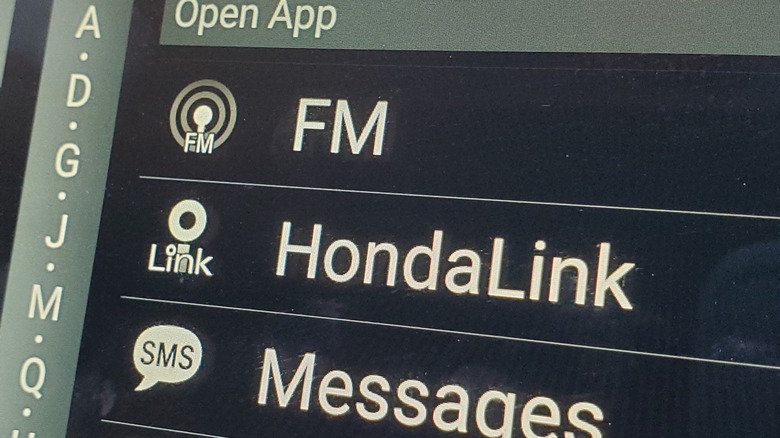
In the early 2010s, many cars were embracing hands-free phone connections via Bluetooth and USB-based features. However, as phones became smarter, and we started to rely on them more in cars for features like turn-by-turn Google Maps directions, automakers looked for further integration options. Enter HondaLink, a system that Honda created in 2012 to make it easier for drivers to use their smartphone's features within the car's infotainment interface. It still leans on some of this functionality today, however, HondaLink is now used for functions like roadside assistance, remote vehicle access, maintenance reminders, and monitoring mileage from your smartphone.
You can also send destinations from your device straight to the car's built-in navigation system, allowing you to access those features without using CarPlay or Android Auto. Other carmakers have similar systems, like Ford's Sync, but none have become full-fledged Apple CarPlay and Android Auto replacements just yet. Though as some cars are getting rid of Android Auto and several popular models have removed Apple CarPlay , we might see a renewed focus on systems like HondaLink.
HDMI ports in cars for entertainment purposes
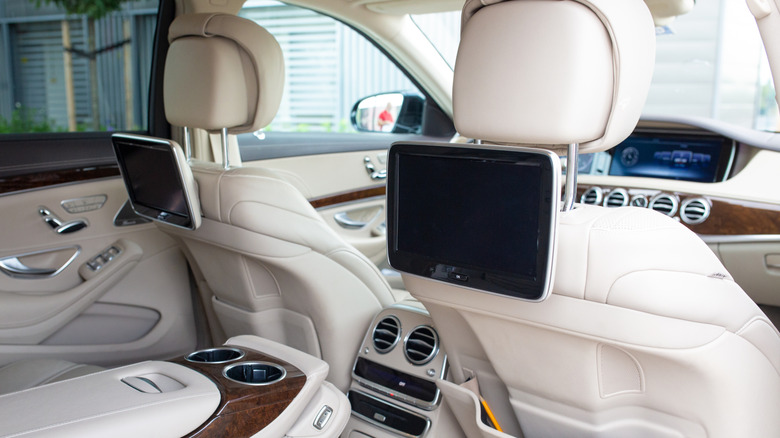
This isn't to say that HDMI ports in cars are never meant for entertainment purposes. Vehicles from Mercedes-Benz often feature HDMI connectors in the rear entertainment systems, allowing for users to connect Blu-ray players, gaming consoles, and more to the car's built-in system. This gives backseat passengers more control over what they do and is a great way to increase the desirability of the car, especially for families. In the past, some Fords even had traditional AV ports, allowing passengers to connect gaming consoles to the in-vehicle displays, among other things.
While you might expect some tech-forward brands — like Tesla — to offer these features, it's not the case. However, companies like OTB Mods have created systems for adding HDMI ports to your Tesla. Ultimately, the reasons cars have HDMI ports differs from vehicle to vehicle. Chances are, if the ports are up front, they have an intended usage beyond entertainment. However, with HDMI ports and displays in the back, you should be able to connect gaming consoles or video players without much issue.