

Can Robots Feel Pain? This New Artificial Skin Makes It Possible
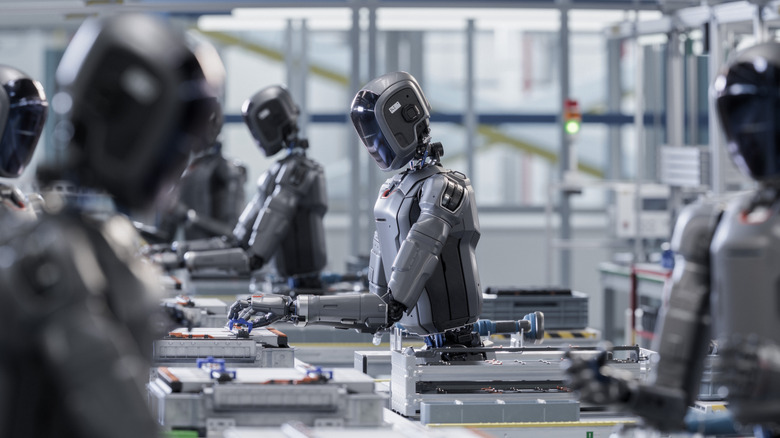
A study conducted by researchers at City University of Hong Kong reveals how they were able to give robots active pain and injury perception with a new electronic skin. While robots can't actually feel pain or get hurt like a human would, this technology can make the robot feel aware of what pain would feel like, which could prevent parts of the robot from being harmed or destroyed, and even detect when parts of the skin itself are damaged.
The paper "A neuromorphic robotic electronic skin with active pain and injury perception" was published last year, and aligns with other robotic sensing technologies already in development. For example, Chinese company XPENG introduced its eighth generation humanoid robots which feature a synthetic skin to help make these robots feel warmer and more intimate. At the same time, skin-sensing is important to make the robot aware about its surroundings.
In this case, however, the researchers introduced a neuromorphic robotic electronic skin (NRE-skin) that goes beyond basic pressure sensing. It works like a simplified nervous system because it can send the robot a "pain" signal depending on escalating or persistent pressure. This could help detect physical damage and trigger reflex-like responses without the constant need for central processing.
Here's why robot pain is a breakthrough advancement
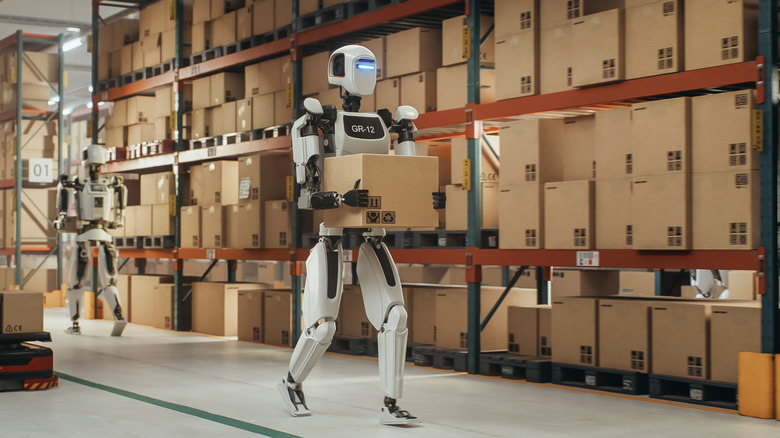
The paper explains that traditional electronic skins consume a lot of power and result in a ton of raw data. With this new NRE-skin, each pressure sensor directly generates electrical pulses the frequency of which increase as pressure increases. In other words, a light touch produces low-frequency pulses, and strong one produces high-frequency pulses, similar to how our nerves react to stronger stimulus.
According to the research, a layered circuit architecture processes those impulses locally. A modulation network embeds location information into each pulse, a signal integrator collects everything, and a dedicated "pain center" monitors the pressure. If a pressure exceeds a threshold or remains moderately high for long enough, the pain signal fires, and the robot can pull its limb away without central processing or human intervention.
The paper presents this as a breakthrough advancement because the NRE-skin remains dormant if it's not touching or sensing something, as a result, it consumes around 2.5 mW when idle and only 5.6 mW under heavy contact, while current e-skins consume about 118 mW continuously. Besides that, computational load also drops because only pulse events are processed, not full sensor frames.
Pain-sensing technology could greatly improve robots
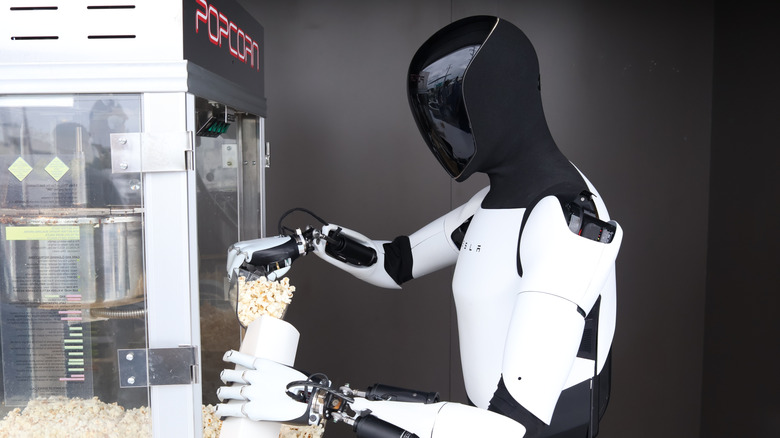
At this moment, no commercial brand has incorporated this neuromorphic "pain-sensing" skin into a product, since it's currently at the research stage. Still, the skin is made to be physically flexible, modular, and magnetically dockable, so companies could apply it only to the parts that need tactile feedback
The paper shows how robot awareness of pressure intensity and duration can trigger protective behavior without central processing, just like our brain instinctively understands that if we put our hands on fire, we need to remove it ASAP or it's going to burn us. In a world where robots are expected to be used in several different applications, this can be extremely useful for dull, dangerous, and repetitive tasks — just like humanoid robotic company Neura told us — but also so robots can better understand their surroundings when running errands or doing human chores.
It's important to note that robots wouldn't agonize or feel pain like we would if something happens to its parts. That said, scientists are trying to make them more similar to us, but that doesn't necessarily translate into them becoming humans or feeling the way we do. For now, we can save this for Isaac Asimov.