

Always Read The Fine Print When Signing A Home Solar Panel Contract
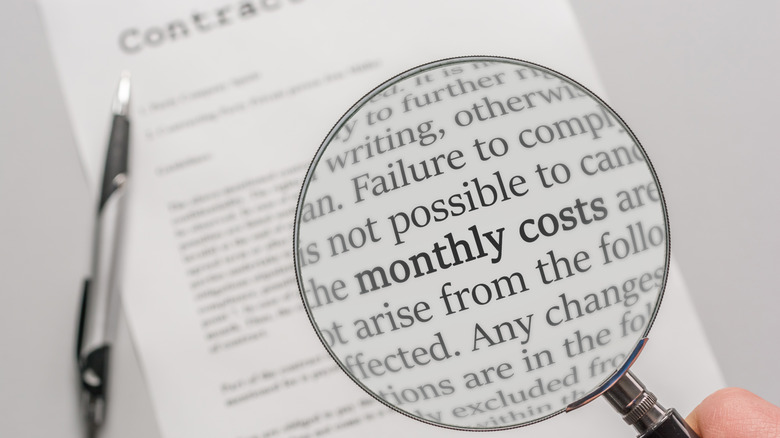
It was 2024 in Houston, Texas, when Frances Holt was visited by a salesperson from the Sunrun solar panel company. She felt like they were being pushy, but were trustworthy enough in advertising the benefits of solar panels. Holt signed a 43-page contract electronically, but never received a physical copy. It wasn't long after that that the panels caused damage to her roof. She decided to simply not activate the system at all, and then in 2025 received a bill from Sunrun saying she owed $134,000. After Holt went to the local Houston station, KPRC 2 News, Sunrun promised to negate the bill and remove the solar panels.
However, this is hardly the first time this has happened. Gloria Combs, a double-amputee senior citizen of Houston, also had a run-in with Sunrun in 2023. Combs was told the solar panels were free because a government program covers them. Then, she got a bill for $50,000. The situation stressed Combs out so much that she preferred not to be home at all, where the solar panels were a constant reminder of the money she owed while living on a fixed income.
These are just two examples of how solar panel companies can be deceptive if you don't read or you misunderstand the fine print in their contracts. While solar panels have benefits, including saving lives, some companies are eager to take advantage of customers when they can.
How solar panel companies mislead you
A look at Sunrun's website gives insight into why these things happen. There are no written prices for solar panels; instead, the site directs those interested to reach out for a personal quote. This sets customers up to be charged high prices because there is no baseline for comparison.
There is also an incentive for the salespeople themselves to try anything to get someone to sign a contract. As of this time of writing, Sunrun has a job opening for a field sales consultant in California, paying a base of $20,000 with commissions for signed customer agreements, and the salesperson has to meet established sales quotas.
Though the two stories above focus on Sunrun, that does not mean any other solar panel company is automatically trustworthy. Contracts from solar panel companies can be vague regarding whether you are purchasing the solar panels outright or leasing them from a third party. They may also refer to regular annual adjustments to your contract, which boils down to increasing costs over time. Other ways contracts can try to trick you are through early termination fees, lack of performance guarantees, and the fact that you might need to remove the panels before selling your home. Some frustrated customers talk about class action lawsuits in online forums, not unlike the Roku TV class action lawsuit going on.
What to know before signing a solar panel contract
There are some things you should know before installing solar panels, and ensuring you understand the contract is certainly one of them. Do not let a salesperson push you into signing a contract you do not understand, haven't read fully, and don't have a physical copy of. Solar panels can be expensive, and will need to be professionally installed on your house until they are professionally removed. Because of this, it's not a decision to be rushed, regardless of what the salesperson may try to make you believe. Research the company you are speaking to, see what people are saying online, and even look to the Better Business Bureau to learn about common customer complaints.
You always have the option to have a lawyer of your choosing look over the contract before you sign it. If the company gives you pushback on doing that, it is definitely a red flag that you may not want to work with them. You are also at liberty to ask for revisions to be made to a contract you are not happy with. If you feel like you've been misled after signing a contract, reaching out to a legal professional as soon as possible can go a long way in helping you understand what your options are. Even the U.S. Department of the Treasury is aware of these deceptive practices and is working toward stronger regulations of solar panel contracts and sales tactics.