

4 Android Phones More Powerful Than The iPhone 17 Pro
We may receive a commission on purchases made from links.
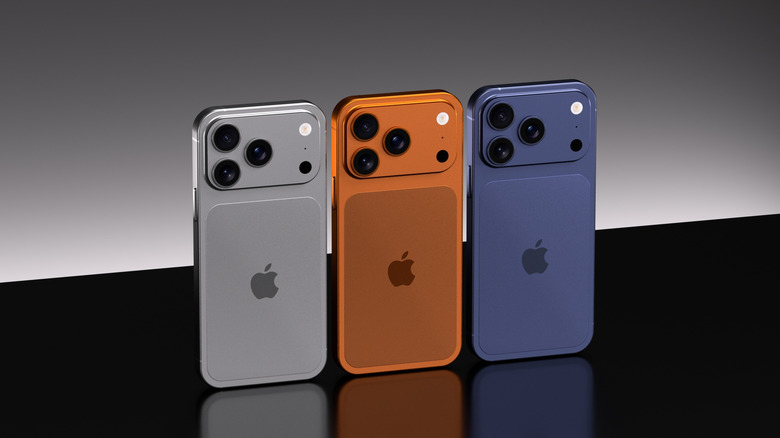
It's not a leap to call Apple's iPhone 17 Pro the new standard for what a high-end phone should be like. It boasts a 1206 x 2622 LTPO OLED anti-reflective display that can get as bright as 3000 nits, a strong ceramic shield to protect it from external damage, and three 48-megapixel cameras that can shoot some of the best 4K videos for a smartphone. Moreover, Apple's A19 Pro chip lets it keep up with dedicated gaming phones in terms of performance in addition to being a high-end flagship with amazing features all around. Additionally, it even has 12GB of RAM and 256GB of storage for the base iPhone 17 Pro, something that previous generations often skimped on.
While the iPhones are a great overall package, there are still many phones that beat the 17 Pro in certain aspects — be it performance, battery life, display, or even the camera. If you're just looking for an Android alternative to the newest iPhone, want something cheaper than the Pro's $1,099 that still fits all your needs, or desire a phone that just outperforms the iPhone 17 Pro, there are a number of great options for you to choose from.
1. OnePlus 15
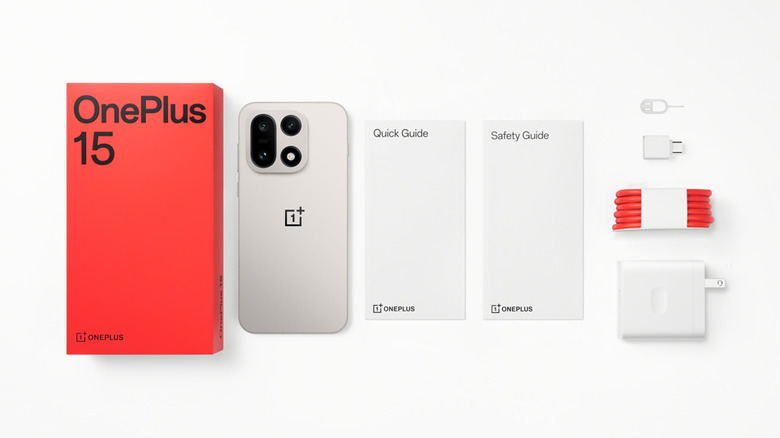
OnePlus phones have always prioritized raw performance, and the OnePlus 15 — which came out in October 2025 in China and November 2025 globally — is the most powerful OnePlus phone yet. Thanks to its Snapdragon 8 Elite Gen 5 chipset — the latest and fastest processor on the market — it's a phone made to top smartphone benchmarks, putting it well above the iPhone 17 Pro in theoretical performance.
In practice, it has a better refresh rate — which goes up to 165Hz compared to the iPhone's 120Hz – better FPS when running heavy games, and can export high-quality renders and large video files faster. Additionally, the phone has a massive 7,300mAh silicon-carbon (Si-C) battery – a technology that Apple isn't willing to use. You can get more storage and RAM as well, as the 512GB/16GB OnePlus 15 is still cheaper than the 256GB/12GB iPhone 17 Pro. All in all, it's a phone made for those wanting impressive performance and longer battery life.
There are some nuances to keep in mind, though. While the OnePlus can outperform the iPhone 17 Pro in certain tasks, it also has a heating problem that makes gaming for long periods of time an issue. In rare instances, certain apps might even refuse to run altogether because of how quickly the phone heats up. Additionally, while the OnePlus has a much larger battery, the iPhone is well-optimized and can offer good enough battery life, though the former does charge a lot faster, both wired and wirelessly. Like many other Chinese phones, it also costs less than the iPhone 17 Pro, with the 256GB/12GB model being $899 and the 512GB/16GB variant being $999.
2. Vivo X300
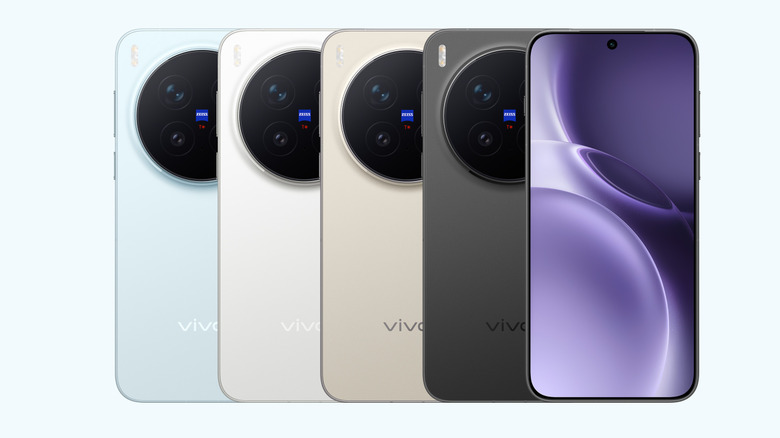
Vivo's X300 (and the X300 Pro) came out in China last October as a flagship centered around giving its users the best camera performance — something it delivered on. Still, even putting the camera aside, the X300 can compete with the iPhone's A19 Pro chip in performance. Like the other phones on this list, the X300 performs better than the iPhone on benchmarks across the board when it comes to multi-core results. On GeekBench, the X300 has a multi-core speed of 10264 compared to the iPhone 17 Pro's 9923. On 3DMark, it scores 7263 to the iPhone's 5868. It has the same LTPO OLED display as the iPhone, but unlike most other Androids on this list supporting the Snapdragon 8 Elite Gen 5, the Vivo uses a MediaTek Dimensity 9500 chipset.
In more practical use, the iPhone 17 Pro has better single-core performance due to its higher-performing individual cores (4.26GHz compared to Vivo's 4.21GHz). This means that the iPhone is quicker when doing daily tasks — though the difference isn't obvious — while the X300 has the potential to run more apps better simultaneously. When it comes to gaming, the iPhone ends up slightly outperforming the X300 at times due to better optimization, but both phones give a similar experience for the most part.
Most of the other phones here that beat the iPhone in technical performance specifications can't get close to the iPhone 17 Pro's camera quality, but the X300 is different. Its Zeiss-branded camera is one of the few in the industry that can consistently give you better shots than the iPhone regardless of the situation. While the smartphone isn't yet launched in the U.S., the base X300 is expected to be priced at around $650 when it launches.
3. iQOO 15
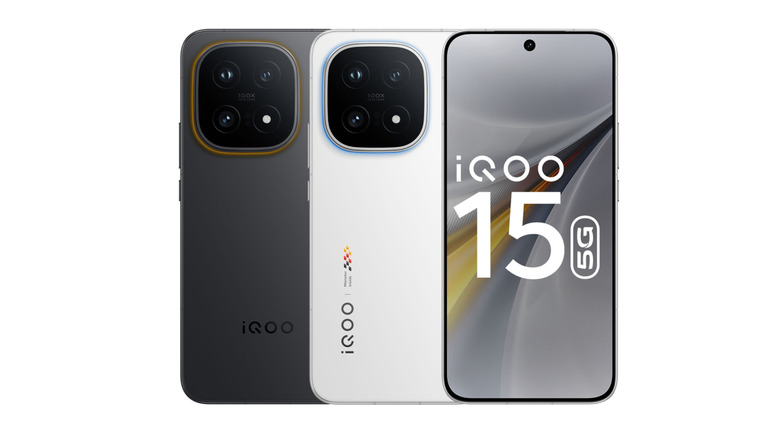
The iQOO 15 is a phone that values performance above all else. Released in October 2025 in China, the phone comes with specs that make it easily top most benchmarks, being one of the strongest Android phones in terms of performance alone. On GeekBench, the iQOO 15 scores 10466 (100-plus points more than the iPhone 17's 9923), and on 3DMark's Wild Life Extreme benchmark, it boasts 7229 compared to the 17 Pro's 5868. It does this by having the same Snapdragon 8 Elite Gen 5 processor as many other phones on this list.
The iQOO 15 has a slightly better display than the iPhone 17 Pro as well — a resolution of 1440 x 3168 compared to the 17 Pro's 1206 x 2622 pixels — alongside a better refresh rate with its 144Hz to the iPhone's 120Hz. It also has twice the peak brightness of the iPhone, which gives a better experience outdoors or when watching content with bright visuals. Additionally, the iQOO 15 has a similarly powerful 7,000mAh Si-C battery to the OnePlus 15, and ends up outlasting the iPhone in battery life. Like the X300, though, the iQOO 15 isn't sold directly in the U.S. yet, but you can get a second-hand one on sites like eBay for $824 as of writing.
4. Samsung S25 Ultra
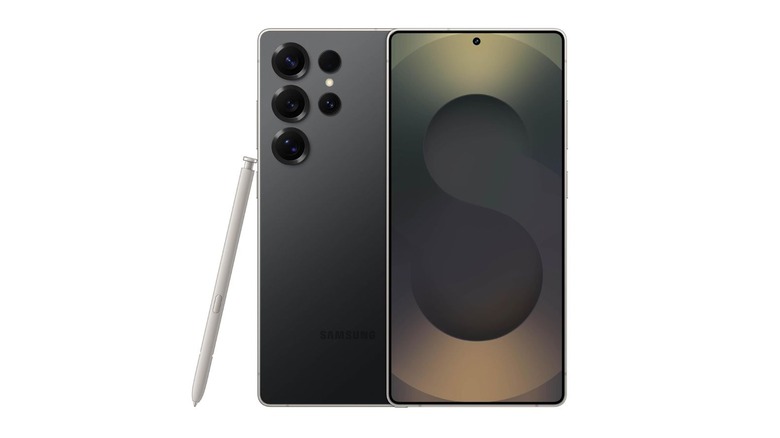
The Samsung S25 Ultra, being another flagship from one of the biggest mainstream brands in the U.S., is the default option for anyone wanting a non-iOS alternative to the latest iPhone. It's a solid flagship that's about as well-rounded as the iPhone, and balances performance, display, and camera, and — unlike other phones from smaller brands — a competitive support package compared to Apple's.
For processing, the S25 Ultra uses the Snapdragon 8 Elite, which is perfectly capable of running most demanding programs without issue. However, this is still a step below the latest 8 Elite Gen 5 chipfound in the latest Chinese phones that are faster than the iPhone 17, such as the OnePlus 15. It has a competitive camera that can output better shots than the iPhone in certain scenarios, though neither phone is objectively better than the other in terms of camera alone. It even has a titanium frame, making it more durable than any other phone using aluminum for protection. As of writing this, you can get the S25 Ultra on Amazon for $1,399 for the 512GB variant.
Unfortunately, it doesn't outperform the iPhone in specs nearly as much as the other phones on the list. This is because it's the oldest phone here, released in early 2025, whereas most others came later in the year. This does mean that the Samsung S26 is coming out soon, though, and for a while — until other companies decide to release their flagships for the year — it'll likely be the strongest phone around.
How we define more powerful
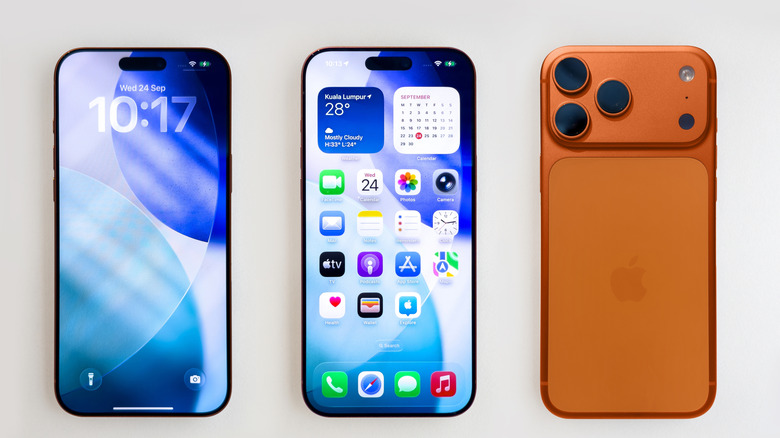
For this list of Android phones more powerful than the iPhone 17 Pro, we went through all the big phone releases in 2025 and early 2026 and compiled the ones that had something going for them over Apple. This could be in terms of performance, battery life, charging speeds, the display, or the camera.
For performance, we used benchmarks like GeekBench and 3DMark as a starting point. We've avoided AnTuTu as it doesn't account for the difference in architecture between Android and Apple, which ends up with Apple products having skewed results. 3DMark results are slightly deceptive as well due to Apple not having the same GPUs available to Android phones, but we've decided to keep these in to show the difference in processes that require a ton of GPU power, such as exporting high-quality renders. The benchmarks aside, we also accounted for the real-world performance of these phones.
To compare the phones' batteries, we analyzed real-world testing of how the phones perform in different games, streaming YouTube, recording videos, and scrolling through the phones' dedicated browsers. Lastly, for the cameras, we compared a variety of similar shots taken by different cameras and took into account which pictures users liked best.