

Things Keep Getting Worse For NASA's Artemis II Mission With Another Big Delay
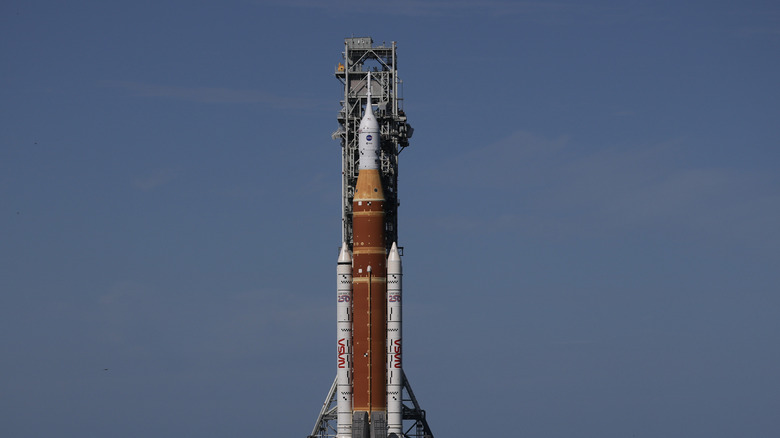
They were so close. After years of work — and more than 50 years since humanity's last trek to the moon — NASA was finally set to launch the first crewed flight in the Artemis program, Artemis II. However, with Artemis II still facing so many issues, the space community has remained on the edge of its seat, unsure if or when the space rocket might actually lift off. Unfortunately, it seems the problems have won out, as NASA is now preparing to rollback the SLS rocket and Orion spacecraft, effectively canceling March's launch attempt, at least for now.
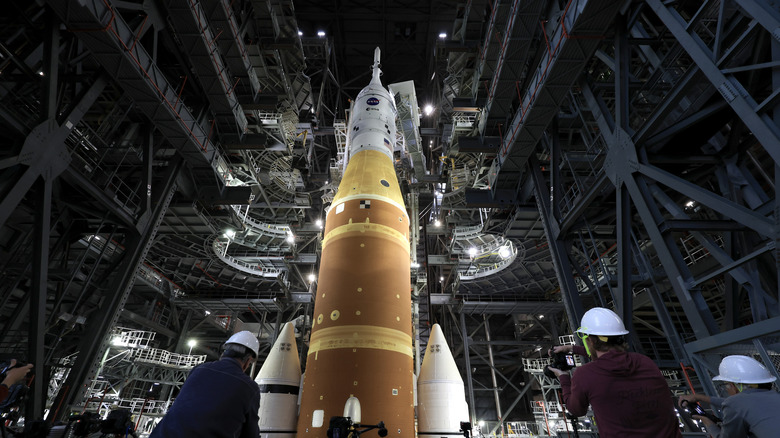
For those not wholly in-tune with the various terms used to address different segments of a rocket's launch, a rollback is essentially where the rocket and all its components are "rolled back" to the Vehicle Assembly Building, or VAB, from the launchpad. The VAB is where the rocket can be properly worked on, allowing the engineers responsible for the rocket and its various systems to work on any issues that might have popped up, and it takes roughly 12 hours to return the rocket to the VAB, as it is a four mile trek.
In this particular instance, the issue that appears to be holding up the launch of Artemis II isn't a problem with Artemis's spacesuits or even the hydrogen leak that the SLS rocket has been experiencing during fueling. Instead, it appears one of the latest attempts to prepare the rocket for launch has led to the discovery of a new problem: a helium leak in the upper stage rocket.
Continued problems warrant closer inspection
The ongoing issues that Artemis II is experiencing aren't tied wholly to the latest iteration of the launch vehicle, either. Previously, Artemis I suffered similar issues, including some concerns around the heat shield used to protect the Orion capsule during its return to Earth. Many of those extended to Artemis II, as well, however, NASA has waved off most of these issues as something that shouldn't affect the flight. Which is why the discovery of this helium leak has garnered so much attention.
Because unlike the hydrogen leak, which is only tied to when the rocket is being fueled up, the helium leak specifically pertains to the upper stage of the rocket. The rocket uses that helium to help maintain the "proper environmental conditions" that NASA says are needed to ensure the engine remains operational without issue, as well as to pressurize the liquid hydrogen and oxygen propellant tanks. So with any kind of leak there, an additional risk of issues comes into play.
At the moment, it is unclear when NASA will try to launch Artemis II. First, the agency needs to get the rocket back to the VAB so that it can then start looking into the issue. It might also be worthwhile to look into the other problems plaguing Artemis, but with NASA, there's no telling what it will focus on beyond the immediate problem. All onlookers can really do now is hope that NASA doesn't end up with another Starliner situation. For now, though, NASA is targeting the rollback of Artemis II for sometime this week.