

Spotify Just Released A New Feature Apple Music Users Wish AutoMix Could Do
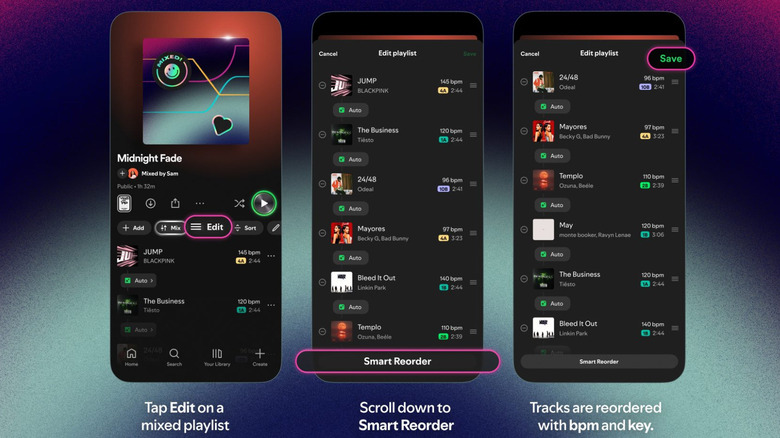
With Apple Music users debating over the new design of albums and playlists in the upcoming iOS 26.4 update, Spotify announced yet another way to improve the listening experience on its platform. Since last year, the company has offered more ways for listeners to make seamless transitions between their favorite songs. However, to make this experience even better, Spotify is announcing Smart Reorder, which helps create better transitions by combining songs' BPM and key.
Spotify says this feature is exclusive to Premium users, and it's possible to toggle it on by tapping Mix on a playlist, then Edit, and choosing Smart Reorder. Tracks will then be reordered following their BPM or key. With that, transitions will sound smoother, combining songs beyond just fading in and out every time a tune is about to end.
The company already offers a few examples of some of the most popular transitions users are enjoying, like Bad Bunny's "Safaera" into "EoO," or "No Lie" by Sean Paul into "Adventure of a Lifetime" by Coldplay. Besides that, Spotify's Smart Reorder is also a clever way for those who are good at adding songs to a playlist, but never know how to create the proper flow or narrative to it.
Apple Music, on the other hand, is still behind its competitor
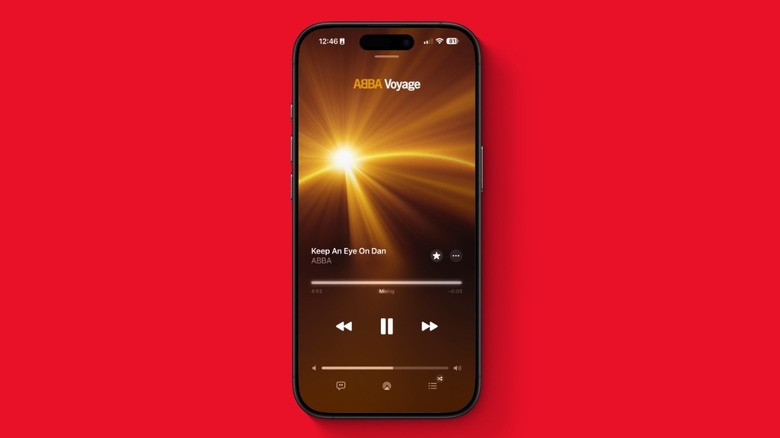
Comparing this news with Apple Music's AutoMix feature introduced with iOS 26, it shows how innovative some of Spotify's features are. For example, AutoMix should feel like an upgrade to crossfade, which is just a simple way to add a fade in and fade out between songs. With Smart Reorder, on the other hand, the service should intelligently understand when to transition one song to the other.
Apple Music told BGR a few times that AutoMix respects albums, so it will never try to use this feature while you're playing the side-B of "Abbey Road," for example, and it won't work with certain genres like Classical. Still, it seems that AutoMix works well on the things that it's supposed to work well on, like hip hop, electronic music, and genres with a strong beat. However, when you take into account country songs, rock, melodic pop, or indie, some of the transitions just sound really far off.
Apple Music users will probably try it once or twice, but by the third time, you start hearing a weird noise halfway through of your song; just to realize Apple Music has been playing pretty much two songs at the same time. Most end up turning this feature off, never bothering to try it again, and it's completely understandable.
Apple Music is trying, but it feels like catching up
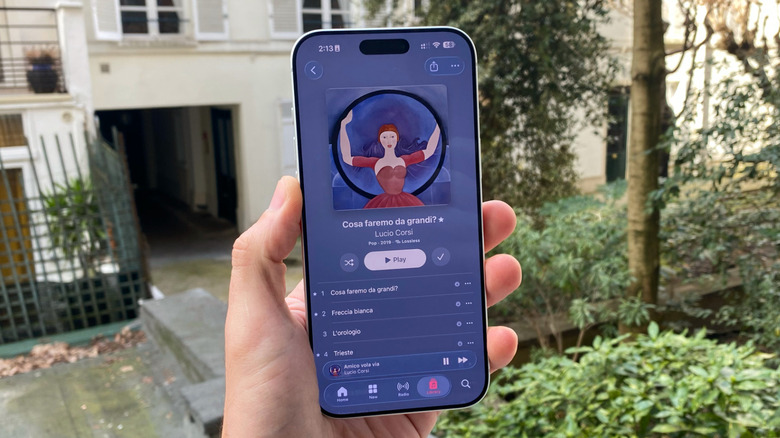
With iOS 26.4, Apple introduces a handful of new features to Apple Music. Users will get a new design for album and playlists, as the service gets the most important color of the cover and applies it as the background. While some people suggest it's bad for readability, in general, it has been a satisfactory experience in beta 2.
Besides that, the company is finally using AI to create playlists. So far, it's only available in the U.S., and it's unclear if Apple will expand globally by the end of the beta testing of iOS 26.4. However, this feature should let you say what you'd want to listen to in a playlist and, based on your taste, create a playlist; which is a superior experience than the Apple Music and ChatGPT integration.
Apple Music is also promoting Upcoming Concerts, which helps fans connect with their favorite artists and attend concerts near them, in addition to helping music lovers discover new artists through upcoming shows. Lastly, the Profile page has been revamped to improve Apple Music settings, redeeming a benefit, or just making it easier for users to access their profiles. While all of these features are steps into the right direction, Apple Music continues to lack deeper AI integration with its algorithm, in addition to social features that actually feel shareable, all of which Spotify is miles better at.