

Does Your Soundbar Have Extra HDMI Ports? Here's What They're For
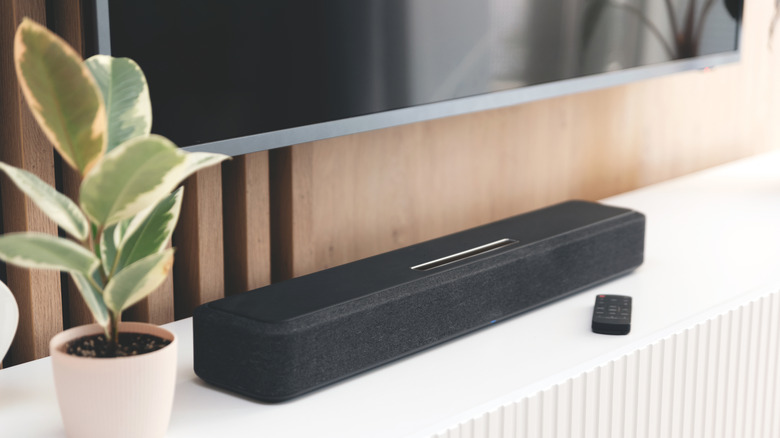
Modern soundbars are pretty capable and typically support a wide range of input options, including HDMI and optical ports. The HDMI port, which is referred to as an Audio Return Channel (ARC) or Enhanced Audio Return Channel (eARC) port, is used to connect the soundbar to your TV, projector, or another output device. However, many of the best soundbars include additional HDMI ports, which begs the question: What are these extra HDMI ports for when the ARC or eARC port will be used for the primary audio connection?
The additional HDMI ports present on a soundbar, which can range from a single port to multiple ports, can come in handy for a variety of use cases. For example, you can use them in the case of an HDMI port shortage on your TV or in cases when your TV is unable to pass through a certain audio format to the soundbar. Here's a look at some of the major use cases for the extra HDMI ports on your soundbar.
Connecting HDMI devices like streaming media player and Blu-ray players
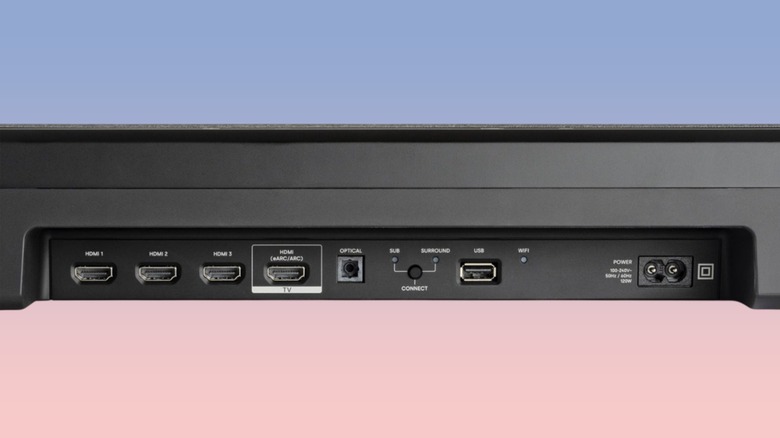
Although it's becoming increasingly common for modern TVs to feature three or four HDMI ports, it's not always a given, particularly in cheaper or older models. So if you have a TV that only has one or two HDMI ports, you can plug streaming devices like Amazon Fire TV Stick or other video devices like a Blu-ray player, to the HDMI ports on your soundbar, which will keep the audio signal and pass the video signal to your TV, allowing you to use your video device without having to remove any devices connected directly to your TV. Your soundbar essentially functions like an HDMI hub in this case.
There are no real downsides to this, particularly in the case of streaming devices or a Blu-ray player. Your content will play as it's supposed to, and you won't face a dearth of HDMI ports. However, you have to ensure the HDMI ports on your soundbar aren't old-generation. Otherwise, you can't play 4K content. That said, unless you have a really old soundbar, it shouldn't be an issue. You can check the HDMI port capabilities by referring to the soundbar's manual.
Passing audio formats directly to soundbar

Another solid reason to use your soundbar's HDMI ports is to pass compatible audio formats directly to it from a connected streaming media player, Blu-ray player, or another device. There are instances when a TV doesn't support a particular audio format, such as Dolby Atmos or DTS:X, and it can't even pass it through to the connected soundbar. But if you still want to enjoy audio in those formats and the same is supported by your soundbar, you can connect the output devices directly to your soundbar.
This way, the soundbar will extract the audio signal and play it, and send the video signal to the TV, which is a win-win scenario for you. You get the best possible audio as well as video. You can also use it if you don't trust your TV's audio processing and pass-through capabilities and would rather have a soundbar handle the audio signal itself.