

This Tiny Gadget Brings Smart Controls To Every Ceiling Fan In Your Home
With how affordable some smart home products are, turning your living space into a smart haven no longer feels out of reach. You can readily buy smart light bulbs for as low as $10, smart doorbells for under $100, and smart garage door openers for roughly $200, allowing you to give your regular devices a high-tech upgrade once they retire. But what about the ones that are still doing their jobs just fine?
If you're not quite ready to swap out one of your dumb gadgets for a smarter version, there are several cool ways to use smart plugs around the house. They're great for things like your table lamp, humidifier, or stand and desk fans. The problem, though, is that smart plugs don't work with a few home devices like your ceiling fans.
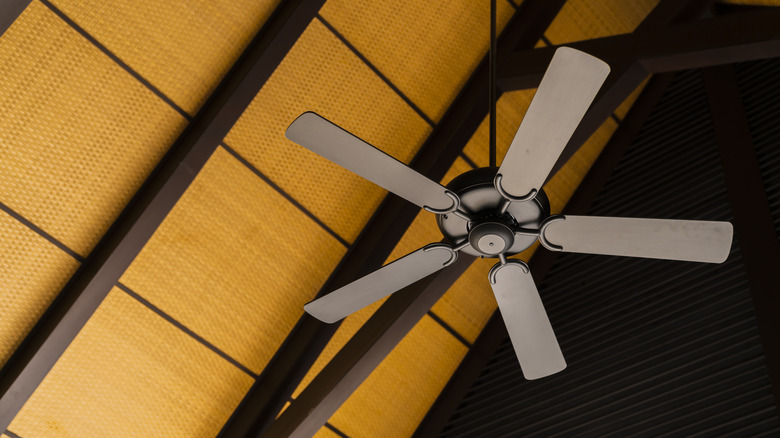
Ceiling fans are usually hardwired, not plugged into an outlet, so you can't simply outfit them with a smart plug. The good news is, there's actually a workaround that can make your existing ceiling fans smart: a Bond Bridge. It looks like a smart thermostat with its puck-like design, but instead of controlling the temperature, it can control your ceiling fan.
What the Bond Bridge is and how it works
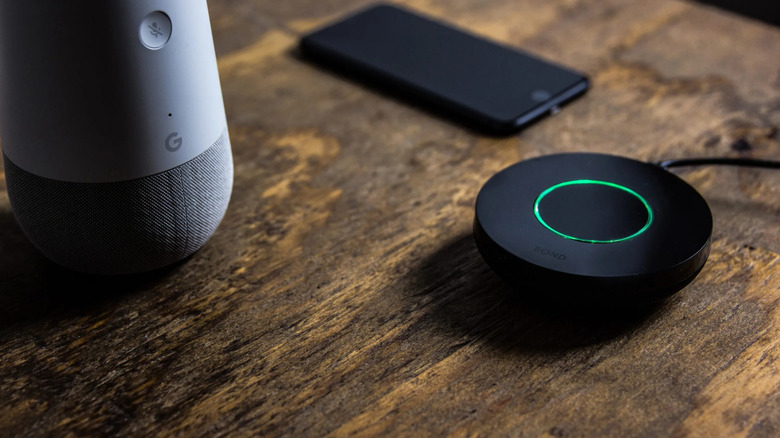
The Bond Bridge is one of those essential smart home gadgets you should be using if you have multiple ceiling fans at home. What it does is copy the signals from your ceiling fan's remote and transmit those same signals to control your fan. Once configured, the Bond Bridge then provides you with a digital remote control right in the companion Bond Home app. This means you can manage your ceiling fan like any other smart home device. For instance, you can turn it off from the app while you're away from home, speed it up right from your bed, and add it to routines for automated convenience.
If you already have a smart home system in place, the Bond Bridge can easily be integrated into it. It's compatible with major platforms like Google Home, Amazon Alexa, and Home Assistant. This allows you to use voice control commands, such as "Turn on the [fan name]," "Set the [fan name] to low," and "Increase [fan name] by 70%." If your ceiling fan comes with a light, you can also use voice commands to switch the light on or off and dim it (assuming the light supports dimming).
What's convenient about the Bond Bridge is that it doesn't need to be installed. You simply plug it into a wall outlet, set things up in the app, and you're good to go. One unit is enough to cover 2,500 square feet and manage a maximum of 30 devices. If your home is larger or has multiple stories, it's best to use more than one bridge. They're designed with anti-collision RF technology, so their signals won't interfere with each other. Other than ceiling fans, the Bond Bridge works with fireplaces and shades, too.
How to pair the Bond Bridge with your ceiling fans
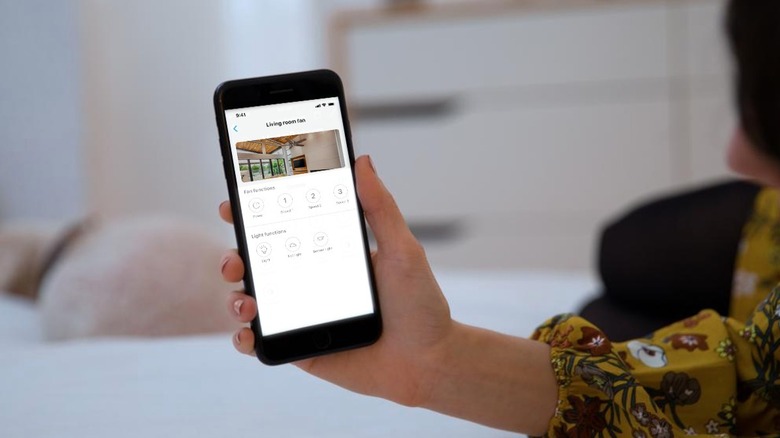
Before you can pair the Bond Bridge with your ceiling fans, you'd need to set it up via the Bond Home app first. Install the app from the App Store or Google Play and create a Bond account to proceed. Afterward, hit the plus icon to add a new device and choose "Bridge" from the options at the top. You can then plug the bridge into power and wait for it to blink green. From here, simply follow the on-screen instructions to finish configuring the Bond Bridge. Like many other interesting gadgets for your DIY smart home, the Bond Bridge follows a quick and easy setup process. To finish things off, pair the bridge with a ceiling fan using these steps:
- In the Bond Home app, tap the plus icon to add your ceiling fan.
- Under Devices, select "Ceiling Fan."
- Choose "No, my device is not smart, I need a bridge."
- Tap on the Bond Bridge you just set up.
- Set the name and location of the ceiling fan.
- Pick one command from your remote control.
- Hit that button several times until you see the Bond Bridge turn green.
- Choose one of the matching remotes in the database, or tap "Record remote manually."
Make sure to verify that the buttons on the app remote work properly with your ceiling fan. If you selected one of the matching remotes instead of recording manually, you're free to customize the remote and delete buttons you won't use.