

It Takes Weeks To Refuel A Nuclear Power Plant - Here's Why
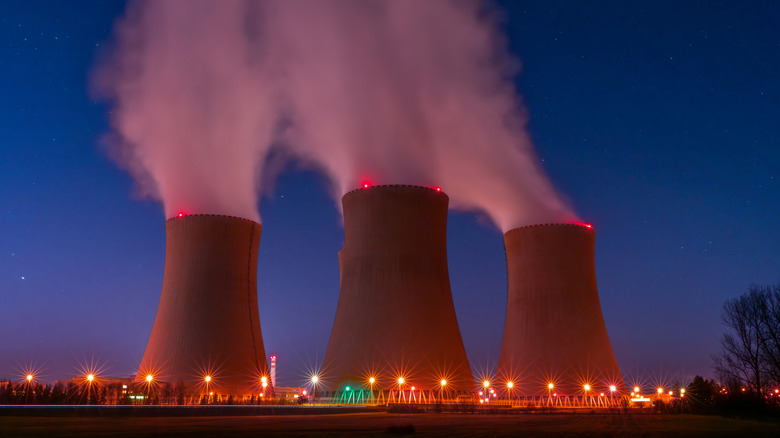
The process of refueling a nuclear plant, known as an outage, is a critical, time-intensive process. Despite its ominous name, refueling outages are an essential act of preventative care for nuclear facilities. Undertaken when roughly a third of the core's fuel has been used, a fueling outage not only replaces the spent fuel but repositions it within the core, optimizing its consumption. Like in nuclear aircraft carriers, which take years to refuel, the process of renewing a nuclear plant's fuel rods takes an inordinate amount of time. Typically, refueling takes roughly a month to undergo and is undertaken every 18 to 24 months, depending on the plant's unique characteristics.
Refueling is comprised of three major phases: shut down, refueling, during which the plant goes through an extensive quality control check, and restarting the plant's operations. Oftentimes, these outages are scheduled for seasons when energy needs are lower, avoiding summer and winter months to reduce the strain on energy grids. During the outage, technicians also perform critical maintenance on its systems, components, and equipment. Furthermore, any system upgrades are likely scheduled during an outage to maximize the plant's time offline.
This testing process is particularly time-intensive, as nuclear operators must ensure that plants function properly in order to avoid major disasters like the infamous Chernobyl or Fukushima. On average, American plants spend roughly 32 days offline during an outage. The process is so intensive that some plants increase their employee count by 300% in order to shoulder the load. Notably, modern plants have greatly improved the efficiency of these processes because U.S. power plants used to take 80 days per outage.
Its all in the preparation
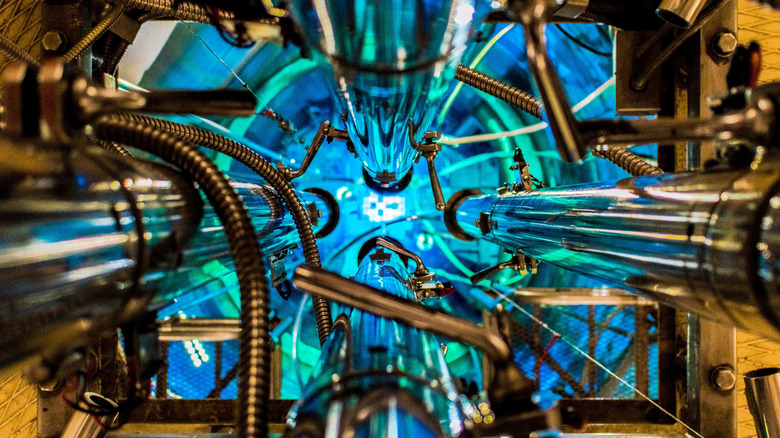
Before nuclear fuel can be placed into a reactor, it must undergo an intensive enrichment process. Power plants use a rare form of uranium, U-235, which can undergo nuclear fission more easily than typical uranium. Consisting of only 0.7% of naturally produced uranium, scientists must first separate U-235 from mined uranium ore at uranium mills or in-situ leaching facilities before undergoing an intensive process of enriching the concentrated uranium and concentrating it into fuel pellets or rods capable of fueling nuclear plants. When fuel canisters arrive at the site, they are lifted to the refueling floor to undergo inspection.
Following inspection, the new batch of fuel is stored in either a dry storage area or in a refueling pool, where they await to be loaded into the reactor. Prior to refueling, plants undergo an intensive planning stage to ensure safety and performance, with a large focus on minimizing employee exposure to dangerous radiation. Such planning is critical to preventing nuclear disasters like those at the Santa Susana Field Laboratory in California, potentially the worst nuclear disaster in U.S. history.
Shutting down the reactor for refueling is an intensive process. Typically, nuclear reactors generate electricity through steam that pushes through a turbine. Operators must throttle this flow of steam down to lower the heat output sufficiently to take the nuclear reactor off the energy grid. Now offline, nuclear operators 'trip' the plant, inserting control rods into the core to prevent nuclear reactions. However, this doesn't mean that the residual heat has been fully removed, so it necessitates an intensive cooling process that requires the plant to flood the generators with water. Then the plant is ready for refueling.
Refueling the reactor
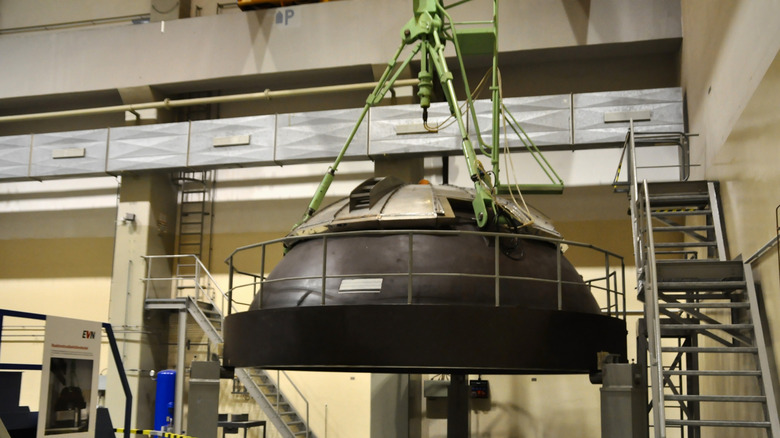
After the reactor has cooled, technicians remove the reactor head and detach the control rods to maintain their position with the fuel. Next, operators compensate for lowered water levels by flooding the refueling cavity above the reactor vessel, removing the gates separating the reactor cavity and the fuel pool. This ensures that the fuel remains cool throughout the transfer process.
Technicians then inspect the entire plant, conducting key tests otherwise impossible during normal operations. These maintenance activities add significant time to the refueling process and require extra manpower to orchestrate. While maintenance is underway, technicians use a large crane, known as a refueling bridge, to remove each spent bundle and transfer it to storage racks in the Spent Fuel Pool. Next, the bridge places the new fuel into the reactor. Finally, the plant undergoes a time-intensive reassembly process before resuming operations.
Once removed from the reactor, nuclear waste spends several years in the onsite cooling pool, during which the fuel's decaying radioactive elements continue to emit heat. The pool provides the dual benefit of cooling the fuel rods and containing radiation. Once cooled, the uranium is transferred to a temporary dry storage area within the plant, typically in air-conditioned containers made of steel or concrete. In theory, waste should be disposed of in an underground repository. Thus far, only Sweden, Finland, France, Switzerland, and Canada are considered close to establishing such geological repositories. The U.S., for its part, has tried and failed to initiate the construction of a nuclear repository in Yucca Mountain. To date, no American repository project has made progress in over a decade.