

MWC 2026 Kicks Off The 6G Era - But Will It Be Any Different?
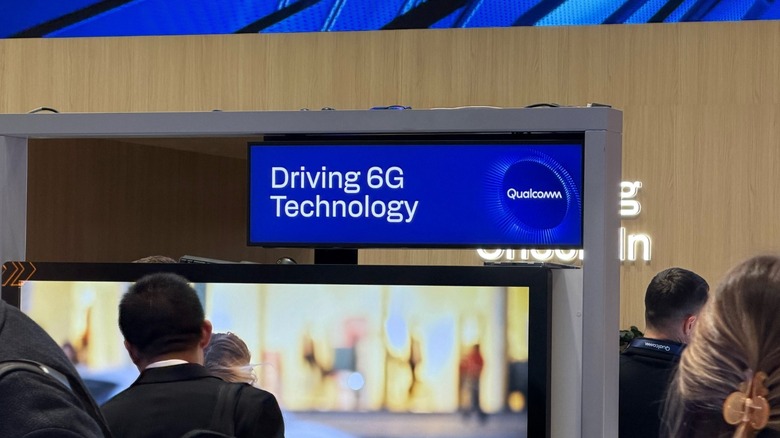
In late-2023, Samsung said it was focusing on the new 6G era. At the time, 5G was still steadily expanding, and the Korean company said the next generation would deliver everything the current couldn't. Fast-forward to Mobile World Congress 2026, and it seems the 6G horizon is finally taking shape as Qualcomm, Amazon, Asus, Google, Meta, Microsoft, Motorola, Samsung, and many others announced a coalition to accelerate the deployment of 6G, as they expect to start delivering this technology by 2029.
According to Qualcomm, 6G will focus on three big features: connectivity, wide-area sensing, and high-performance compute, with all that being powered toward an AI experience. With these changes, the upcoming standard will be a lot more stable, energy efficient, and could even pave the way for connected cities with actually connected terrestrial and aerial vehicles.
"6G is more than the next step in wireless evolution. It's the foundation for an AI-native future that distributes intelligence across devices, the edge, and the cloud, and transforms network providers into AI-driven enterprises," said Cristiano Amon, President and CEO of Qualcomm Incorporated. "Having led multiple generations of global wireless innovation, Qualcomm brings deep expertise and capabilities to the development and commercialization of 6G.
6G to be an AI-native platform

With the AI boom of the past few years, the new connectivity standard for mobile, robots, vehicles, and everything tech-related is being built with this in mind. Qualcomm believes there will be "unprecedented operational and power efficiencies," as the new standard will be easier and more cost-efficient to build.
With that, 6G will be all about wider bandwidths, Giga-MIMO, the ability to use radio signals and multimodal fusion to detect drones, monitor vehicle traffic, and other physical AI applications. This new standard will also be key for Extended Reality (XR) experiences with improved context awareness, multi-device collaboration, and even the creation of autonomous networks.
In addition to the 6G advancements, which we'll continue to learn more about in the coming years, the company, alongside a few other players, is readying Wi-Fi 8 support, with products expected to be released later this year or early next year. This push to a new standard will deliver big numbers, with connection speeds surpassing 9Gbps, a broader, more stable range so users can enjoy fast internet even when they're not near the Wi-Fi modem, and, of course, improved management of devices connected to the same network. Qualcomm also tells BGR that the transition between one access point to another will also be greatly improved with this new generation.
Technology improvements will depend on key partners
While 5G was able to, in general, improve on the previous 4G standard, it hasn't completely changed how we experience the online world. From a customer point of view, the current standard makes connecting with others simpler through video calls, downloading larger files, and even replacing Wi-Fi at home for some users due to generous 5G carrier deals.
For Qualcomm and other players to deliver this AI-centric view of 6G, the company says the success will depend on "strong and dedicated partnerships, shared purpose, and joint innovation," as the new technology will only deliver a bigger leap if the entire industry is on it. Just like 5G, we'll also see the transition from, at first a simpler experience using the current network available, to a standalone version in the years to come.
Still, there's a lot we don't know about how 6G will operate, and even how long it'll take to become mainstream. For example, 5G was first deployed in 2016 by Qualcomm, and one of the biggest players in the market, Apple, only started adopting this technology on its smartphones by late-2020, with the iPhone 12. That said, we might start to understand the real capabilities of 6G in the next trade shows, as these companies continue to develop this AI-centric technology.