

How Often Do Ship Anchors Break Undersea Internet Cables? More Often Than You'd Expect
It's a little-known fact that undersea cables are necessary for a majority of international internet traffic and not mobile networks, satellites, or fixed internet. It's safe to say they are the foundation of global communications. So, when one of those cables goes down or is damaged in some way, it's a lot worse than those common Wi-Fi mistakes everyone makes — it can cause some pretty big headaches for people around the world.
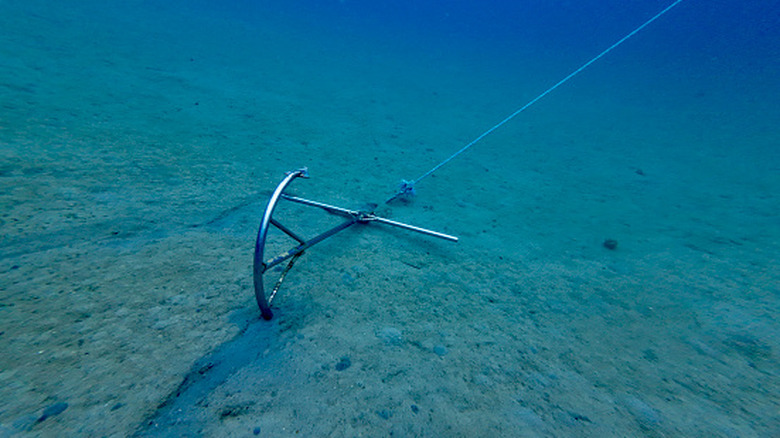
Cable cuts, where those undersea cables are severed, are actually pretty common. These have been caused by earthquakes and underwater landslides, physical sabotage, and — wait for it — maritime activities, including commercial fishing and mismanaged vessel anchoring. Estimates from the International Cable Protection Committee (ICPC) claim that undersea cable damage from dragged anchors is responsible for about 30% of all annual incidents, or around 60 faults every year. An older 2011 ICPC White Paper claims it's the leading cause of cable damage, far more than previously suspected.
But as you can already glean, there are different types of incidents that involve anchors. Those include direct impact, dragged anchors moving along the seafloor, accidental deployment, and intentional deployment during adverse weather at sea. More surprisingly, genuine accidents aren't the only thing happening under the surface. There are reports of intended sabotage carried out by anchor dragging, particularly attributed to Russian vessels in the North Atlantic-Baltic region and Chinese vessels in the Western Pacific.
Ultimately, it happens a lot more often than you might expect. If the ICPC's numbers are still accurate today, a large portion of outages could be directly related to anchor incidents, both accidental and otherwise.
What happens when an undersea cable is cut or damaged?
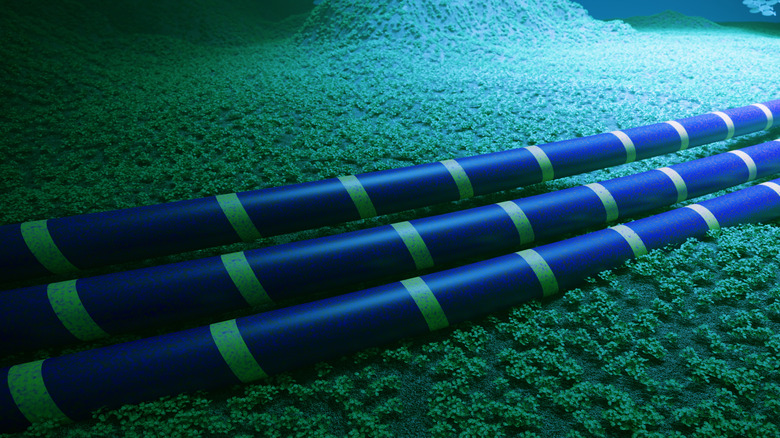
As reported by the International Cable Protection Committee, approximately 1.7 million kilometers of undersea cable see 150 to 200 total incidents each year. The good news is that, despite more cable being installed, and technically more of it exposed, those incident numbers are remaining stable, not increasing. But it's still a big deal. And 70 to 80% of those faults are caused by human activities. So, what happens when a cable breaks?
The answer is: It depends, but undersea cable breaks usually result in some type of outage or slowdown. There are redundant cables available, so in some cases, when one cable breaks, it doesn't completely sever communications. Instead, the broken cable's network capacity is spread across multiple different cables. But it can significantly slow things down.
After a cable is cut, undersea vessels, including submarines and remotely operated vehicles (ROVs), are used to find the damage and repair it. Sometimes, the breaks are easy to see — other times, it takes a while for operators to discover the fault. Afterward, a cable ship is dispatched to repair the damage. These ships are equipped with enough cable and unique tools to repair, install, and test the cabling. Subsea cable repairs are expensive and can cost as much as $500,000 to $1 million per incident for fiber optic telecommunication cables.
Cables remain the primary source of telecommunications and even some power transfers. With revolutionary and record-breaking new data tech on the way, we may even see more cables installed if the current wiring needs an upgrade. The emergence of quantum data teleportation is exciting and could one day lead to blazing fast speeds over fiber optic cables. Until then, we'll keep our eyes on the sea floor.